Loading...
Done
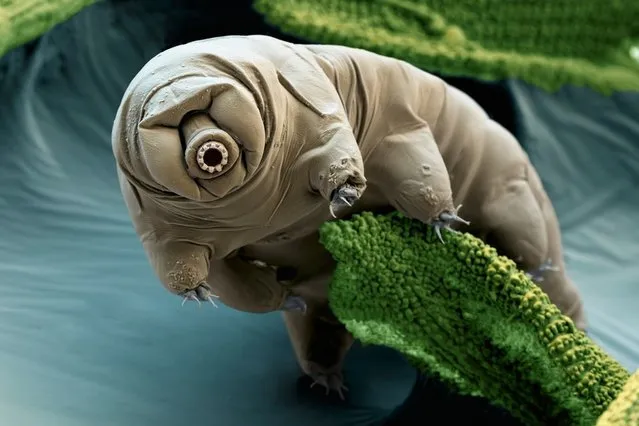
Tardigrades (commonly known as waterbears or moss piglets). (Photo by SPL/East News)

“Tardigrades (commonly known as waterbears or moss piglets) are small, water-dwelling, segmented animals with eight legs. Tardigrades were first discovered in 1773 by Johann August Ephraim Goeze, who called them kleiner Wasserbär, meaning “little water bear” in German. The name Tardigrada means “slow walker” and was given by Lazzaro Spallanzani in 1777. The name water bear comes from the way they walk, reminiscent of a bear's gait. The biggest adults may reach a body length of 1.5 millimetres (0.059 in), the smallest below 0.1 mm. Freshly hatched tardigrades may be smaller than 0.05 mm”. – Wikipedia. Photo: Tardigrades. (Photo by SPL/East News)
Details
26 Sep 2012 09:55:00
Lance Cpl. Blas Trevino of the 1st Battalion, 5th Marines, shouts out as he is rescued on a medevac helicopter from the U.S. Army's Task Force Lift “Dust Off”, Charlie Company 1-214 Aviation Regiment after he got shot in the stomach outside Sangin, in the Helmand Province of southern Afghanistan on June 11, 2011. The Army's 'Dust Off' crew needed two attempts to get him out, as they were fired upon and took five rounds of bullets into the tail of their aircraft. (Photo by Anja Niedringhaus/AP Photo/File)

Lance Cpl. Blas Trevino of the 1st Battalion, 5th Marines, shouts out as he is rescued on a medevac helicopter from the U.S. Army's Task Force Lift “Dust Off”, Charlie Company 1-214 Aviation Regiment after he got shot in the stomach outside Sangin, in the Helmand Province of southern Afghanistan on June 11, 2011. The Army's 'Dust Off' crew needed two attempts to get him out, as they were fired upon and took five rounds of bullets into the tail of their aircraft. (Photo by Anja Niedringhaus/AP Photo/File)
Details
17 May 2021 07:36:00
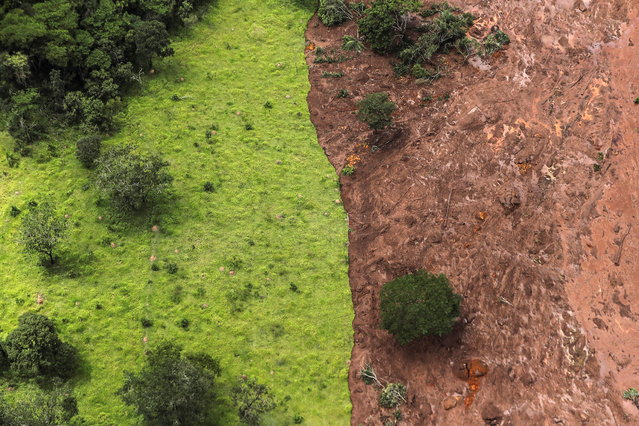
Aerial view over mud and waste from the disaster caused by dam spill in Brumadinho, Minas Gerais, Brazil, 26 January 2019. At least nine people have died and 300 are missing after a tailings dam burst at the Feijao mine in southeastern Brazil owned by Vale, the world's largest iron-ore producer, the Minas Gerais state government said. The dam in Brumadinho near Belo Horizonte broke on 25 January at around mid-day, unleashing a river of sludge that destroyed some nearby houses. (Photo by Antonio Lacerda/EPA/EFE)

Aerial view over mud and waste from the disaster caused by dam spill in Brumadinho, Minas Gerais, Brazil, 26 January 2019. At least nine people have died and 300 are missing after a tailings dam burst at the Feijao mine in southeastern Brazil owned by Vale, the world's largest iron-ore producer, the Minas Gerais state government said. The dam in Brumadinho near Belo Horizonte broke on 25 January at around mid-day, unleashing a river of sludge that destroyed some nearby houses. (Photo by Antonio Lacerda/EPA/EFE)
Details
29 Jan 2019 00:03:00
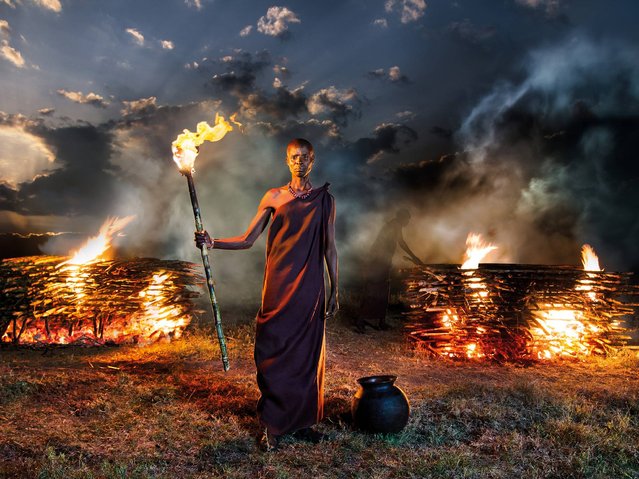
“The Salt of the Presidium”. Andrew Wanyonyi Sikanga is a salt producer in Nabuyole, western Kenya, who produces salt from an aquatic plant. (Photo by Steve McCurry/2015 Lavazza Calendar)

Extraordinary tales of everyday heroism have been illustrated beautifully by renowned US photographer Steve McCurry in the new 2015 Lavazza Calendar. The calendar which has been created in collaboration with the Slow Food movement, features twelve breathtaking pictures, capturing the spirit, strength and humanity of the Earth Defenders – women and men who protect their land and projects in Africa with passion and bravery. The proceeds from sales of the calendar and all donations will be contributed entirely to create 10,000 food gardens in African schools and villages by the end of 2016. (Photo by Steve McCurry/2015 Lavazza Calendar)
Details
27 Oct 2014 12:08:00
A debutante from a local academy looks at her mobile phone as she waits to take part in the Vienna Ball at the Kempinski Hotel, March 19, 2016, in Beijing. (Photo by Kevin Frayer/Getty Images)

A debutante from a local academy looks at her mobile phone as she waits to take part in the Vienna Ball at the Kempinski Hotel, March 19, 2016, in Beijing. The ball, which is an event organized by the luxury Kempinski Hotel chain and the City of Vienna, brings together both Chinese and foreign members of the capital's elite class. Despite a slowing economy, private wealth has soared in China after decades of rapid growth. A record number of high net worth individuals and families has fuelled a market for luxury goods, services, and events catering to China's burgeoning elite class. (Photo by Kevin Frayer/Getty Images)
Details
27 Mar 2016 12:31:00
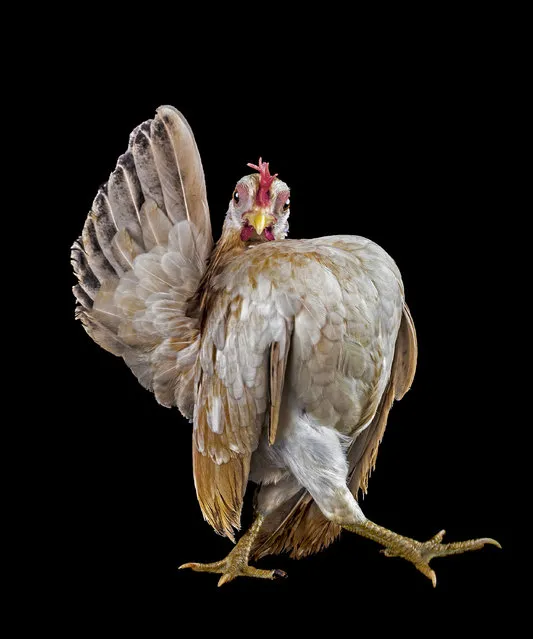
Ornamental chicken breeding clubs have emerged in Indonesia, Thailand, North America and even European countries such as the UK and France. Malaysia is however the epicenter of this cultural phenomenon. (Photo by Ernest Goh/2013 Sony World Photography Awards)

Ornamental chicken breeding clubs have emerged in Indonesia, Thailand, North America and even European countries such as the UK and France. Malaysia is however the epicenter of this cultural phenomenon. These chickens are prized for their build, size, behavior and showmanship by their owners and competitions or beauty contests as they are often described are held almost every week in at least one village in Malaysia. Judges sit around a square table inspecting each chicken for a few minutes trying to determine a champion specimen in its own weight class based on its stance, temperament and physical assets like wings, tails and comb. The walk or strut by an ornamental chicken in a beauty contest, much like a runway model, constitutes a large part of the scoring system. (Photo by Ernest Goh/2013 Sony World Photography Awards)
Details
28 Apr 2013 08:32:00


“Chameleons (family Chamaeleonidae) are a distinctive and highly specialized clade of lizards. They are distinguished by their parrot-like zygodactylous feet, their separately mobile and stereoscopic eyes, their very long, highly modified, and rapidly extrudable tongues, their swaying gait, the possession by many of a prehensile tail, crests or horns on their distinctively shaped heads, and the ability of some to change color. Uniquely adapted for climbing and visual hunting, the approximately 160 species of chameleon range from Africa, Madagascar, Spain and Portugal, across south Asia, to Sri Lanka, have been introduced to Hawaii, California and Florida, and are found in warm habitats that vary from rain forest to desert conditions”. – Wikipedia

Photo: A woman with the latest fashion accessory, a chameleon. (Photo by Fox Photos/Getty Images). Circa 1926
Details
20 Mar 2011 15:45:00


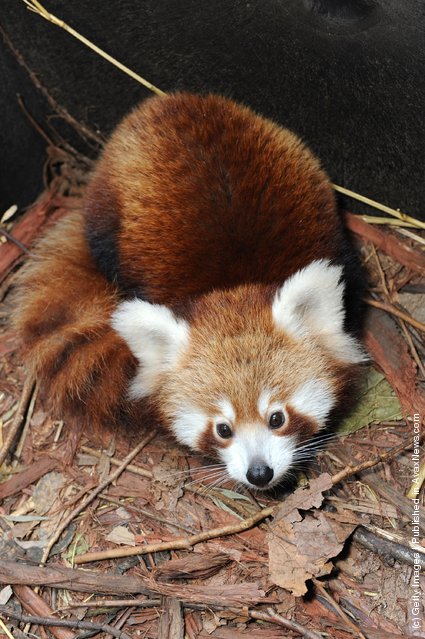
“The red panda (Ailurus fulgens, or shining-cat), is a small arboreal mammal native to the eastern Himalayas and southwestern China. It is the only species of the genus Ailurus. Slightly larger than a domestic cat, it has reddish-brown fur, a long, shaggy tail, and a waddling gait due to its shorter front legs. It feeds mainly on bamboo, but is omnivorous and may also eat eggs, birds, insects, and small mammals. It is a solitary animal, mainly active from dusk to dawn, and is largely sedentary during the day”. – Wikipedia

Photo: In this handout image provided by Taronga Zoo, Seba, a baby Red Panda, explores his new home at Taronga Zoo on April 7, 2011 in Sydney, Australia. The Red Panda cub was born at Christmas and is the 45th to be born at the zoo since 1977. (Photo by Peter Hardin/Taronga Zoo via Getty Images)
Details
07 Apr 2011 08:51:00