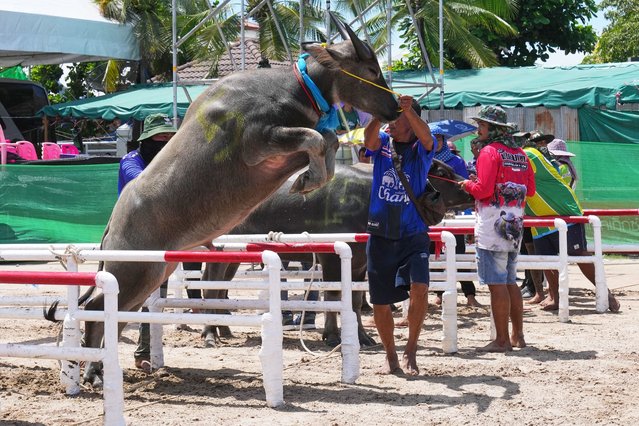
A member of a Thai buffalo racing team tries to control it before a sprint race during an annual buffalo racing festival in Chonburi, Thailand, Monday, October 6, 2025. (Photo by Sakchai Lalit/AP Photo)
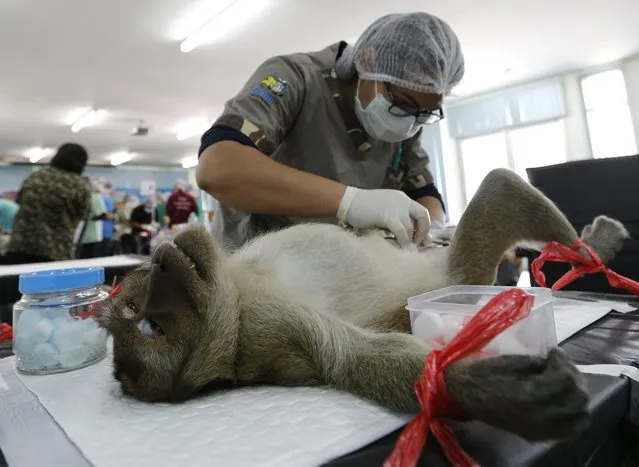
A Thai veterinarian sterilizes a monkey in a bid to control the birth rate of the monkey population in Hua Hin city, Prachuap Khiri Khan Province, Thailand, 15 July 2017. (Photo by Narong Sangnak/EPA/EFE)
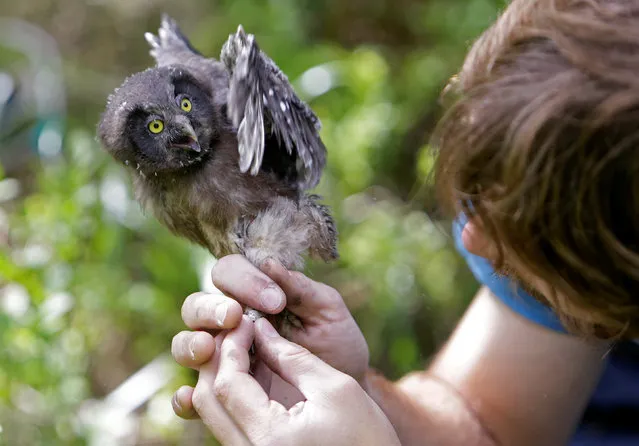
Scientist Jiri Sindelar checks a ring of a Boreal owl chick outside the “Smart Nest Box”, which allows the study of birds by using mounted cameras, in a forest near the village of Mikulov, Czech Republic, June 18, 2016. (Photo by David W. Cerny/Reuters)
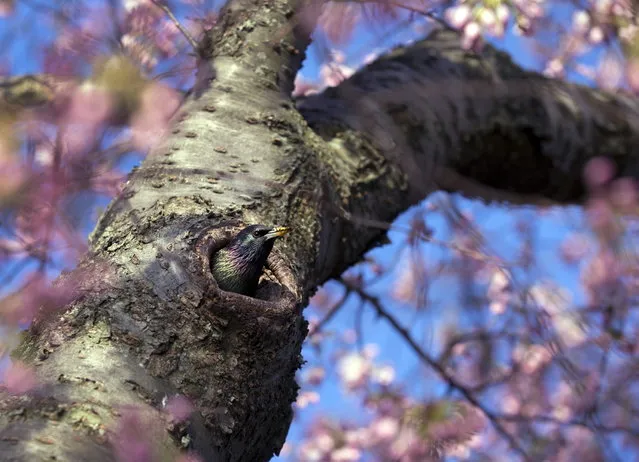
A nesting bird peeks out of the budding Japanese Yoshino cherry tree along the Tidal Basin in Washington, Sunday, April 7, 2013. Despite repeated predictions peak blossom time for the historic cherry trees is not yet here, but almost, almost. (Photo by Carolyn Kaster/AP Photo)
A TV cameraman drives into Usain Bolt of Jamaica after the men's 200m final during the Beijing 2015 IAAF World Championships at the National Stadium, also known as “Bird's Nest”, in Beijing, China, 27 August 2015. Bolt won the race. (Photo by Rolex Dela Pena/EPA)
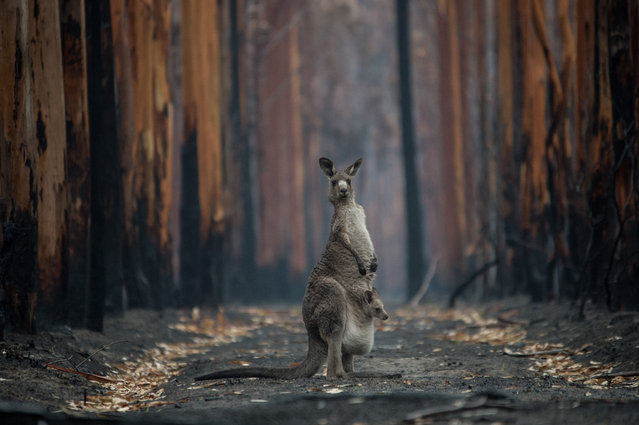
A kangaroo and joey are seen in a burnt forest on Kangaroo Island, south west of Adelaide on January 16, 2020. Australia’s continuing bushfire crisis has taken an enormous toll on wildlife, with huge numbers of mammals, birds, reptiles, insects and other species killed. (Photo by Jo-Anne McArthur/Weanimals)
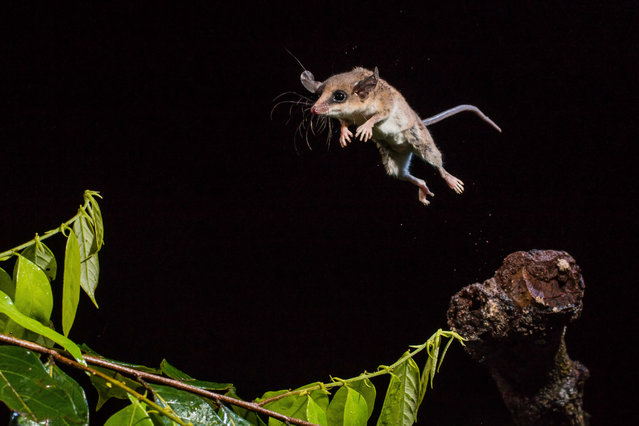
Tropical acrobatics by Adrià López Baucells in Manaus, Brazil. An unidentified South American marsupial, although the characteristic black markings on its face indicate it may be a mouse opossum. These small creatures are nocturnal and feed on bugs, fruit and bird eggs. (Photo by Adrià López Baucells/2019 Royal Society of Biology Photography Competition)
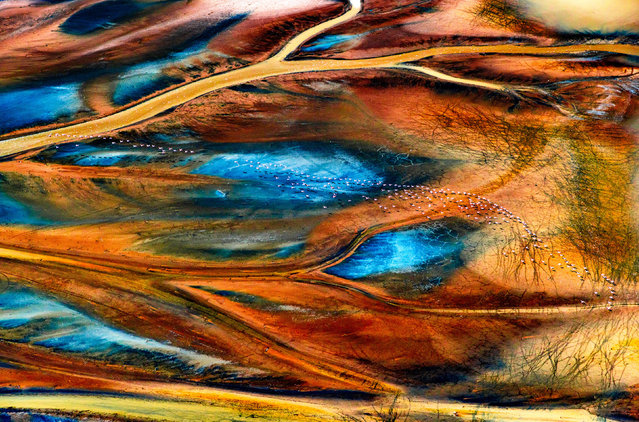
Hundreds of flamingos take flight in the Rift Valley in East Africa early September 2024. The birds gather in the region’s saline lakes to eat the blue-green algae that grows in abundance. The red-orange pigment in the algae is what gives them their distinctive pink plumage. They also use the site to breed. (Photo by Alexandre and Chloe Bes/Naturagency/Solent News)