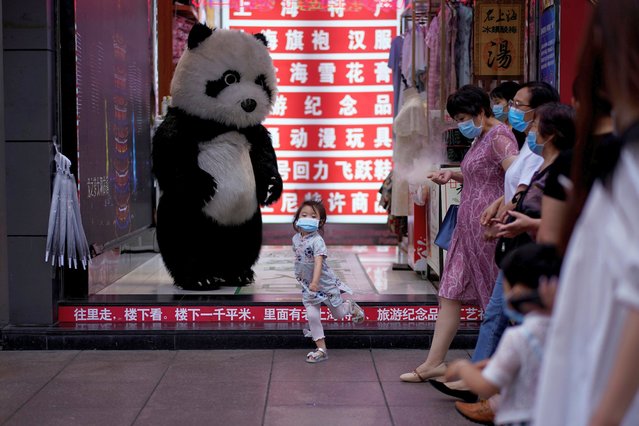
A little girl wearing a face mask dances in front of a toy panda at a shopping area in Shanghai, following the coronavirus disease (COVID-19) outbreak, China on June 16, 2020. (Photo by Aly Song/Reuters)
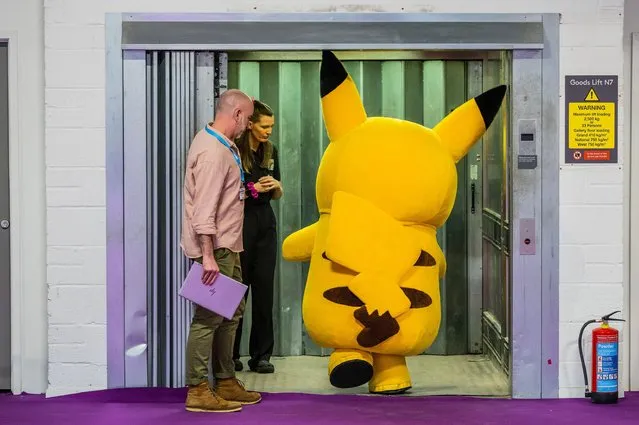
Piccacho, Pokemon passes the Hero toys and is guided into the goods lift in London, United Kingdom on January 24, 2023. (Photo by Guy Bell/Alamy Live News)
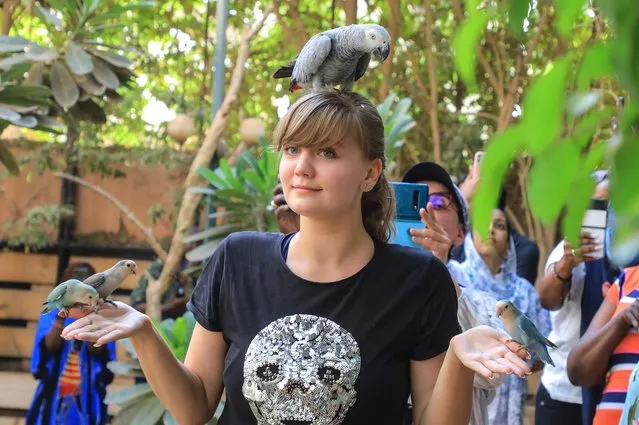
An undated handout photo obtained on May 14, 2022, from Khartoum's Marshall Nature Reserve for exotic birds, shows a visitor posing for pictures with some of the protected birds in the capital Khartoum. Tucked away east of Sudan's capital Khartoum, a sanctuary of lush green vegetation has been a haven for dozens of exotic birds from far and wide. (Photo by Khartoum Marshall Nature Reserve/AFP Photo)
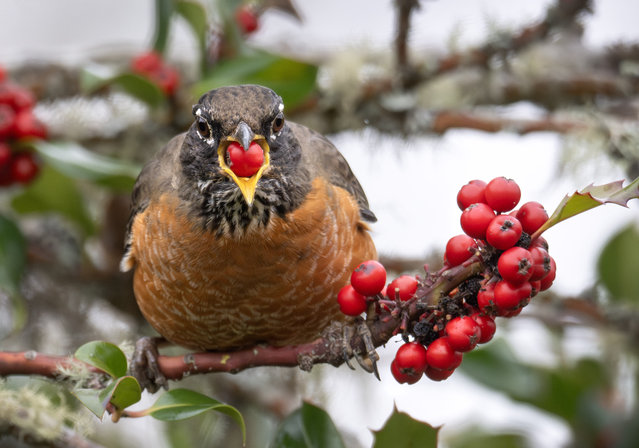
An American robin feeds on holly berries in a thicket near Elkton in southwestern Oregon on November 16, 2024. Many birds can safely consume holly berries, including blackbirds, redwings, and thrushes. There is an old wives tale that if you see a bird eating a berry, it is safe for humans to eat, but this is not true. Birds consume many plants that are poisonous to humans, holly berries included. (Photo by Robin Loznak/ZUMA Press Wire/Rex Features/Shutterstock)
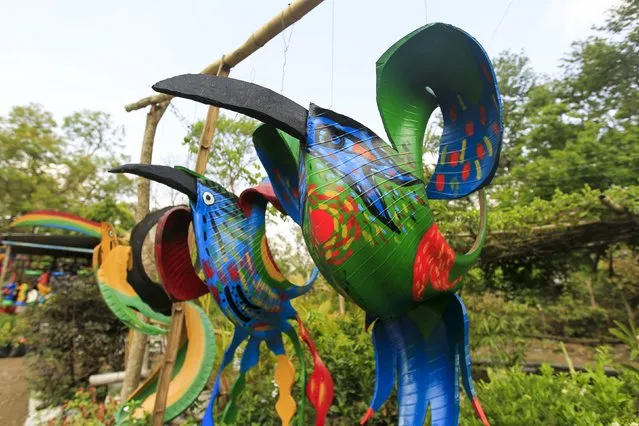
Birds made of recycled tires are displayed in a shop located on the Panamerican highway near Catarina town, May 7, 2015. Salazar recycles used tyres to make bird figurines and sofas to sell in his shop located on the Panamerican highway. (Photo by Oswaldo Rivas/Reuters)
A christmas teddy bear is wheeled along on a trolley at the Steiff stuffed toy factory on November 23, 2012 in Giengen an der Brenz, Germany. Founded by seamstress Margarethe Steiff in 1880, Steiff has been making stuffed teddy bears since the early 20th century ever since her nephew Richard Steiff exhibited the first commercially produced teddy bear in Europe in 1903. Teddy bears are among the most popular children's toys and the company is hoping for a strong Christmas season. (Photo by Thomas Niedermueller)