Loading...
Done
People take part in the “The Burial of the Sardine” funeral procession, which marks the end of carnival festivities, in Madrid, Spain, February 10, 2016. (Photo by Juan Medina/Reuters)

People take part in the “The Burial of the Sardine” funeral procession, which marks the end of carnival festivities, in Madrid, Spain, February 10, 2016. “Mourners” carry a coffin with a mock sardine through the streets to celebrate the countdown to Lent. Spanish painter Francisco de Goya's painting “El entierro de la sardina” (The Burial of the Sardine) was inspired by this tradition, which started in Madrid in the 18th century, around the time of Spanish King Carlos III. (Photo by Juan Medina/Reuters)
Details
11 Feb 2016 12:29:00
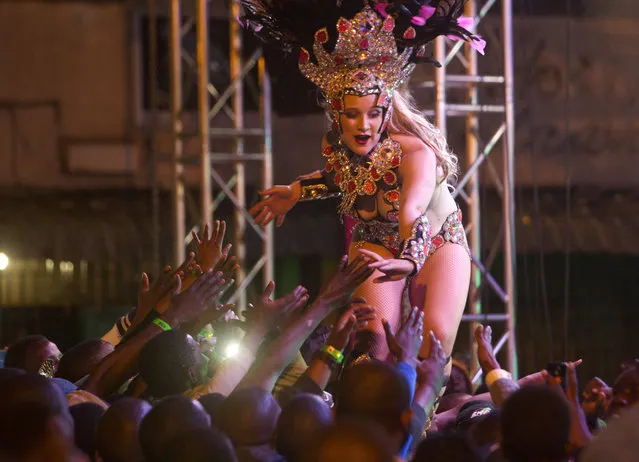
In this picture taken Friday, September 8, 2017, Brazilan Samba dancers perform on stage during the Harare International Carnival in the capital. (Photo by Tsvangirayi Mukwazhi/AP Photo)

In this picture taken Friday, September 8, 2017, Brazilan Samba dancers perform on stage during the Harare International Carnival in the capital. An international carnival aimed at boosting the local tourism industry has ended in economically troubled Zimbabwe. Some viewed the Harare festivities, which ended Sunday and featured artists and dancers from Brazil, Cuba, Egypt and elsewhere, as a relief from the struggle to get by in the southern African country. (Photo by Tsvangirayi Mukwazhi/AP Photo)
Details
14 Sep 2017 08:13:00
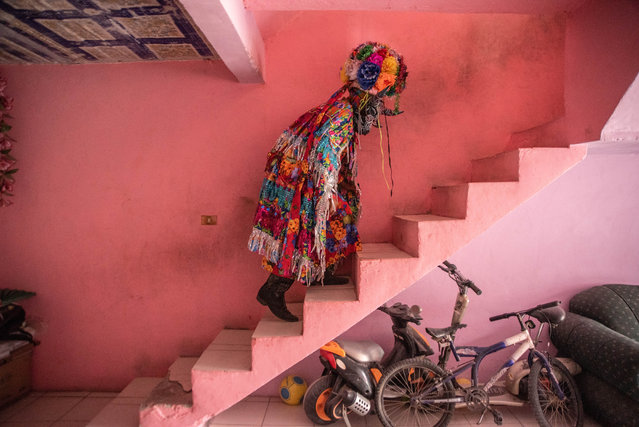
Inhabitants of the community of Coyolillo celebrate their Afro-descendant carnival in Veracruz, Mexico on February 25, 2020. This carnival has more than 100 years of history and is the heritage of the African workers who arrived in that area more than 300 years ago to work in the sugar cane fields. The event is known for the colourful robes, capes and animal masks – of bulls, deer, goats and cows – worn by participants. As such, the carnival is a unique expression of African-Mexican folk art. (Photo by Hector Adolfo Quintanar Perez/ZUMA Wire/Rex Features/Shutterstock)

Inhabitants of the community of Coyolillo celebrate their Afro-descendant carnival in Veracruz, Mexico on February 25, 2020. This carnival has more than 100 years of history and is the heritage of the African workers who arrived in that area more than 300 years ago to work in the sugar cane fields. (Photo by Hector Adolfo Quintanar Perez/ZUMA Wire/Rex Features/Shutterstock)
Details
05 Mar 2020 00:03:00
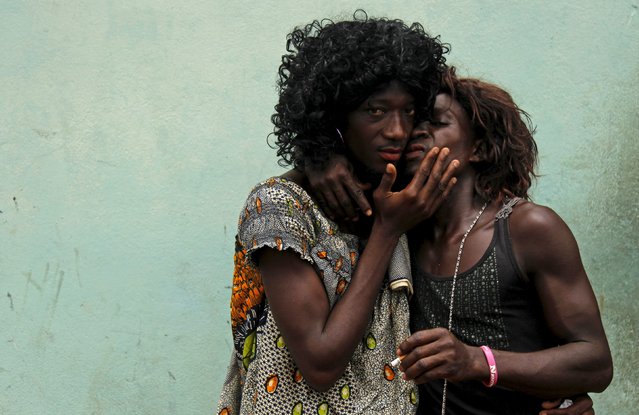
Men dressed as women kiss as they take part in a parade during the Popo (Mask) Carnival of Bonoua, east of Abidjan, April 9, 2016. (Photo by Luc Gnago/Reuters)

Men dressed as women kiss as they take part in a parade during the Popo (Mask) Carnival of Bonoua, east of Abidjan, April 9, 2016. (Photo by Luc Gnago/Reuters)
Details
11 Apr 2016 10:50:00
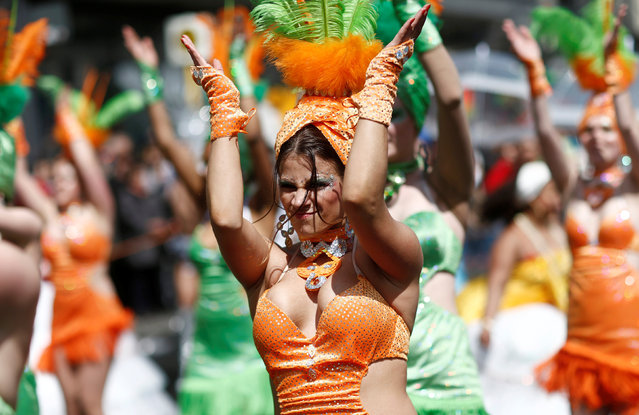
Dancers take part in the Karneval der Kulturen (Carnival of Cultures) street parade of ethnic minorities in Berlin, Germany, May 15, 2016. (Photo by Hannibal Hanschke/Reuters)

Dancers take part in the Karneval der Kulturen (Carnival of Cultures) street parade of ethnic minorities in Berlin, Germany, May 15, 2016. (Photo by Hannibal Hanschke/Reuters)
Details
16 May 2016 10:44:00
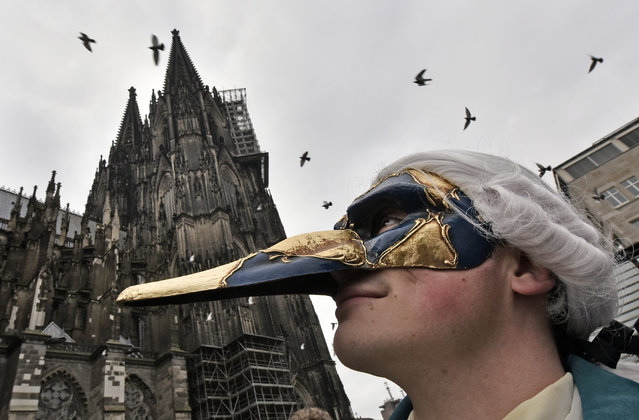
A dressed reveler looks up to the famous cathedral in Cologne, Germany, Wednesday, November 11, 2015. Thousands of carnival supporters celebrate the traditional beginning of the carnival season in Germany. (Photo by Martin Meissner/AP Photo)

A dressed reveler looks up to the famous cathedral in Cologne, Germany, Wednesday, November 11, 2015. Thousands of carnival supporters celebrate the traditional beginning of the carnival season in Germany. (Photo by Martin Meissner/AP Photo)
Details
14 Nov 2015 08:03:00
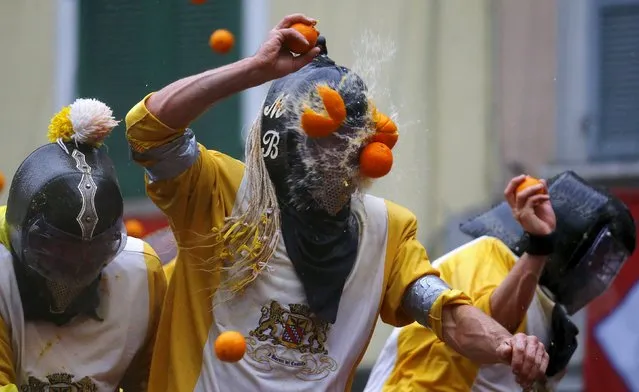
A participant is hit by an orange during an annual carnival battle in the northern Italian town of Ivrea February 7, 2016. Dressed up as Middle Age kings' guards, a group of men ride in a horse-drawn carriage and pelt “foot soldiers” with oranges as thousands of people gather to re-enact a Middle Age battle when the townsfolk of Ivrea overthrew an evil king. In a strange twist, instead of swords and cross bows, these days the weapons of choice are oranges. (Photo by Stefano Rellandini/Reuters)

A participant is hit by an orange during an annual carnival battle in the northern Italian town of Ivrea February 7, 2016. Dressed up as Middle Age kings' guards, a group of men ride in a horse-drawn carriage and pelt “foot soldiers” with oranges as thousands of people gather to re-enact a Middle Age battle when the townsfolk of Ivrea overthrew an evil king. In a strange twist, instead of swords and cross bows, these days the weapons of choice are oranges. (Photo by Stefano Rellandini/Reuters)
Details
08 Feb 2016 12:03:00
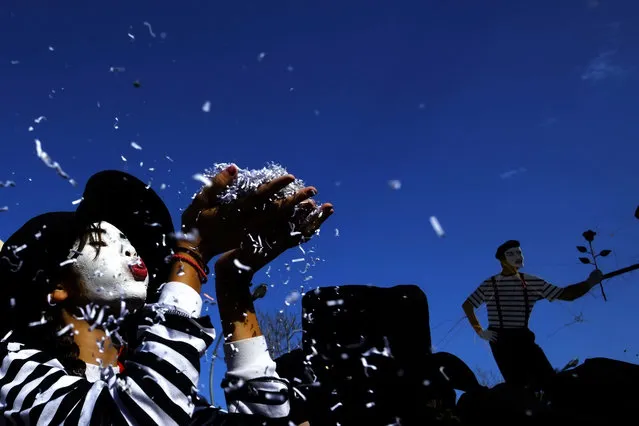
A child blowing confetti from her hands during a Carnival parade in Cyprus' coastal city of Limassol, Sunday, March 13, 2016. Limassol's long-established parade is Cyprus' biggest and most famous, drawing revelers from across the east Mediterranean island. This year's parade drew huge crowds as people sought lighthearted reprieve from the bailed-out country's recession. The parade marks the start of the 40-day fasting period of Lent in the run-up to the Orthodox Christian Easter. (Photo by Petros Karadjias/AP Photo)

A child blowing confetti from her hands during a Carnival parade in Cyprus' coastal city of Limassol, Sunday, March 13, 2016. Limassol's long-established parade is Cyprus' biggest and most famous, drawing revelers from across the east Mediterranean island. This year's parade drew huge crowds as people sought lighthearted reprieve from the bailed-out country's recession. The parade marks the start of the 40-day fasting period of Lent in the run-up to the Orthodox Christian Easter. (Photo by Petros Karadjias/AP Photo)
Details
14 Mar 2016 10:21:00