Loading...
Done
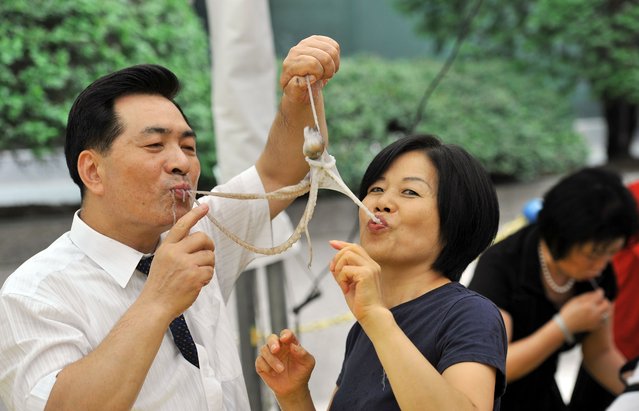
A South Korean man and a woman eat a live octopus during an event to promote a local food festival in Seoul on September 12, 2013. (Photo by Jung Yeon-Je/AFP Photo)

Live octopus is a delicacy in South Korea but is a known choking hazard, since the still-moving suction cups can cause tentacle pieces to stick in a person's throat. A baby octopus is often consumed whole, while larger varieties are cut up and the still-wriggling tentacles eaten with a splash of sesame oil. Photo: A South Korean man and a woman eat a live octopus during an event to promote a local food festival in Seoul on September 12, 2013. (Photo by Jung Yeon-Je/AFP Photo)
Details
13 Sep 2013 09:40:00
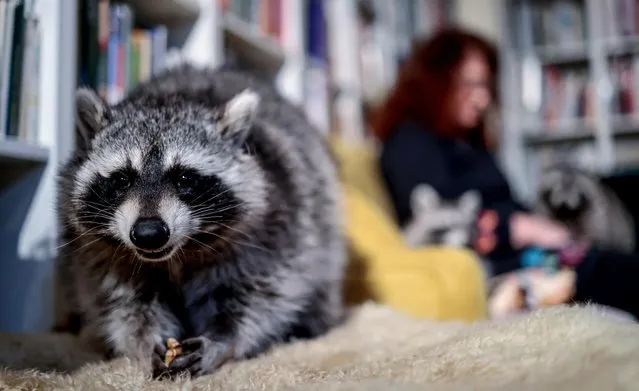
Raccoon Fritzi eats at the home of veterinarian Mathilde Laininger in Berlin, Germany, January 27, 2022. She cares for four raccoons that can no longer be released into the wild. Raccoon Fritzi has an Instagram account with ten thousand followers. (Photo by Hannibal Hanschke/Reuters)

Raccoon Fritzi eats at the home of veterinarian Mathilde Laininger in Berlin, Germany, January 27, 2022. She cares for four raccoons that can no longer be released into the wild. Raccoon Fritzi has an Instagram account with ten thousand followers. (Photo by Hannibal Hanschke/Reuters)
Details
13 Feb 2022 05:18:00
Hundreds of flamingos take flight in the Rift Valley in East Africa early September 2024. The birds gather in the region’s saline lakes to eat the blue-green algae that grows in abundance. The red-orange pigment in the algae is what gives them their distinctive pink plumage. They also use the site to breed. (Photo by Alexandre and Chloe Bes/Naturagency/Solent News)

Hundreds of flamingos take flight in the Rift Valley in East Africa early September 2024. The birds gather in the region’s saline lakes to eat the blue-green algae that grows in abundance. The red-orange pigment in the algae is what gives them their distinctive pink plumage. They also use the site to breed. (Photo by Alexandre and Chloe Bes/Naturagency/Solent News)
Details
23 Sep 2024 02:54:00
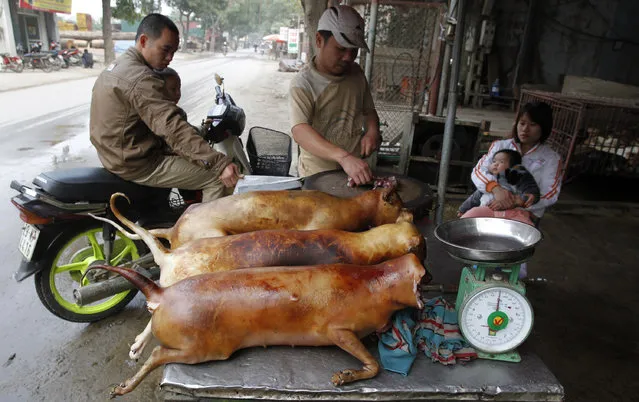
A vendor (C) cuts slaughtered dogs for sale at his roadside stall in Duong Noi village, outside Hanoi December 16, 2011. While animal rights activists have condemned eating dog meat as cruel treatment of the animals, it is still an accepted popular delicacy for some Vietnamese, as well in some other Asian countries. (Photo by Reuters/Kham)

A vendor (C) cuts slaughtered dogs for sale at his roadside stall in Duong Noi village, outside Hanoi December 16, 2011. While animal rights activists have condemned eating dog meat as cruel treatment of the animals, it is still an accepted popular delicacy for some Vietnamese, as well in some other Asian countries. Duong Noi is well-known as a dog-meat village, where hundreds of dogs are killed each day for sale as popular traditional food. Dog-eating as a custom is rooted in Vietnam and was developed as a result of poverty. One kilogram of dog meat costs about 130,000 dongs ($6.2). (Photo by Reuters/Kham)
Details
16 Jul 2013 11:40:00
This picture taken on January 25, 2015 shows a participant taking part in an ice water challenge in Zhangjiajie, central China's Hunan province. Participants were required to stay in an ice pond, holding an ice block while eating ice-cream with an electric fan blowing at them. (Photo by AFP Photo/Stringer)

This picture taken on January 25, 2015 shows a participant taking part in an ice water challenge in Zhangjiajie, central China's Hunan province. Participants were required to stay in an ice pond, holding an ice block while eating ice-cream with an electric fan blowing at them. (Photo by AFP Photo/Stringer)
Details
31 Jan 2015 12:58:00
A person jumps on a trampoline before Nathan's Famous Fourth of July International Hot Dog-Eating Contest at Coney Island in Brooklyn, New York City, U.S., July 4, 2017. (Photo by Andrew Kelly/Reuters)

A person jumps on a trampoline before Nathan's Famous Fourth of July International Hot Dog-Eating Contest at Coney Island in Brooklyn, New York City, U.S., July 4, 2017. (Photo by Andrew Kelly/Reuters)
Details
05 Jul 2017 06:28:00
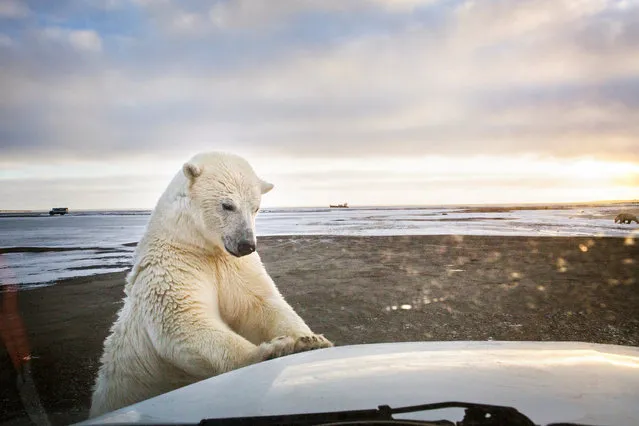
In late summer and early autumn polar bears flock to the native village of Kaktovik in the Alaskan Arctic to eat at “the boneyard” – the remains of whales annually hunted by the community. (Photo by Katie Orlinsky/Getty Images)

A selection of work by four photojournalists who have won grants of $10,000 and editorial support from the agency. Here: “Chasing Winter” by Katie Orlinksy. In late summer and early autumn polar bears flock to the native village of Kaktovik in the Alaskan Arctic to eat at “the boneyard” – the remains of whales annually hunted by the community. (Photo by Katie Orlinsky/Getty Images)
Details
02 Sep 2016 13:55:00
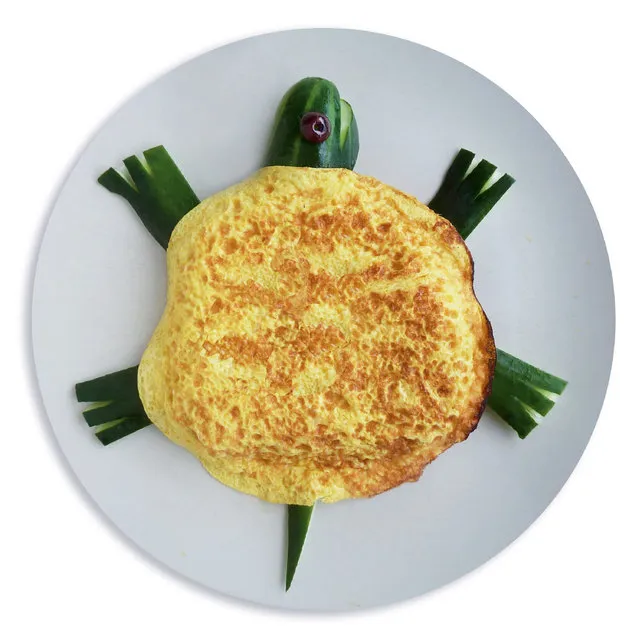
Egg, cucumber, olive. (Photo by Bill and Claire Wurtzel/Welcome Books)

Some creations from the new “Funny Food Made Easy” book by Bill and Claire Wurtzel. “Inspiring kids to eat healthy foods with creative works of plate art and easy-to-follow instructions and illustrations. Through finished plate art, detailed step-by-step illustrations, recipes, and tips, Funny Food Made Easy provides all you and your kids need to make, eat, and enjoy healthy breakfasts, lunches, and snacks” – roughly speaking so. Here: Egg, cucumber, olive. (Photo by Bill and Claire Wurtzel/Welcome Books)
Details
05 Sep 2016 11:03:00