Loading...
Done
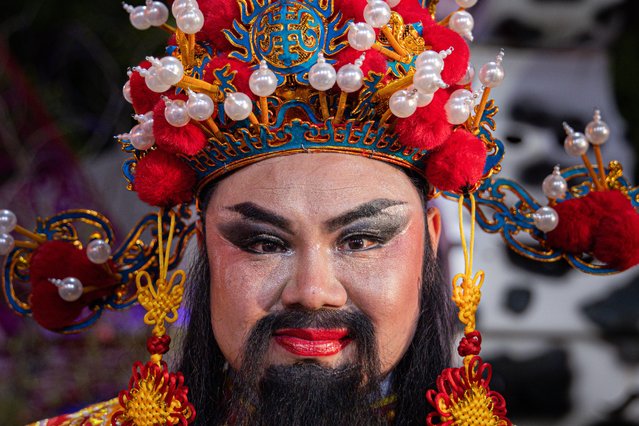
God of Wealth arrives at the Lunar New Year celebration at Thean Hou Temple on February 10, 2024, in Kuala Lumpur, Malaysia. Chinese New Year in Malaysia is marked by family gatherings, festive adornments and traditional rituals embodying a spirit of hope and renewal for the year ahead, and aims to bring joy and prosperity to all while fostering a sense of unity and hope for a successful Year of the Dragon. (Photo by Annice Lyn/Getty Images)

God of Wealth arrives at the Lunar New Year celebration at Thean Hou Temple on February 10, 2024, in Kuala Lumpur, Malaysia. Chinese New Year in Malaysia is marked by family gatherings, festive adornments and traditional rituals embodying a spirit of hope and renewal for the year ahead, and aims to bring joy and prosperity to all while fostering a sense of unity and hope for a successful Year of the Dragon. (Photo by Annice Lyn/Getty Images)
Details
18 May 2024 00:19:00
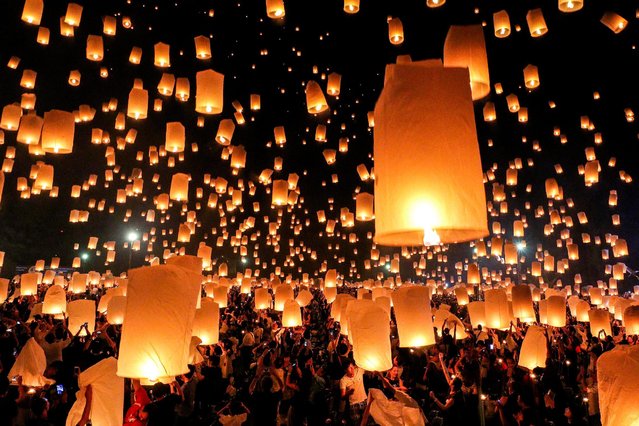
People release floating lanterns during the festival of Yee Peng in the northern capital of Chiang Mai, Thailand November 14, 2016. Yi Peng refers to the full moon day in the second month according to the Lanna lunar calendar (the twelfth month according to the Thai lunar calendar). Swarms of Lanna-style sky lanterns are launched into the air where they resemble large shoals of giant fluorescent jellyfish gracefully floating through the sky. The festival is meant as a time for tham bun, to make merit. Khom loi are made from a thin fabric, such as rice paper, stretched over a bamboo or wire frame, to which a candle or fuel cell is attached. When the fuel cell is lit, the resulting hot air is trapped inside the lantern and creates enough lift for the khom loi to float up into the sky. (Photo by Athit Perawongmetha/Reuters)

People release floating lanterns during the festival of Yee Peng in the northern capital of Chiang Mai, Thailand November 14, 2016. Yi Peng refers to the full moon day in the second month according to the Lanna lunar calendar (the twelfth month according to the Thai lunar calendar). Swarms of Lanna-style sky lanterns are launched into the air where they resemble large shoals of giant fluorescent jellyfish gracefully floating through the sky. The festival is meant as a time for tham bun, to make merit. Khom loi are made from a thin fabric, such as rice paper, stretched over a bamboo or wire frame, to which a candle or fuel cell is attached. When the fuel cell is lit, the resulting hot air is trapped inside the lantern and creates enough lift for the khom loi to float up into the sky. (Photo by Athit Perawongmetha/Reuters)
Details
15 Nov 2016 11:54:00


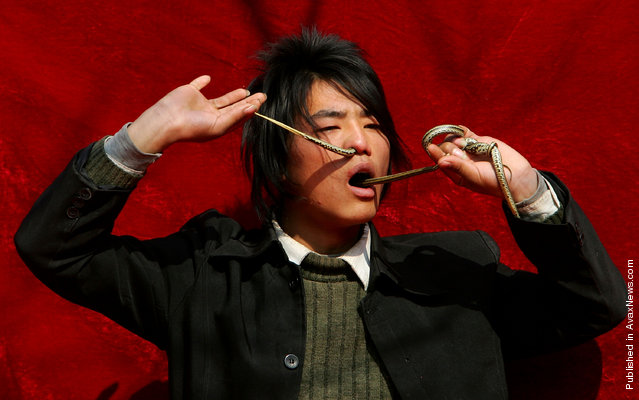
A Chinese snake charmer performs at a temple fair to mark Chinese New Year February 19, 2007 in Beijing, China. Chinese worldwide are celebrating the Chinese Lunar New Year of the Pig. (Photo by Guang Niu/Getty Images)
Details
18 Mar 2011 11:27:00
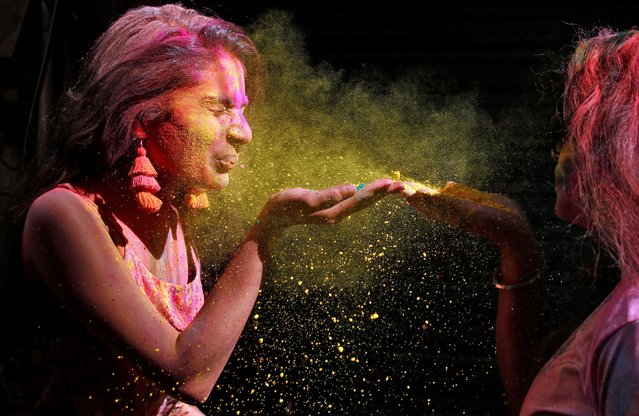
Women blow coloured power during Holi celebrations in Chennai, India, March 10, 2020. (Photo by P. Ravikumar/Reuters)

Women blow coloured power during Holi celebrations in Chennai, India, March 10, 2020. Holi is observed in India at the end of the winter season on the last full moon of the lunar month. (Photo by P. Ravikumar/Reuters)
Details
12 Mar 2020 00:01:00
China Marks Day Of Vernal Equinox

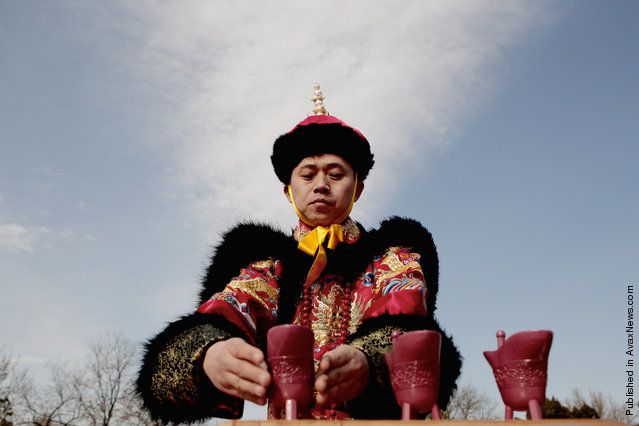
A performer plays the role of the Emperor during a re-enactment of an ancient ceremony of Qing Dynasty Emperors praying at Ritan Park which holds the ceremony of 'fete day'' to mark the first day of spring on March 21st, 2011 in Beijing, China. March 21st is the Day of Vernal Equinox according to the Chinese lunar calender. (Photo by Lintao Zhang/Getty Images)
Details
21 Mar 2011 19:07:00
China Celebrates The Lantern Festival

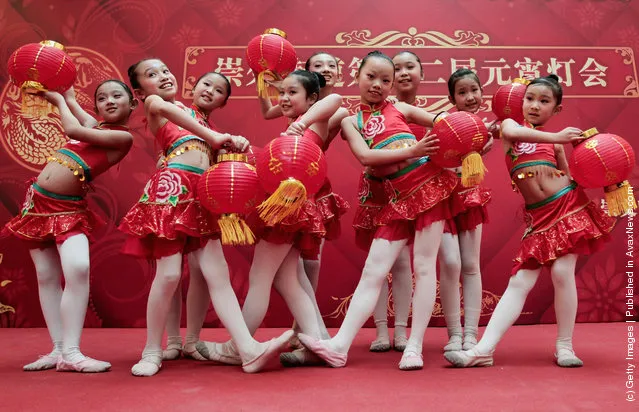
Young dancers perform at a preview show for the Chinese Lantern Festival which falls on February 6 and traditionally marks the end of the Lunar New Year celebrations on February 3, 2012 in Beijing, China.The Lantern Festival also known as the Yuanxiao Festival or Shangyuan Festival in China.(Photo by Lintao Zhang/Getty Images)
Details
04 Feb 2012 13:02:00
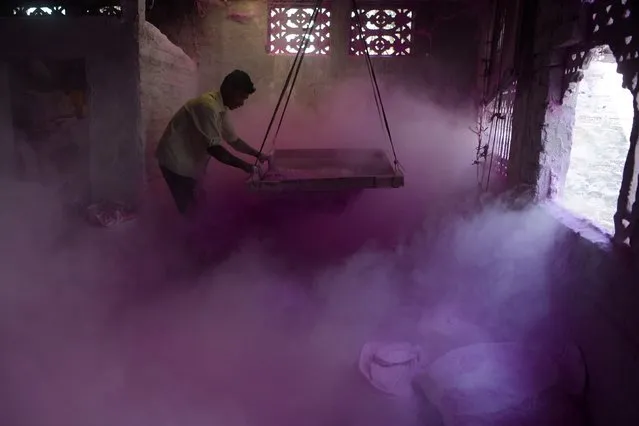
An Indian labourer sifts coloured powder, known as “gulal”, to be used during the forthcoming spring festival of Holi, inside a factory at Fulbari village on the outskirts of Siliguri on March 6, 2017. Holi, the popular Hindu spring festival of colours is observed in India at the end of the winter season on the last full moon of the lunar month, and will be celebrated on March 13 this year. (Photo by Diptendu Dutta/AFP Photo)

An Indian labourer sifts coloured powder, known as “gulal”, to be used during the forthcoming spring festival of Holi, inside a factory at Fulbari village on the outskirts of Siliguri on March 6, 2017. Holi, the popular Hindu spring festival of colours is observed in India at the end of the winter season on the last full moon of the lunar month, and will be celebrated on March 13 this year. (Photo by Diptendu Dutta/AFP Photo)
Details
08 Mar 2017 00:04:00
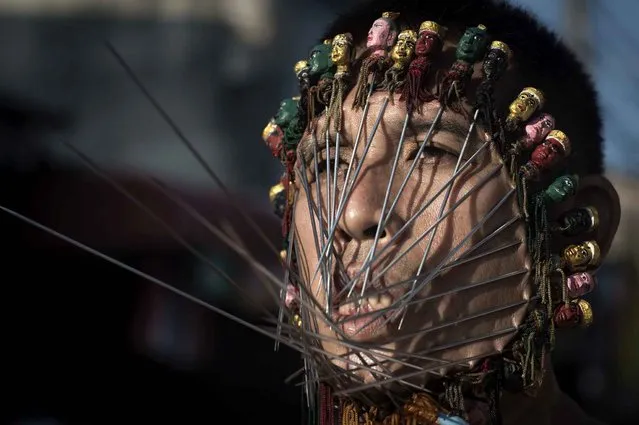
A devotee of the Chinese Jui Tui Shrine has his face pierced with metal rods during a street procession during the annual Vegetarian Festival in the southern Thai town of Phuket on October 19, 2015. During the festival, which begins on the first evening of the ninth lunar month and lasts nine days, religious devotees slash themselves with swords, pierce their cheeks with sharp objects and commit other painful acts to purify themselves, taking on the sins of the community. (Photo by Nicolas Asfouri/AFP Photo)

A devotee of the Chinese Jui Tui Shrine has his face pierced with metal rods during a street procession during the annual Vegetarian Festival in the southern Thai town of Phuket on October 19, 2015. During the festival, which begins on the first evening of the ninth lunar month and lasts nine days, religious devotees slash themselves with swords, pierce their cheeks with sharp objects and commit other painful acts to purify themselves, taking on the sins of the community. (Photo by Nicolas Asfouri/AFP Photo)
Details
21 Oct 2015 08:05:00