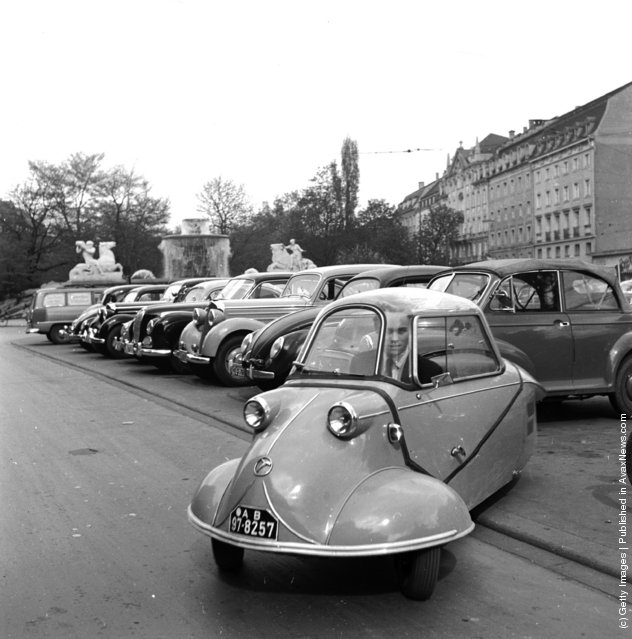
A three wheeled “cabin” scooter manufactured by German aircraft engineers Messerschmitt & Co at factories in Regensburg. (Photo by Hans Enzwieser/BIPs/Getty Images). 1955
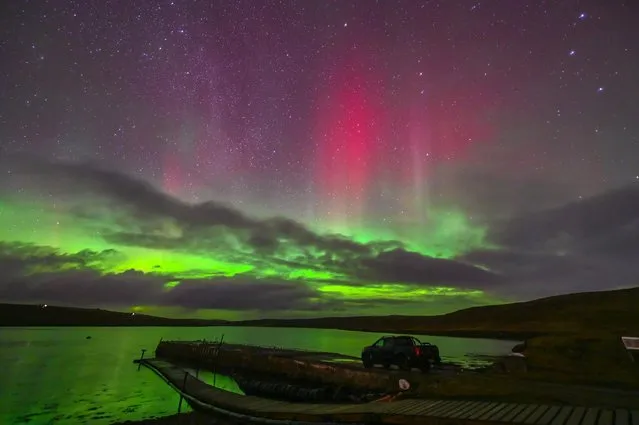
The northern lights as seen from from Yell in the Shetland Islands, Scotland on January 15, 2023. The aurora borealis is caused by collisions between electrically charged particles released from the sun that enter the Earth’s atmosphere and collide with gases such as oxygen and nitrogen. (Photo by Ryan Nisbet/Capture Media Agency)
A family member of a torch relay runner wearing a protective mask uses a portable electric fan to cool down as she attends a torch kiss event during Tokyo 2020 Olympic torch relay celebration at Shinagawa Central Park in Tokyo, Japan, July 21, 2021. (Photo by Issei Kato/Reuters)
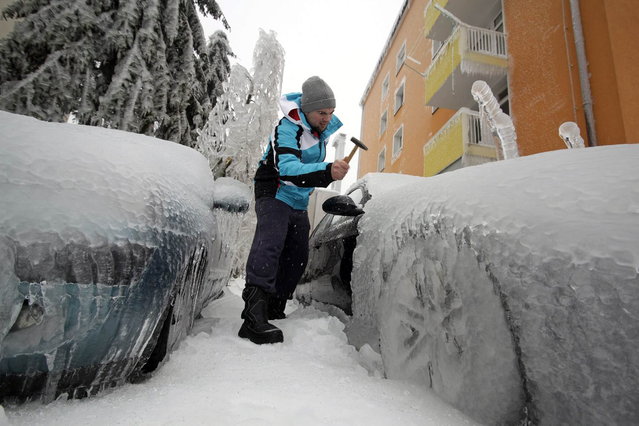
A man removes ice from an ice-covered car with a hammer in Postojna, Slovenia, on February 5, 2014. Cars stand entombed in a crystal-like casing near the deserted railway station in Postojna. Trees and electricity pylons lie felled in the snow by the sheer weight of ice enveloping them. (Photo by Srdjan Zivulovic/Reuters)
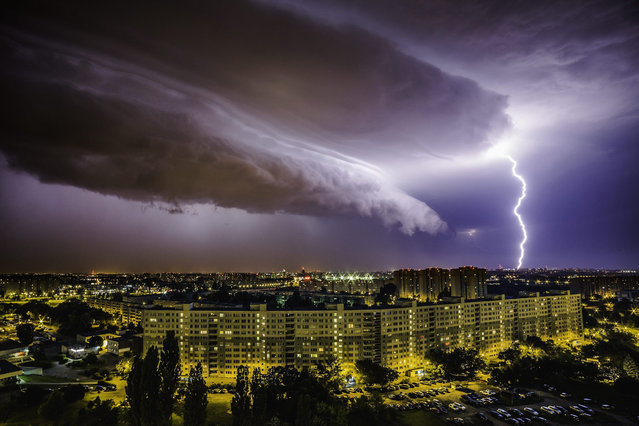
A picture made available on 08 July 2015 showsa lightning strikes during a heavy storm over Poznan in the night of 07 July 2015. Severe storms passed last night over Poland causing lots of damages to buildings, trees, electricity and railway tractions. (Photo by Lukasz Ogrodowczyk/EPA)
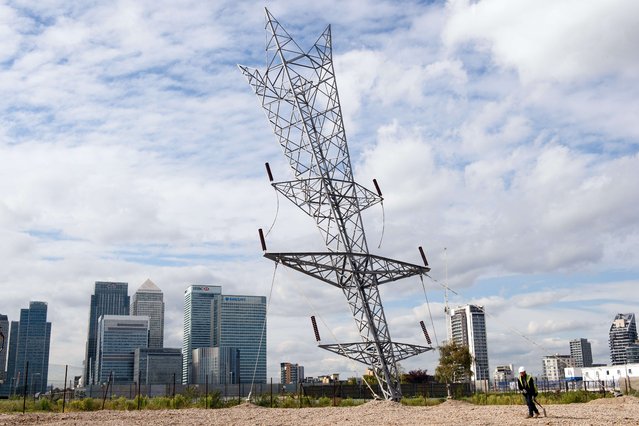
A workman smooths out the gravel near the base of British artist Alex Chinneck' latest sculpture “A bullet from a shooting star” on the Greenwich Peninsula in London on September 17, 2015. The 35-metre tall, upside-down electricity pylon overlooks the Canary Wharf financial district. (Photo by Leon Neal/AFP Photo)
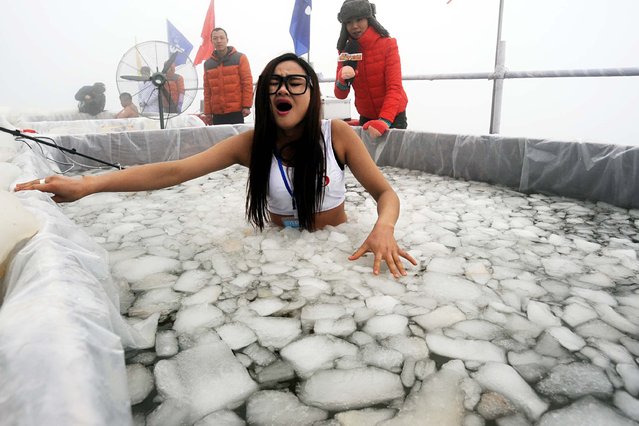
This picture taken on January 25, 2015 shows a participant taking part in an ice water challenge in Zhangjiajie, central China's Hunan province. Participants were required to stay in an ice pond, holding an ice block while eating ice-cream with an electric fan blowing at them. (Photo by AFP Photo/Stringer)
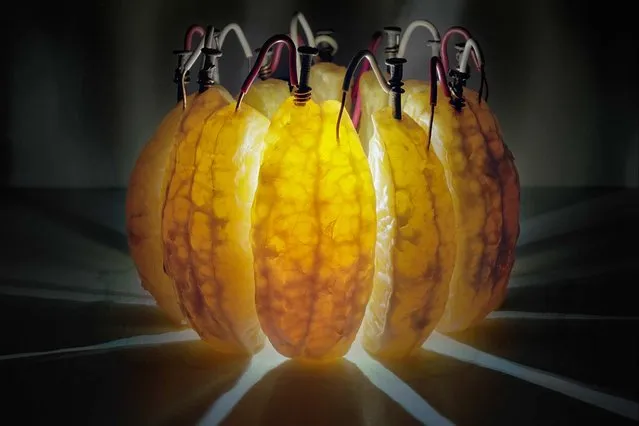
Wedges of an orange generate enough current and electrical juice – 3.5 volts – to power an LED. The fruit’s citric acid helps electrons flow from galvanized nails to copper wire in this 14-hour exposure. This image was published in September’s Visions of Earth, a trio of photos that appear in each issue of National Geographic. (Photo by Caleb Charland/National Geographic)