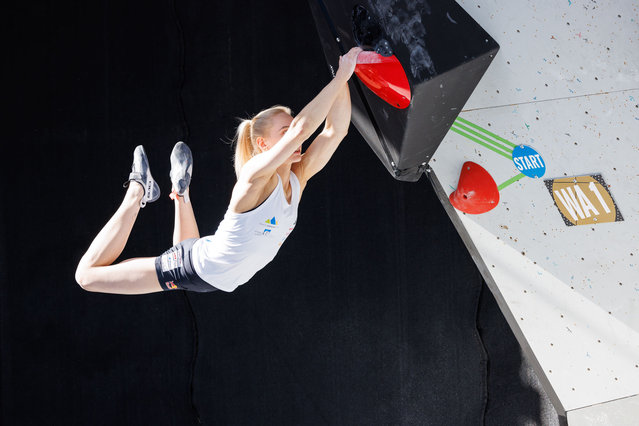
Janja Garnbret of Slovenia competes during the women's boulder qualification of the IFSC World Cup Innsbruck 2024 on June 26, 2024 in Innsbruck, Austria. (Photo by Marco Kost/Getty Images)
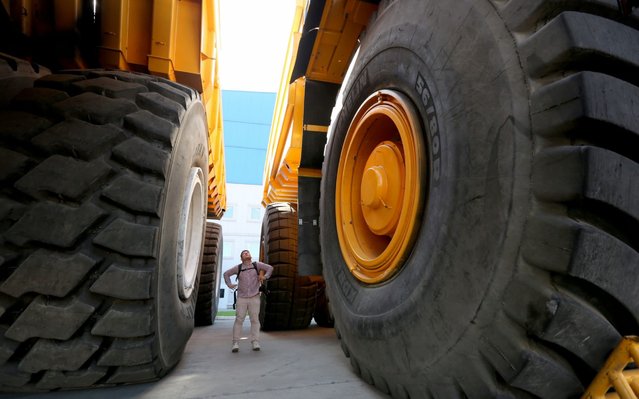
A visitor is dwared between the wheels of BelAZ 450-ton dump truck (L) and BelAZ 360-ton dump truck (R) at the plant of Belarusian manufacturer of heavy trucks and equipment for earthmoving, BelAZ, in Zhodino, some 55 km from Minsk, Belarus, 27 August 2019. The company mostly delivers its products to CIS mining companies, mainly from Russia and Ukraine. (Photo by Tatyana Zenkovich/EPA/EFE/Rex Features/Shutterstock)
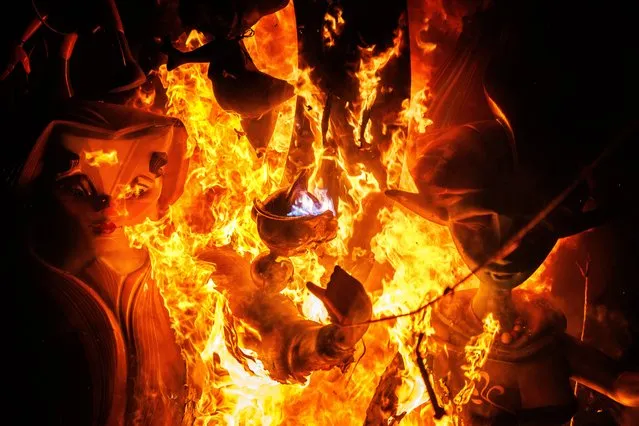
Papier-mache sculptures, also known as “ninots”, burn during the “Nit de la Crema” (Fire Night) of the Fallas Festival in Valencia, eastern Spain, 19 March 2024. Fallas is a fortnight-long fiesta in which installations of parodic papier-mache, cardboard, and wooden sculptures are traditionally burnt every year on the last day of the event in the so-called “Crema” to end the festivities. (Photo by Biel Alino/EPA/EFE)
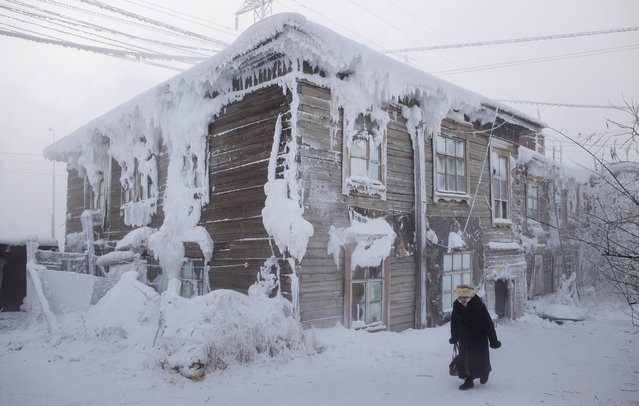
Yakutsk, with a population of around 270,000, holds its own title: that of the coldest city on Earth. Here: Frost-encrusted house in the city centre. (Photo by Amos Chapple/Courtesy Images/RFE/RL)
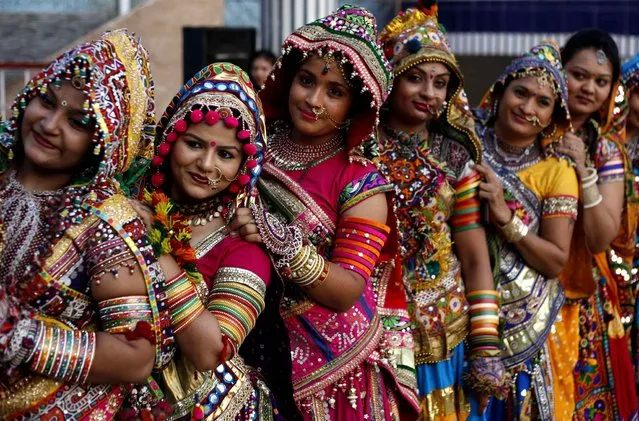
Indian girls in traditional attire pose for photographs as they practice the Garba, the traditional dance of Gujarat state, ahead of Navratri festival in Ahmadabad, India, Saturday, October 3, 2015. Navratri or nine night festival will begin on October 13. (Photo by Ajit Solanki/AP Photo)
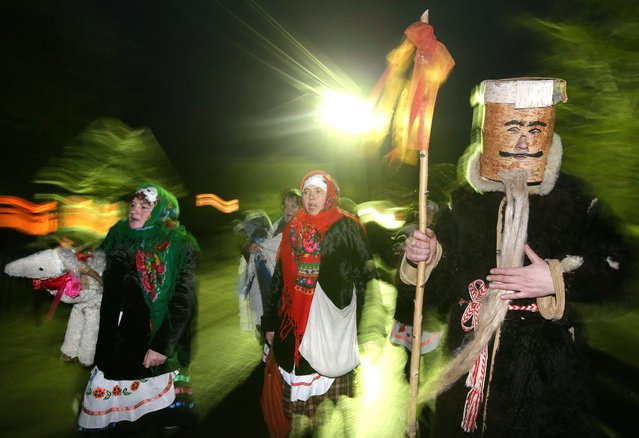
Belarussians in costumes sing songs during the traditional rite of Shchadrets (Schedry vecher or Generous Eve) in the village of Osovo, some 190 km from Minsk, Belarus, 13 January 2015. Shchadrets is a Belarusian folk holiday celebrated on the New Year's Eve in accordance with the Julian calendar (Old New Year). The holiday is similar to Koliady, when youth in costumes walk from house to house singing holiday songs, performing, and asking for a reward afterwards. (Photo by Tatyana Zenkovich/EPA)
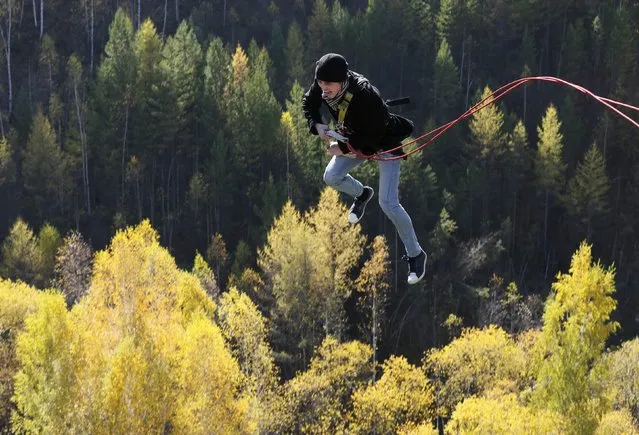
A member of the “Exit Point” amateur rope-jumping group jumps from a 44-metre high (144-feet high) waterpipe bridge in the Siberian Taiga area outside Krasnoyarsk, September 28, 2014. Fans of rope-jumping, a kind of extreme sport involving a jump from a high point using an advanced system of amortization including mountaineering and rope safety equipment, attended the Golden Autumn group's jumping season. (Photo by Ilya Naymushin/Reuters)
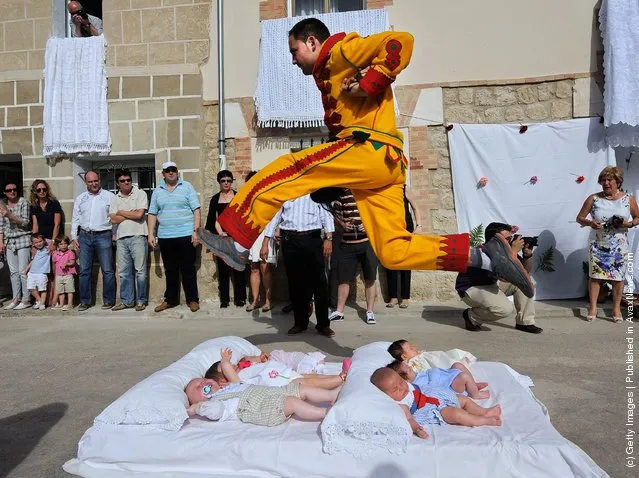
“Baby jumping (El Colacho) is a traditional Spanish practice dating back to 1620 that takes place annually to celebrate the Catholic feast of Corpus Christi in the village of Castrillo de Murcia near Burgos. During the act – known as El Salto del Colacho (the devil's jump) or simply El Colacho – men dressed as the Devil (known as the Colacho) jump over babies born during the previous twelve months of the year who lie on mattresses in the street. ... The festival has been rated as one of the most dangerous in the world”. – Wikipedia
Photo: A man representing the devil leaps over babies during the festival of El Colacho on June 26, 2011 in Castrillo de Murcia near Burgos, Spain. The festival, held on the first Sunday after Corpus Cristi, represents the devil taking away original sin from the newly born babies by leaping over them. (Photo by Denis Doyle/Getty Images)