Loading...
Done
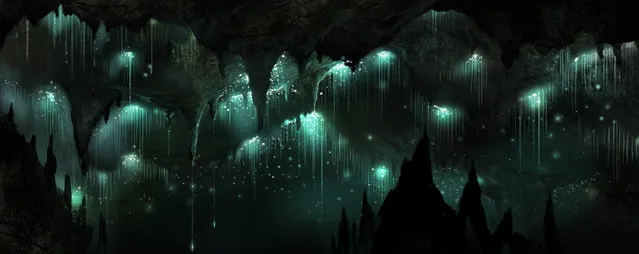
Waitomo Glowworm Caves New Zealand

The Waitomo Glowworm Caves attraction is a cave at Waitomo on the North Island of New Zealand, known for its population of glowworms, Arachnocampa luminosa. This species is found exclusively in New Zealand. They are around the size of an average mosquito. This cave is part of the Waitomo Caves system that includes the Ruakuri Cave and the Aranui Cave.
Details
12 May 2014 09:55:00
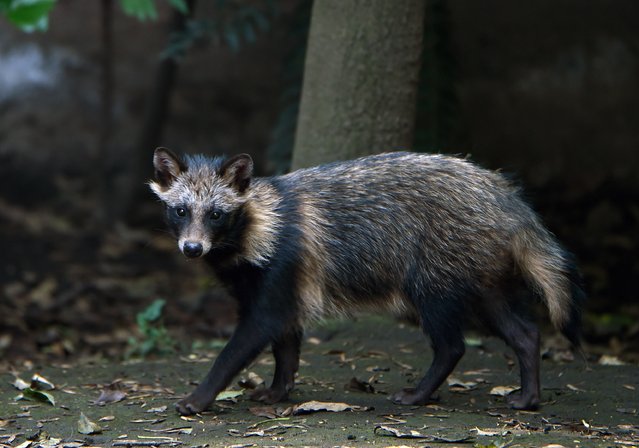
View of a raccoon dog or Tanuki (Nyctereutes procyonoides) at the Chapultpec Zoo in Mexico City on August 06, 2015. (Photo by Alfredo Estrella/AFP Photo)

View of a raccoon dog or Tanuki (Nyctereutes procyonoides) at the Chapultpec Zoo in Mexico City on August 06, 2015. This species is native from Japan and China. (Photo by Alfredo Estrella/AFP Photo)
Details
05 Mar 2016 11:37:00
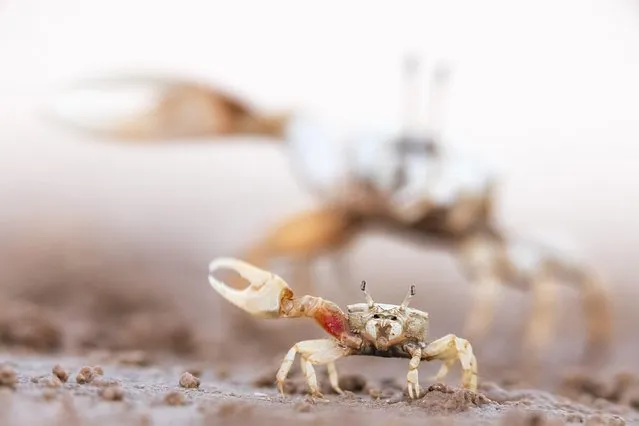
A young male fiddler crab is dwarfed by an older male of the same species, looming behind it at Morua estuary, in the Gulf of California, Mexico on January 4, 2022. Whereas female fiddler crabs have small claws of equal sizes, the males’ pincers can vary in size, with the small one used to pick up food and the larger to impress females. (Photo by Claudio Contreras/Solent News)

A young male fiddler crab is dwarfed by an older male of the same species, looming behind it at Morua estuary, in the Gulf of California, Mexico on January 4, 2022. Whereas female fiddler crabs have small claws of equal sizes, the males’ pincers can vary in size, with the small one used to pick up food and the larger to impress females. (Photo by Claudio Contreras/Solent News)
Details
16 Jan 2022 03:43:00
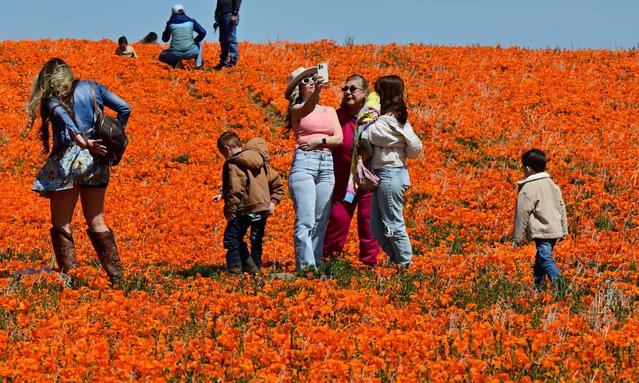
People visit the Antelope Valley California Poppy Reserve in Lancaster, California, to view the flowers blooming on April 6, 2023. California’s biologically diverse landscapes are home to more than 7,000 species of native plants, and the California Poppy, also known as golden poppy, a flowering plant native to the United States and Mexico became the official state flower in 1903. (Photo by Frederic J. Brown/AFP Photo)

People visit the Antelope Valley California Poppy Reserve in Lancaster, California, to view the flowers blooming on April 6, 2023. California’s biologically diverse landscapes are home to more than 7,000 species of native plants, and the California Poppy, also known as golden poppy, a flowering plant native to the United States and Mexico became the official state flower in 1903. (Photo by Frederic J. Brown/AFP Photo)
Details
14 Apr 2023 02:37:00
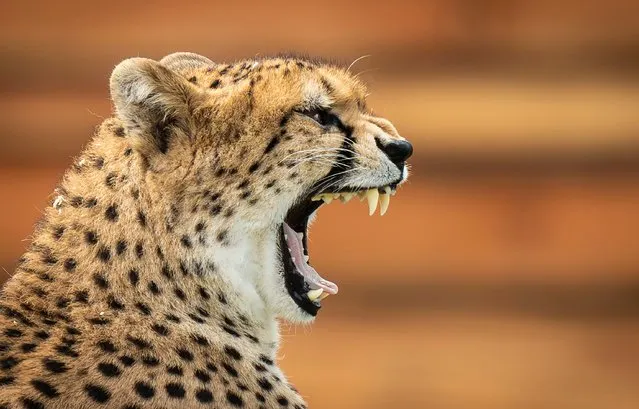
Cheetah Darcy enjoys her newly-developed Cheetah Territory that covers 10,000 square at Yorkshire Wildlife Park, near Doncaster, UK on Wednesday, August 16, 2023. Darcy, who is four-years-old, travelled from Ireland's Fota Wildlife Park to YWP last week where she will be joined by 13-year-old male Brooke who is on his way from the Bristol Zoo Project as a recommendation by the European Endangered Species Programme. (Photo by Danny Lawson/PA Images via Getty Images)

Cheetah Darcy enjoys her newly-developed Cheetah Territory that covers 10,000 square at Yorkshire Wildlife Park, near Doncaster, UK on Wednesday, August 16, 2023. Darcy, who is four-years-old, travelled from Ireland's Fota Wildlife Park to YWP last week where she will be joined by 13-year-old male Brooke who is on his way from the Bristol Zoo Project as a recommendation by the European Endangered Species Programme. (Photo by Danny Lawson/PA Images via Getty Images)
Details
27 Aug 2023 03:23:00
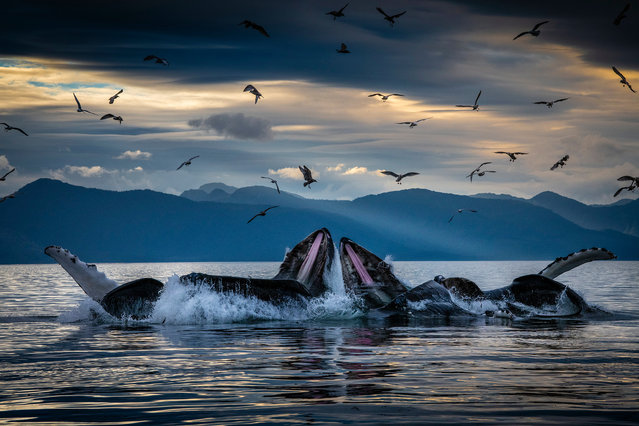
“Secrets of the Whales”. Skerry’s photographs celebrate the lives and culture of whales, illuminating recent research and their diverse behaviours. His latest work focuses on four key species: sperm whales, humpbacks, orca and beluga whales. Humpback whales bubble-net feeding off the coast of Alaska. They work cooperatively to feed on herring by blowing a perfect ring of bubbles underwater to form a net encircling the fish. The whales then swim up through the centre of the bubble net with their mouths open. (Photo by Brian Skerry/National Geographic Photo/Visa pour l'Image)

“Secrets of the Whales”. Skerry’s photographs celebrate the lives and culture of whales, illuminating recent research and their diverse behaviours. His latest work focuses on four key species: sperm whales, humpbacks, orca and beluga whales. Humpback whales bubble-net feeding off the coast of Alaska. They work cooperatively to feed on herring by blowing a perfect ring of bubbles underwater to form a net encircling the fish. The whales then swim up through the centre of the bubble net with their mouths open. (Photo by Brian Skerry/National Geographic Photo/Visa pour l'Image)
Details
04 Sep 2021 09:02:00
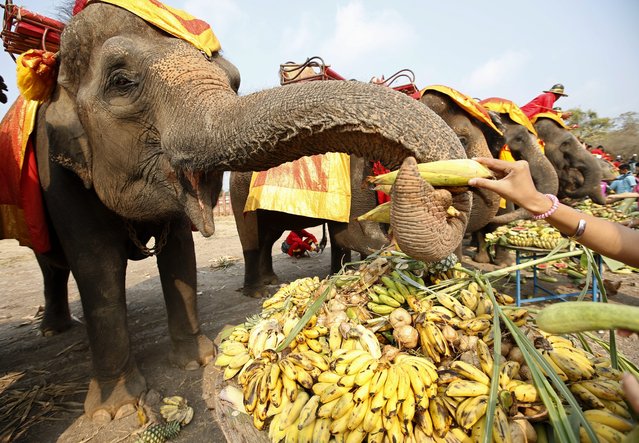
Elephants enjoy various kinds of fruits and vegetables during an all-you-can-eat elephant buffet held to mark the National Elephant Day at the ancient historical city of Ayutthaya, Thailand, 13 March 2014. The annual National Thai Elephant Day is held on 13 March to celebrate and drawing public attention for more concerted effort to save the species and protect its habitat. Thailand sees a severe decline with less than 3,000 wild elephants left in the kingdom. (Photo by Rungroj Yongrit/EPA)

Elephants enjoy various kinds of fruits and vegetables during an all-you-can-eat elephant buffet held to mark the National Elephant Day at the ancient historical city of Ayutthaya, Thailand, 13 March 2014. The annual National Thai Elephant Day is held on 13 March to celebrate and drawing public attention for more concerted effort to save the species and protect its habitat. Thailand sees a severe decline with less than 3,000 wild elephants left in the kingdom. (Photo by Rungroj Yongrit/EPA)
Details
14 Mar 2014 07:16:00


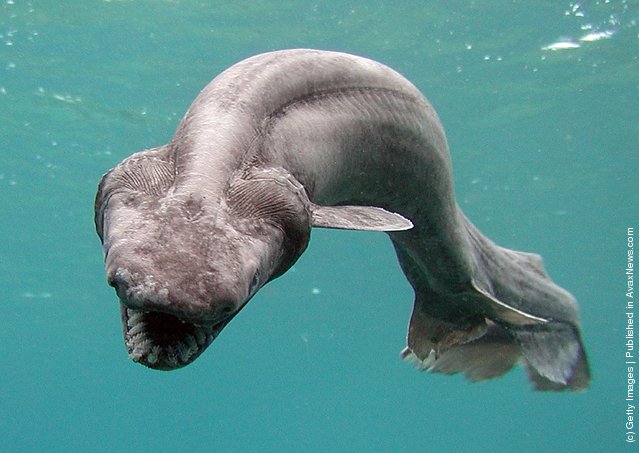
“The frilled shark (Chlamydoselachus anguineus) is one of two extant species of shark in the family Chlamydoselachidae, with a wide but patchy distribution in the Atlantic and Pacific Oceans. This uncommon species is found over the outer continental shelf and upper continental slope, generally near the bottom though there is evidence of substantial upward movements. It has been caught as deep as 1,570 m (5,150 ft), whereas in Suruga Bay, Japan it is most common at depths of 50–200 m (160–660 ft). Exhibiting several “primitive” features, the frilled shark has often been termed a «living fossil»”. – Wikipedia

Photo: A 1.6 meter long Frill shark swims in a tank after being found by a fisherman at a bay in Numazu, on January 21, 2007 in Numazu, Japan. The frill shark, also known as a Frilled shark usually lives in waters of a depth of 600 meters and so it is very rare that this shark is found alive at sea-level. It's body shape and the number of gill are similar to fossils of sharks which lived 350,000,000 years ago. (Photo by Awashima Marine Park/Getty Images)

Details
05 May 2011 10:01:00