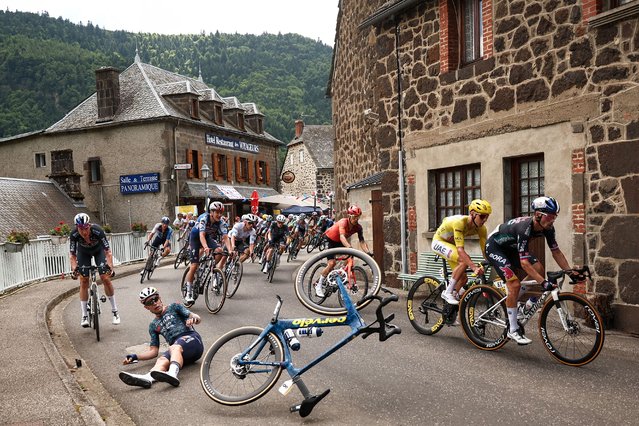
The Belgian rider Wout van Aert crashes during an ascent on the 11th stage of the Tour de France in Col de Néronne, France on July 10, 2024. (Photo by Anne-Christine Poujoulat/AFP Photo)
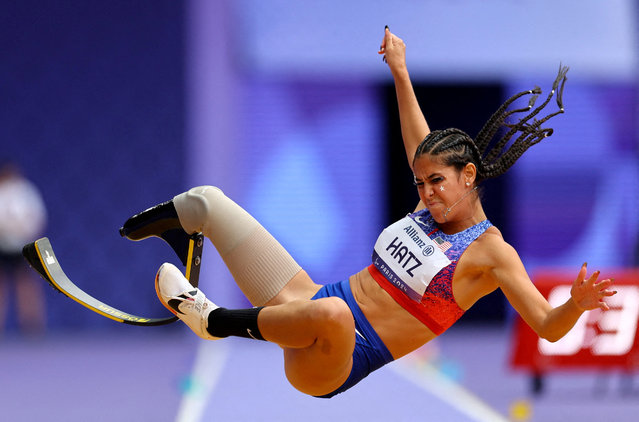
The USA’s Beatriz Hatz competes at Women's Long Jump -T64 final at the Stade de France stadium, during the 2024 Paralympics, Saturday, August 31, 2024, in Paris, France. (Photo by Ümit Bektaş/Reuters)
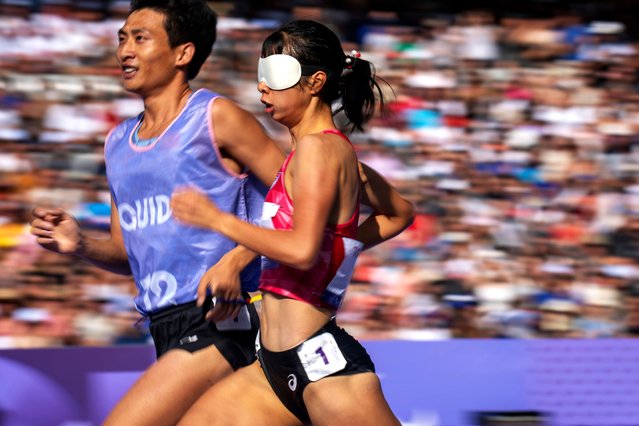
Shanshan He, of China, competes at Women's 1500 -T11 at the Stade de France stadium, during the 2024 Paralympics, Sunday, September 1, 2024, in Paris, France. (Photo by Emilio Morenatti/AP Photo)
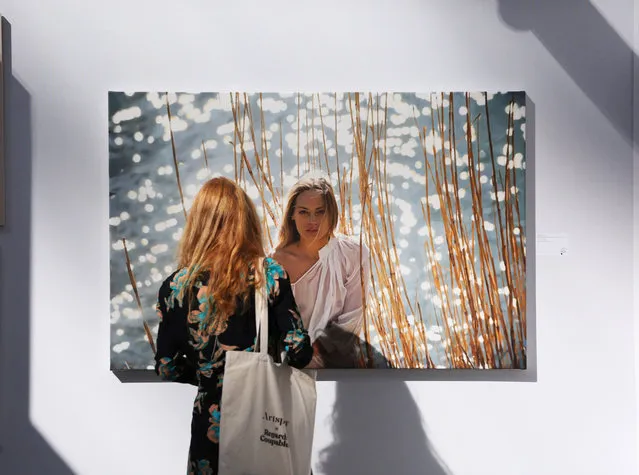
A woman looks at an artwork during the preview of the Art Paris 2020 held at the Grand Palais in Paris, France, September 9, 2020. Originally scheduled for April, Art Paris, France's second-biggest modern and contemporary art fair, opens its door to the public from Sept. 10 to 13. (Photo by Chine Nouvelle/SIPA Press/Rex Features/Shutterstock)
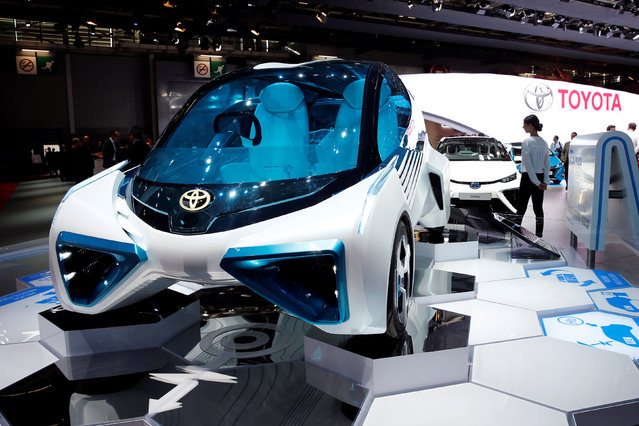
The Toyota FCV Plus fuel cell concept car is displayed on media day at the Paris auto show, in Paris, France, September 29, 2016. (Photo by Benoit Tessier/Reuters)
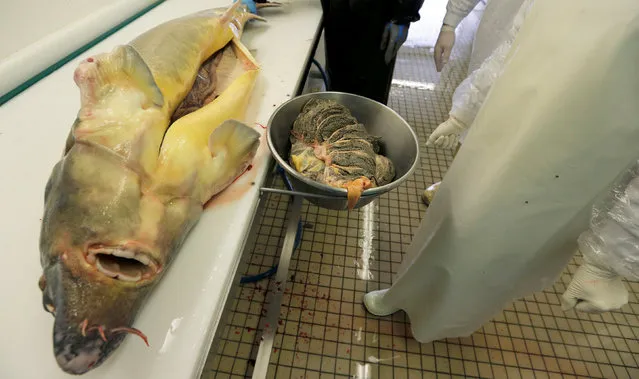
An employee collects eggs from inside a dead female sturgeon at the caviar fish farming company “Sturgeon”, the leading French producer, in Saint-Genis-de-Saintonge, France, November 8, 2016. (Photo by Regis Duvignau/Reuters)
Cast member Shu Qi poses during a photocall for the film “The Assassin” (Nie yin niang) in competition at the 68th Cannes Film Festival in Cannes, southern France, May 21, 2015. (Photo by Eric Gaillard/Reuters)
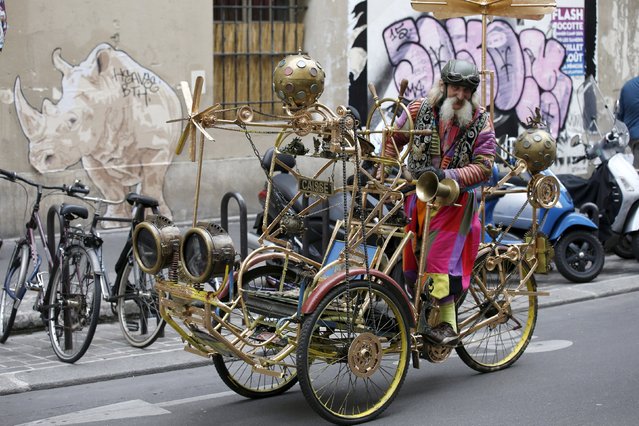
French artist Gino rides the “Celestial Cyclo” tricycle built by him in Le Marais neighbourhood in Paris, France, August 15, 2015. (Photo by Pascal Rossignol/Reuters)