Loading...
Done
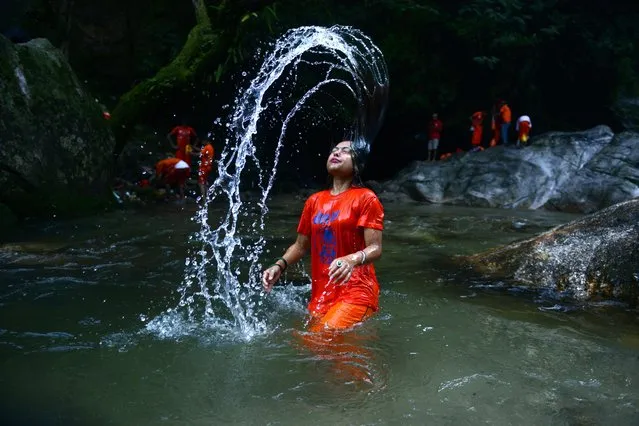
A Nepalese Hindu devotee bathes in the Bagmati River on her way to the Pashupatinath Temple to offer prayers to Lord Shiva, Hindu god of destruction during Shravan festivities in Sundarijal, on the outskirts of Kathmandu on August 3, 2015. According to the Nepali calendar, Shravan is considered the holiest month of the year with each Monday of the month known as Shravan Somvar when worshippers offer prayers for a happy and prosperous life. (Photo by Prakash Mathema/AFP Photo)

A Nepalese Hindu devotee bathes in the Bagmati River on her way to the Pashupatinath Temple to offer prayers to Lord Shiva, Hindu god of destruction during Shravan festivities in Sundarijal, on the outskirts of Kathmandu on August 3, 2015. According to the Nepali calendar, Shravan is considered the holiest month of the year with each Monday of the month known as Shravan Somvar when worshippers offer prayers for a happy and prosperous life. (Photo by Prakash Mathema/AFP Photo)
Details
04 Aug 2015 12:46:00
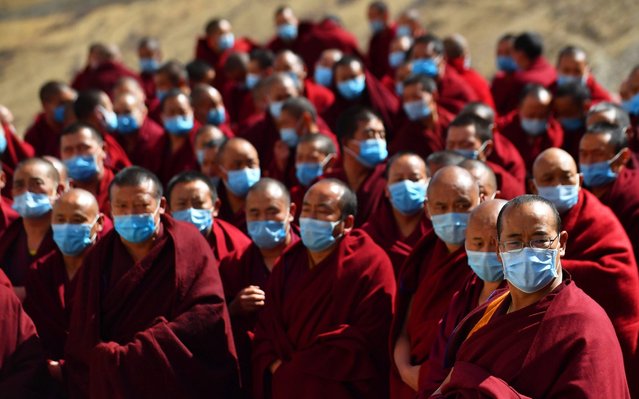
Monks attend a prayer service for blessing at the Gandan Temple in Lhasa, capital of southwest China's Tibet Autonomous Region, February 5, 2020. Tibetan Buddhist temples held prayer services to support novel coronavirus-infected areas in China. The monks here were also organized to donate money to help fight against the epidemic. (Photo by Chogo/Xinhua News Agency)

Monks attend a prayer service for blessing at the Gandan Temple in Lhasa, capital of southwest China's Tibet Autonomous Region, February 5, 2020. Tibetan Buddhist temples held prayer services to support novel coronavirus-infected areas in China. The monks here were also organized to donate money to help fight against the epidemic. (Photo by Chogo/Xinhua News Agency)
Details
08 Feb 2020 00:07:00
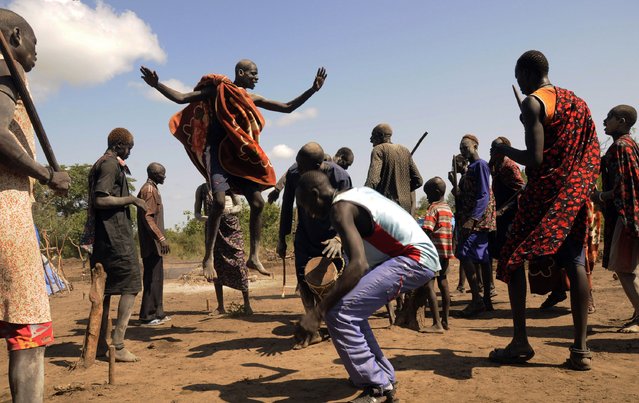
Cattle keepers from the Dinka tribe perform a traditional dance after a prayer session for peace and good health along the route to Rajaf Payam outside the capital Juba October 18, 2014. (Photo by Jok Solomon/Reuters)

Cattle keepers from the Dinka tribe perform a traditional dance after a prayer session for peace and good health along the route to Rajaf Payam outside the capital Juba October 18, 2014. (Photo by Jok Solomon/Reuters)
Details
25 Oct 2014 13:12:00
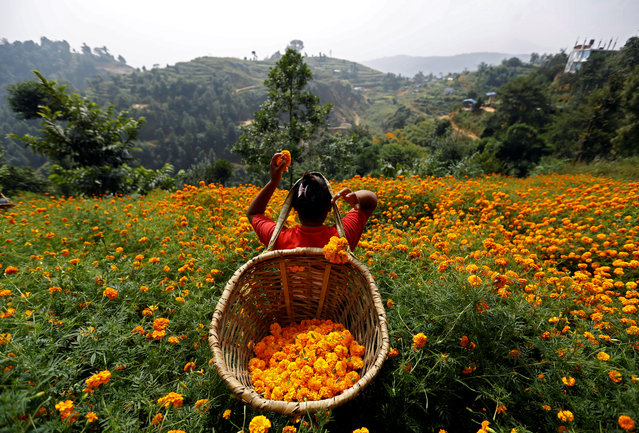
A woman picks marigold flowers used to make garlands and offer prayers, before selling them to the market for the Tihar festival, also called Diwali, in Kathmandu, Nepal October 17, 2017. (Photo by Navesh Chitrakar/Reuters)

A woman picks marigold flowers used to make garlands and offer prayers, before selling them to the market for the Tihar festival, also called Diwali, in Kathmandu, Nepal on October 17, 2017. (Photo by Navesh Chitrakar/Reuters)
Details
18 Oct 2017 09:07:00
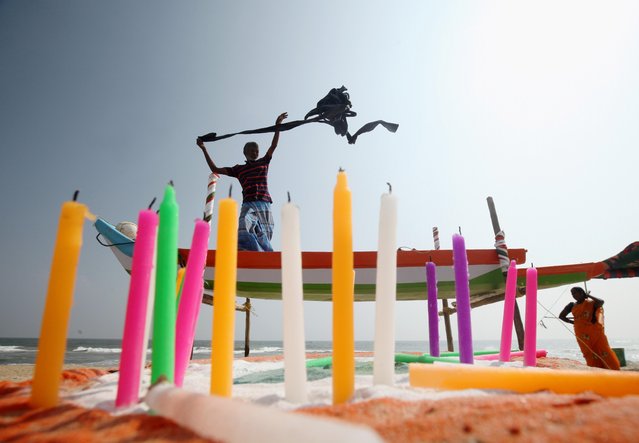
A man prepares to tie a black ribbon next to a makeshift memorial during a prayer ceremony for the victims of the 2004 tsunami on the 16th anniversary of the disaster, at Marina Beach in Chennai, India, December 26, 2020. (Photo by P. Ravikumar/Reuters)

A man prepares to tie a black ribbon next to a makeshift memorial during a prayer ceremony for the victims of the 2004 tsunami on the 16th anniversary of the disaster, at Marina Beach in Chennai, India, December 26, 2020. (Photo by P. Ravikumar/Reuters)
Details
04 Jan 2021 00:03:00
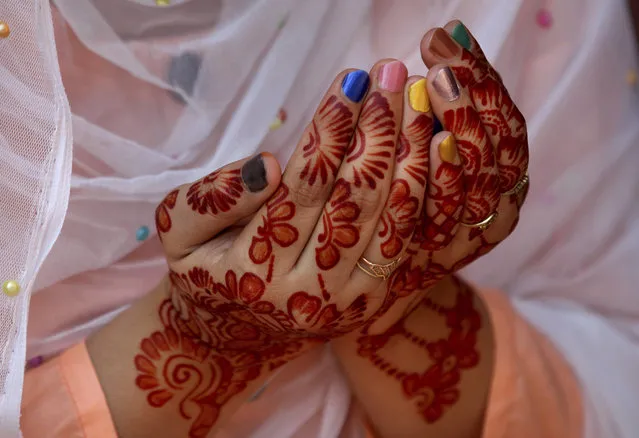
A woman, her hands decorated with traditional henna, prays during Eid al-Fitr prayer at historical Badshahi mosque in Lahore, Pakistan, Sunday, May 24, 2020. (Photo by K.M. Chaudary/AP Photo)

A woman, her hands decorated with traditional henna, prays during Eid al-Fitr prayer at historical Badshahi mosque in Lahore, Pakistan, Sunday, May 24, 2020. (Photo by K.M. Chaudary/AP Photo)
Details
26 May 2020 00:07:00
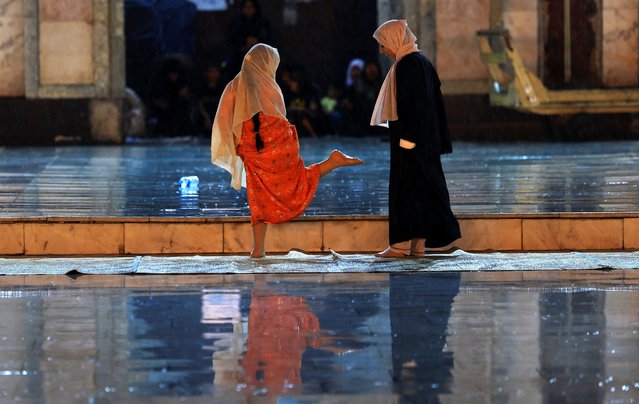
A Sunni Muslim child plays in the rain as she arrives for Eid al-Fitr prayers at the shrine of cleric Sheikh Abdul Qadir al-Gailani in Baghdad, Iraq on March 31, 2025. (Photo by Thaier Al-Sudani/Reuters)

A Sunni Muslim child plays in the rain as she arrives for Eid al-Fitr prayers at the shrine of cleric Sheikh Abdul Qadir al-Gailani in Baghdad, Iraq on March 31, 2025. (Photo by Thaier Al-Sudani/Reuters)
Details
25 Apr 2025 02:40:00


“Kumbh Mela is a mass Hindu pilgrimage in which Hindus gather at the Ganges river. The normal Kumbh Mela is celebrated every 3 years, the Ardh (half) Kumbh Mela is celebrated every six years at Haridwar and Prayag, the Purna (complete) Kumbh takes place every twelve years, at four places (Prayag (Allahabad), Haridwar, Ujjain, and Nashik). The Maha (great) Kumbh Mela which comes after 12 “Purna Kumbh Melas”, or 144 years, is held at Allahabad.

The last Ardh Kumbh Mela was held over a period of 45 days beginning in January 2007, more than 70 million Hindu pilgrims took part in the Ardh Kumbh Mela at Prayag, and on January 15, the most auspicious day of the festival of Makar Sankranti, more than 5 million participated. The previous Maha Kumbh Mela, held in 2001, was attended by around 60 million people, making it at the time the largest gathering anywhere in the world in recorded history”. – Wikipedia

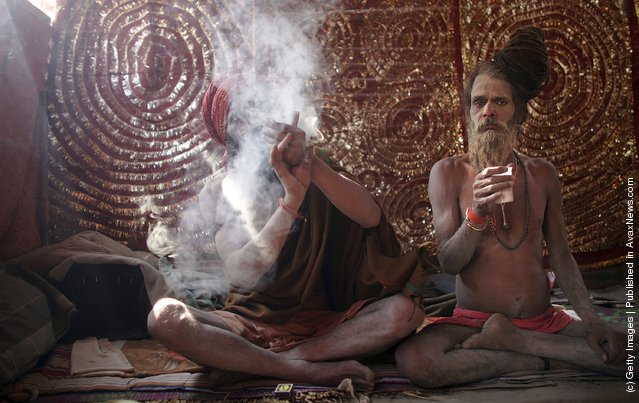
Photo: Sadhus (holy men) smoke at their camp near the ritual site at Sangam, the confluence of the Ganges, Yamuna and mythical Saraswati rivers during the Ardh Kumbh Mela festival (Half Pitcher festival) January 18, 2007 in Allahabad, India. Millions of Hindu pilgrims have flocked to the largest religious gathering in the world which lasts for 45 days in northern India. The festival commemorates the mythical conflict between gods and demons over a pitcher filled with the “nectar of immortality”. Devotees believe that taking a holy dip in the Ganges at this time washes away their sins and paves the path to salvation. (Photo by Mario Tama/Getty Images)

Details
30 Jun 2011 10:27:00