Loading...
Done
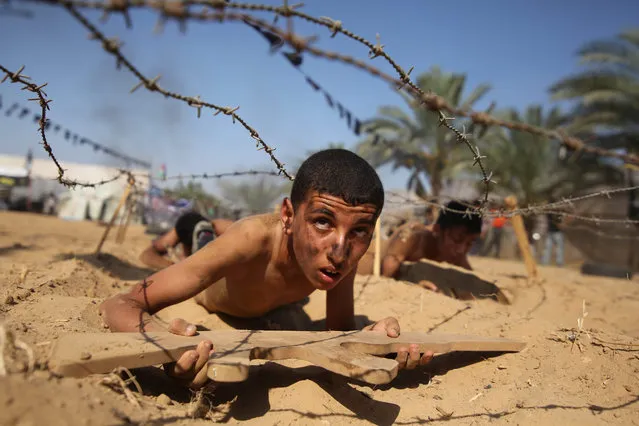
A Palestinian boy takes part in a military-style summer camp being held by the Islamic Jihad movement during the youngsters' summer school vacation in Khan Younes town, in the southern Gaza Strip, 13 July 2016. Thousands of youngsters between the age of six and 16 can participate in the summer camp where they receive military as well as religious training. (Photo by Hatem Omar/EPA)

A Palestinian boy takes part in a military-style summer camp being held by the Islamic Jihad movement during the youngsters' summer school vacation in Khan Younes town, in the southern Gaza Strip, 13 July 2016. Thousands of youngsters between the age of six and 16 can participate in the summer camp where they receive military as well as religious training. (Photo by Hatem Omar/EPA)
Details
14 Jul 2016 09:40:00
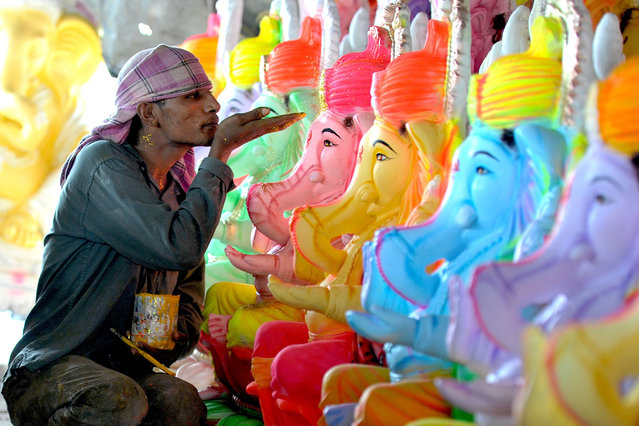
An Indian artists uses sparkles to decorate statues of the Hindu god Lord Ganesh ahead of the forthcoming Ganesh Chaturthi festival at a workshop in Hyderabad on August 29, 2016. The statues are being prepared for the Ganesh Chaturthi festival a popular eleven-day long Hindu religious festival in India which will be celebrated from September 5 to 15. (Photo by Noah Seelam/AFP Photo)

An Indian artists uses sparkles to decorate statues of the Hindu god Lord Ganesh ahead of the forthcoming Ganesh Chaturthi festival at a workshop in Hyderabad on August 29, 2016. The statues are being prepared for the Ganesh Chaturthi festival a popular eleven-day long Hindu religious festival in India which will be celebrated from September 5 to 15. (Photo by Noah Seelam/AFP Photo)
Details
31 Aug 2016 11:54:00
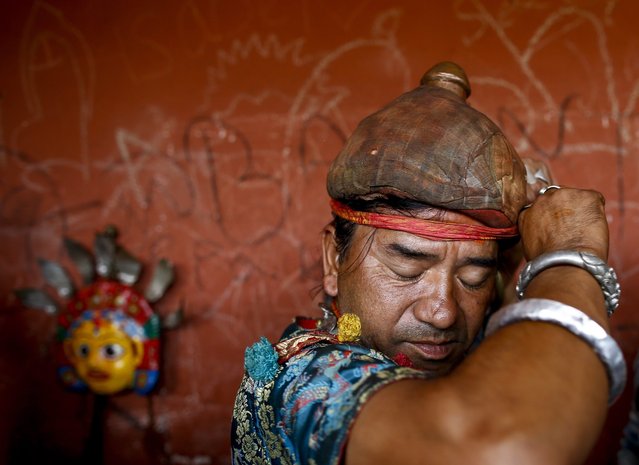
A Nepalese devotee prepares for a religious mask performance during the Seekaali Festival in Khokna village, near Kathmandu, Nepal, 07 October 2016. During the 300-year-old Seekali festival, elderly ethnic Newari devotees wear masks of 14 various goddesses including Lord Ganesha, Lord Shiva, Lord Laxmi, Lord Brahma and Lord Bishnu. The Khokna people celebrate the Seekaali festival as an alternative of the Dashain festival which is biggest festival of Nepalese Hindus that celebrates the victory of the gods over demons. (Photo by Narendra Shrestha/EPA)

A Nepalese devotee prepares for a religious mask performance during the Seekaali Festival in Khokna village, near Kathmandu, Nepal, 07 October 2016. During the 300-year-old Seekali festival, elderly ethnic Newari devotees wear masks of 14 various goddesses including Lord Ganesha, Lord Shiva, Lord Laxmi, Lord Brahma and Lord Bishnu. The Khokna people celebrate the Seekaali festival as an alternative of the Dashain festival which is biggest festival of Nepalese Hindus that celebrates the victory of the gods over demons. (Photo by Narendra Shrestha/EPA)
Details
09 Oct 2016 07:14:00
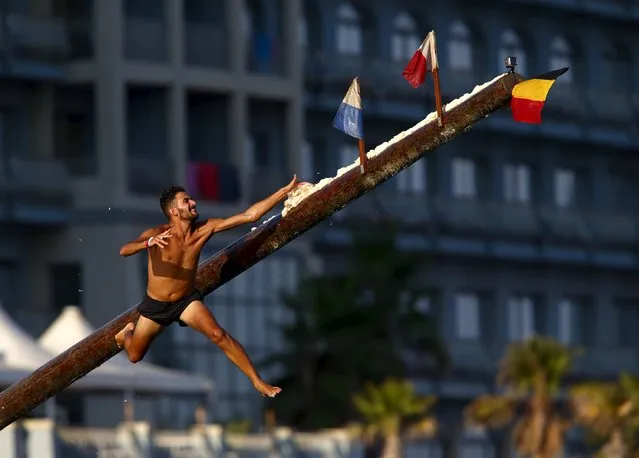
A competitor tries to swipe away some grease as he slips off the “gostra”, a pole covered in grease, during the celebrations for the religious feast of St Julian, patron of the town of St Julian's, outside Valletta August 30, 2015. (Photo by Darrin Zammit Lupi/Reuters)

A competitor tries to swipe away some grease as he slips off the “gostra”, a pole covered in grease, during the celebrations for the religious feast of St Julian, patron of the town of St Julian's, outside Valletta August 30, 2015. In the traditional “gostra”, a game stretching back to the Middle Ages, young men, women and children have to make their way to the top of a pole and try to uproot one of the flags to win prizes. Photo by Darrin Zammit Lupi/Reuters)
Details
31 Aug 2015 12:16:00
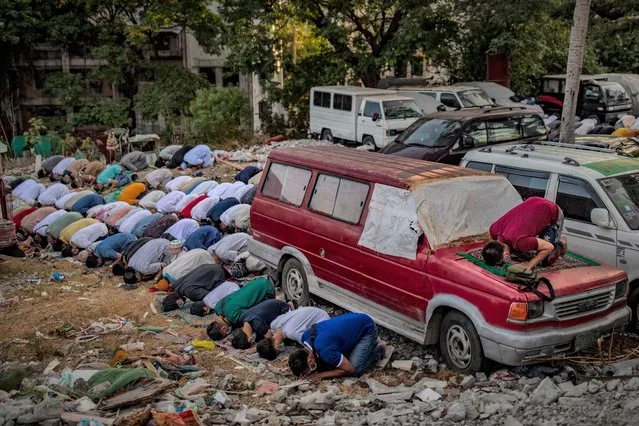
Filipino Muslims pray outside the Blue Mosque as they celebrate Eid al-Fitr on May 13, 2021 in Taguig, Metro Manila, Philippines. Eid al-Fitr marks the end of Ramadan, during which Muslims in countries around the world spend time with family, offer gifts and often give to charity. Parts of the Philippines remain under strict lockdown to curb the spread of the coronavirus, with religious venues restricted to 20 percent capacity only. (Photo by Ezra Acayan/Getty Images)

Filipino Muslims pray outside the Blue Mosque as they celebrate Eid al-Fitr on May 13, 2021 in Taguig, Metro Manila, Philippines. Eid al-Fitr marks the end of Ramadan, during which Muslims in countries around the world spend time with family, offer gifts and often give to charity. Parts of the Philippines remain under strict lockdown to curb the spread of the coronavirus, with religious venues restricted to 20 percent capacity only. (Photo by Ezra Acayan/Getty Images)
Details
04 Jun 2021 11:55:00
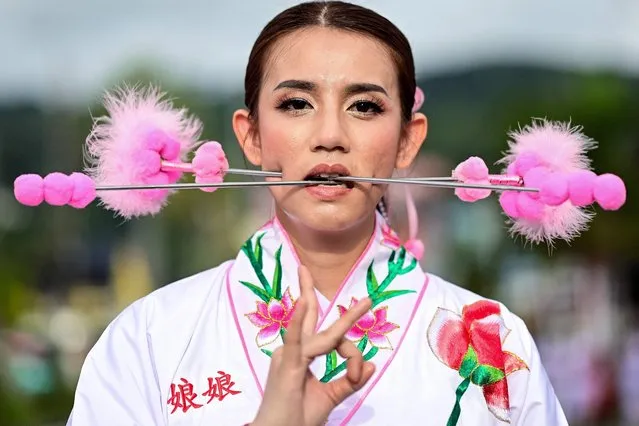
A devotee of the Jor Soo Gong Naka shrine with skewers pierced through her cheeks takes part in a procession during the annual Vegetarian Festival in Phuket on September 27, 2022. The festival, back after two years of hiatus because of the Covid-19 pandemic, features religious devotees who slash themselves with swords, pierce their cheeks with sharp objects and commit other painful acts to purify themselves, taking on the sins of the community. (Photo by Manan Vatsyayana/AFP Photo)

A devotee of the Jor Soo Gong Naka shrine with skewers pierced through her cheeks takes part in a procession during the annual Vegetarian Festival in Phuket on September 27, 2022. The festival, back after two years of hiatus because of the Covid-19 pandemic, features religious devotees who slash themselves with swords, pierce their cheeks with sharp objects and commit other painful acts to purify themselves, taking on the sins of the community. (Photo by Manan Vatsyayana/AFP Photo)
Details
10 Oct 2022 04:16:00
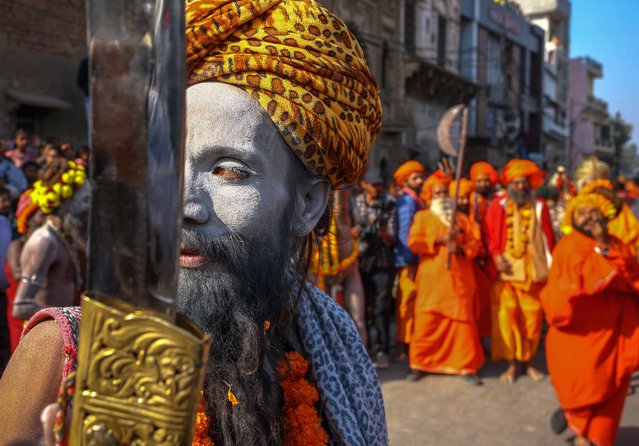
Sadhus take part in a religious roadshow ( Peshwai )  on December 14, 2024 in Allahabad, India. Kumbh Mela in 2025 is a Maha Kumbh, which is a significant Hindu festival celebrated once every 144 years at Prayagraj (Allahabad). Scheduled from January 13 to February 26, 2025, it attracts millions of devotees for ritual bathing at the confluence of the Ganges, Yamuna, and the mythical Saraswati rivers, marking a unique spiritual occasion with enhanced significance compared to regular Kumbh Mela. (Photo by Ritesh Shukla/Getty Images)

Sadhus take part in a religious roadshow (Peshwai) on December 14, 2024 in Allahabad, India. Kumbh Mela in 2025 is a Maha Kumbh, which is a significant Hindu festival celebrated once every 144 years at Prayagraj (Allahabad). Scheduled from January 13 to February 26, 2025, it attracts millions of devotees for ritual bathing at the confluence of the Ganges, Yamuna, and the mythical Saraswati rivers, marking a unique spiritual occasion with enhanced significance compared to regular Kumbh Mela. (Photo by Ritesh Shukla/Getty Images)
Details
26 Dec 2024 01:40:00
Members of Panchayati Akhara Bada Udasin take part in a religious procession as they head towards the Kumbh Mela festival ahead of the royal bath near the Sangam, the confluence of three of the holiest rivers in Hindu mythology – Ganga, Yamuna, and the mythical Saraswati – in Prayagraj, Uttar Pradesh, India, 12 January 2025. Every 12 years, Hindu pilgrims gather for ritual baths at the river's banks during the Maha Kumbh Mela festival. (Photo by Rajat Gupta/EPA)

Members of Panchayati Akhara Bada Udasin take part in a religious procession as they head towards the Kumbh Mela festival ahead of the royal bath near the Sangam, the confluence of three of the holiest rivers in Hindu mythology – Ganga, Yamuna, and the mythical Saraswati – in Prayagraj, Uttar Pradesh, India, 12 January 2025. Every 12 years, Hindu pilgrims gather for ritual baths at the river's banks during the Maha Kumbh Mela festival. (Photo by Rajat Gupta/EPA)
Details
18 Jan 2025 04:05:00