Loading...
Done
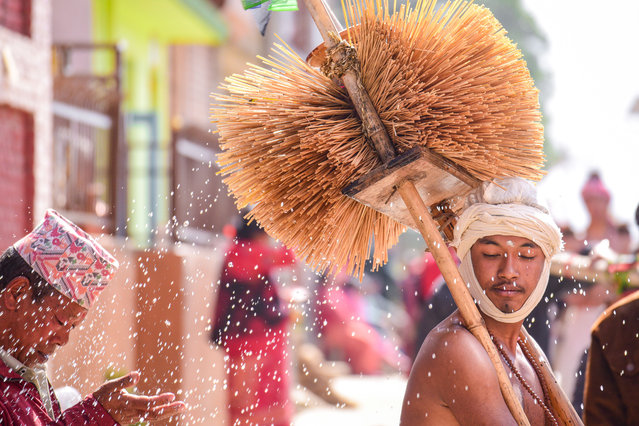
Devotees perform religious rituals by splashing holy water during the Madhav Narayan Festival, a month-long event dedicated to Lord Madhav Narayan, an incarnation of Lord Vishnu in Thacho, Lalitpur, Nepal on February 10, 2025. Devotees also carry butter lamps and blow conch shells (shankha) as part of the sacred observance. (Photo by Safal Prakash Shrestha/ZUMA Press Wire)

Devotees perform religious rituals by splashing holy water during the Madhav Narayan Festival, a month-long event dedicated to Lord Madhav Narayan, an incarnation of Lord Vishnu in Thacho, Lalitpur, Nepal on February 10, 2025. Devotees also carry butter lamps and blow conch shells (shankha) as part of the sacred observance. (Photo by Safal Prakash Shrestha/ZUMA Press Wire)
Details
08 Mar 2025 03:54:00
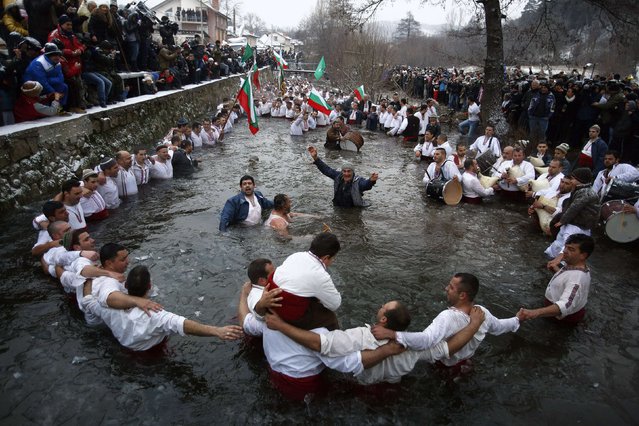
Bulgarian men dance in the icy waters of the Tundzha river during a celebration to commemorate Epiphany Day in the town of Kalofer January 6, 2015. (Photo by Stoyan Nenov/Reuters)

Bulgarian men dance in the icy waters of the Tundzha river during a celebration to commemorate Epiphany Day in the town of Kalofer January 6, 2015. It is believed that the ritual will bring good health to the participants throughout the new year. (Photo by Stoyan Nenov/Reuters)
Details
07 Jan 2015 13:50:00
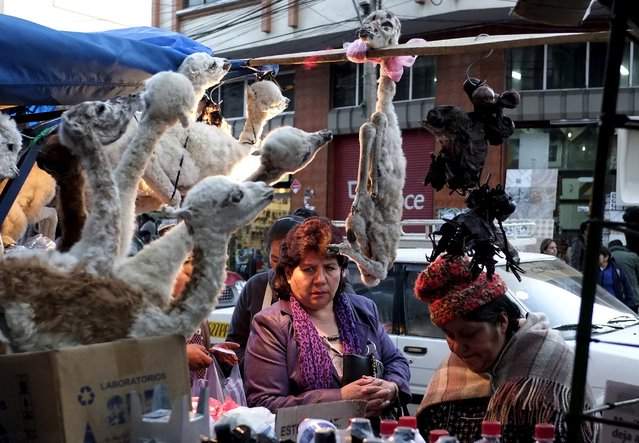
A woman (C) shops for an offering at the witch doctor's street in La Paz, July 31, 2015. (Photo by David Mercado/Reuters)

A woman (C) shops for an offering at the witch doctor's street in La Paz, July 31, 2015. According to Andean culture, the all the month of August is a time to give offerings to “Pachamama” to give thanks for their farms and health. The Aymaras use coca leaves, candies, animal fat, llama fetuses, some dried fruits, powdered minerals and alcohol during these rituals. (Photo by David Mercado/Reuters)
Details
02 Aug 2015 12:27:00
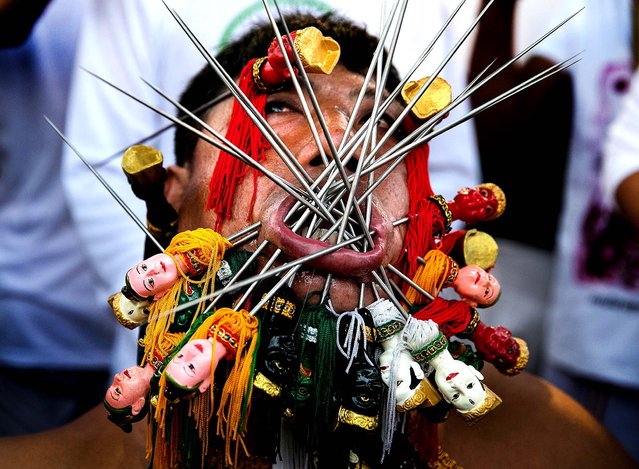
A devotee gest pierced at the Bang Neow shrine in Phuket. (Photo by Paula Bronstein/Getty Images)

“The Nine Emperor Gods Festival is a nine-day Taoist celebration beginning on the eve of 9th lunar month of the Chinese calendar, which is observed primarily in Southeast Asian countries like Myanmar, Singapore, Malaysia, Thailand and also the Riau Islands. In Thailand, this festival is called Tesagan Gin Je, the Vegetarian Festival. It is celebrated throughout the entire country, but the festivities are at their height in Phuket, where about 35% of the population is Chinese. It attracts crowds of spectators because of many of the unusual religious rituals that are performed”. – Wikipedia. Photo: A devotee gest pierced at the Bang Neow shrine in Phuket. (Photo by Paula Bronstein)
Details
11 Oct 2013 07:49:00
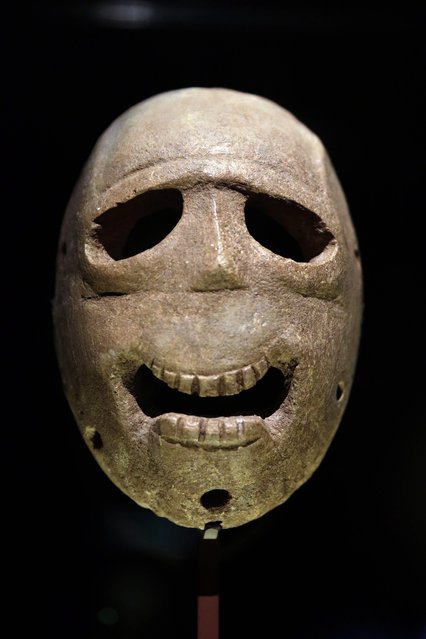
In this  Monday, March 10, 2014 photo, a 9,000 year-old mask is on display at the Israel Museum in Jerusalem.  (Photo by Tsafrir Abayov/AP Photo)

In this Monday, March 10, 2014 photo, a 9,000 year-old mask is on display at the Israel Museum in Jerusalem. The exhibition called “Face To Face” shows eleven stone masks, said to have been discovered in the Judean desert and hills near Jerusalem, which date back 9,000 years and offer a rare glimpse at some of civilization's first communal rituals. (Photo by Tsafrir Abayov/AP Photo)
Details
14 Mar 2014 08:25:00
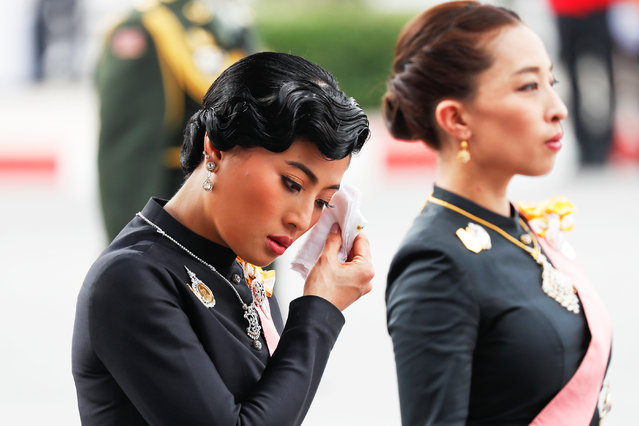
Thai Princess Bajrakitiyabha (R) and Princess Sirivannavari Nariratana take part in the funeral procession for the late Thai king Bhumibol Adulyadej in Bangkok on October 26, 2017 A sea of black- clad mourners massed across Bangkok' s historic heart early on October 26 as funeral rituals began for King Bhumibol Adulyadej, a revered monarch whose passing after a seven- decade reign has left Thailand bereft of its only unifying figure. (Photo by Damir Sagolj/Reuters)

Thai Princess Bajrakitiyabha (R) and Princess Sirivannavari Nariratana take part in the funeral procession for the late Thai king Bhumibol Adulyadej in Bangkok on October 26, 2017 A sea of black- clad mourners massed across Bangkok' s historic heart early on October 26 as funeral rituals began for King Bhumibol Adulyadej, a revered monarch whose passing after a seven- decade reign has left Thailand bereft of its only unifying figure. (Photo by Damir Sagolj/Reuters)
Details
27 Oct 2017 08:59:00
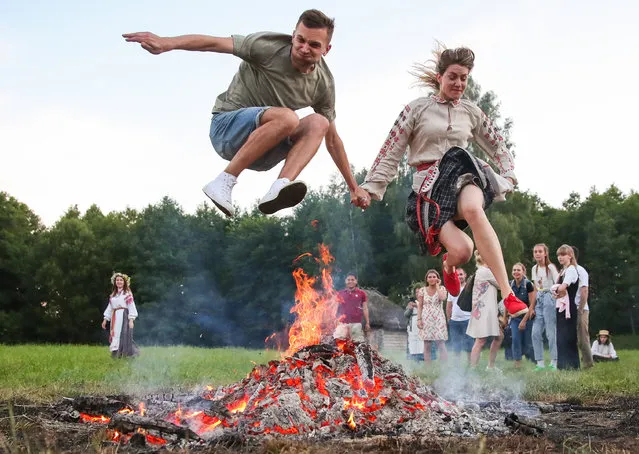
A man and a woman jump over a bonfire during Ivan Kupala Day celebrations held by the Belarusian State Museum of Folk Architecture and Rural Lifestyle in the village of Ozertso near Minsk, Belarus on July 4, 2020. Ivan Kupala Day, also known as Ivana-Kupala or Kupala Night, is a traditional pagan holiday celebrated in eastern Slavic cultures. Various rituals are traditionally performed on Kupala Night, including making flower wreaths, fortune-telling, jumping over bonfires, and burning a wheel-like effigy symbolizing the sun. (Photo by Natalia Fedosenko/TASS)

A man and a woman jump over a bonfire during Ivan Kupala Day celebrations held by the Belarusian State Museum of Folk Architecture and Rural Lifestyle in the village of Ozertso near Minsk, Belarus on July 4, 2020. Ivan Kupala Day, also known as Ivana-Kupala or Kupala Night, is a traditional pagan holiday celebrated in eastern Slavic cultures. Various rituals are traditionally performed on Kupala Night, including making flower wreaths, fortune-telling, jumping over bonfires, and burning a wheel-like effigy symbolizing the sun. (Photo by Natalia Fedosenko/TASS)
Details
07 Jul 2020 00:07:00
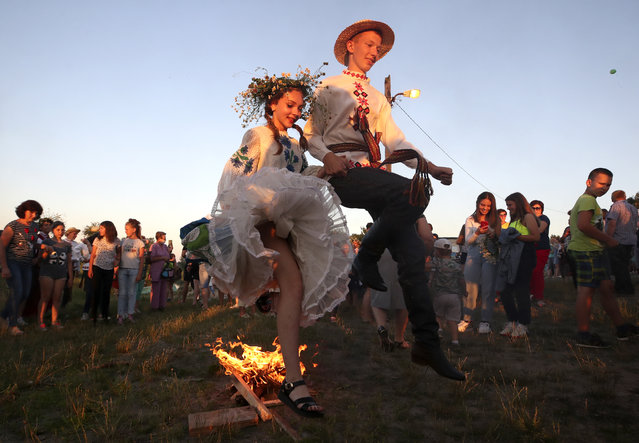
People in ethnic costumes jump over a bonfire during Ivan Kupala Day celebrations held by the Pripyat River in the town of Turauin Gomel Region, Belarus on July 6, 2020. Ivan Kupala Day, also known as Ivana-Kupala or Kupala Night, is a traditional pagan holiday celebrated in eastern Slavic cultures. Various rituals are traditionally performed on Kupala Night, including making flower wreaths, fortune-telling, jumping over bonfires, and burning a wheel-like effigy symbolizing the sun. (Photo by Natalia Fedosenko/TASS)

People in ethnic costumes jump over a bonfire during Ivan Kupala Day celebrations held by the Pripyat River in the town of Turauin Gomel Region, Belarus on July 6, 2020. Ivan Kupala Day, also known as Ivana-Kupala or Kupala Night, is a traditional pagan holiday celebrated in eastern Slavic cultures. Various rituals are traditionally performed on Kupala Night, including making flower wreaths, fortune-telling, jumping over bonfires, and burning a wheel-like effigy symbolizing the sun. (Photo by Natalia Fedosenko/TASS)
Details
19 Jul 2020 00:01:00