Loading...
Done
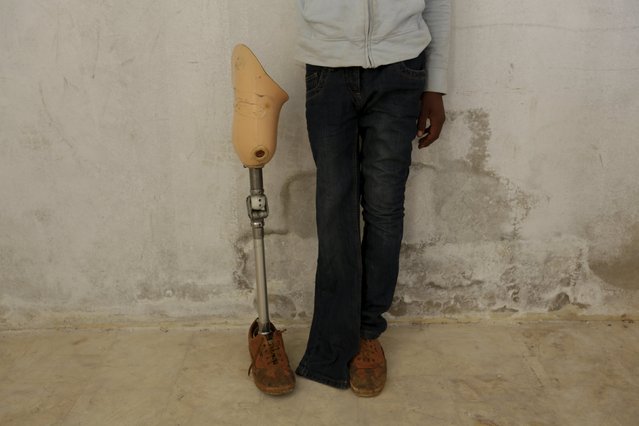
A young man with an amputated leg poses for a photograph standing by his broken artificial limb in the rebel-controlled area of Maaret al-Numan town in Idlib province, Syria March 20, 2016. (Photo by Khalil Ashawi/Reuters)

A young man with an amputated leg poses for a photograph standing by his broken artificial limb in the rebel-controlled area of Maaret al-Numan town in Idlib province, Syria March 20, 2016. Two university students forced to interrupt their studies have learnt to make and fit hundreds of new limbs in the past four years in opposition-held areas of Syria. A mobile clinic operating from a truck has gone some way to improve access to treatment. While most patients are between 15 and 45, the clinic also helps children and the elderly with replacement limbs. (Photo by Khalil Ashawi/Reuters)
Details
16 Apr 2016 12:03:00
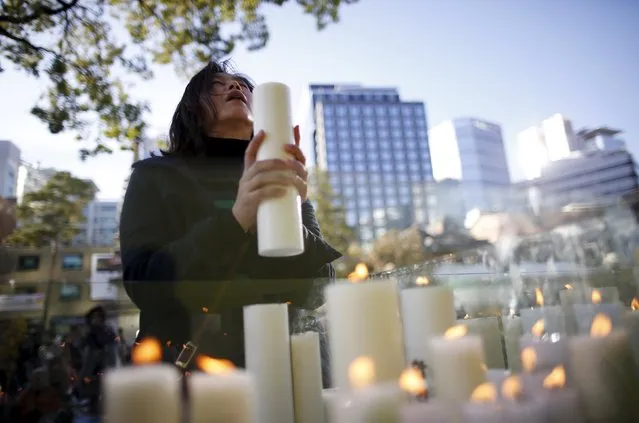
A mother prays for success for her child in the college entrance examinations at a Buddhist temple in Seoul, South Korea, November 12, 2015. About 630,000 students on Thursday sat for the annual exams that could lead them to one of the country's top universities. In South Korea, there is no higher achievement than to be accepted by a prestigious university. (Photo by Kim Hong-Ji/Reuters)

A mother prays for success for her child in the college entrance examinations at a Buddhist temple in Seoul, South Korea, November 12, 2015. About 630,000 students on Thursday sat for the annual exams that could lead them to one of the country's top universities. In South Korea, there is no higher achievement than to be accepted by a prestigious university. As a result, many students prepare for these entrance exams from an early age, often studying up to 16 hours a day for years to take this test. (Photo by Kim Hong-Ji/Reuters)
Details
14 Nov 2015 09:01:00
Brtukan. “Being a girl of colour in a society where the majority of the people are white, I have had to get used to all the different ways people approach me. From being asked what kind of rap music you listen to and how you wash your hair, to getting told, “you don’t sound black”, “you’re pretty for a black girl” or “you’re not that black so it’s OK”, as if being black is such a bad thing”. (Photo by Lisa Minogue/The Guardian)

As part of FLAIR Melbourne – a Flinders Lane art festival – Melbourne’s Lisa Minogue presents stylised photographic portraits of Australian women of colour, their faces painted vibrantly to accentuate their individuality and encourage the viewer to study each face more closely. Minogue asked each woman the same question: “What do the words “coloured girl” mean to you?”. (Photo by Lisa Minogue/The Guardian)
Details
17 Aug 2016 11:16:00
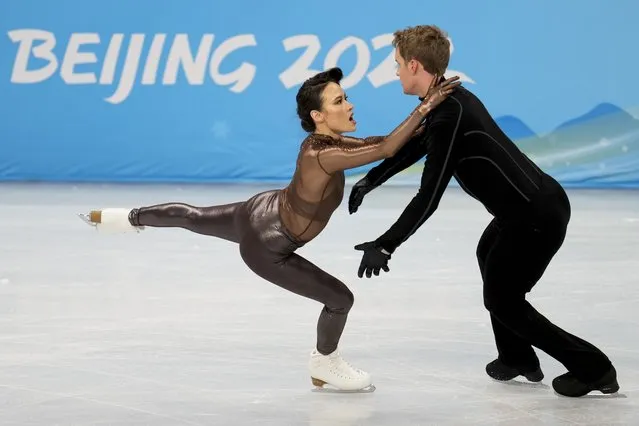
Figure skating couple Madison Chock and Evan Bates, of the USA, practice their dance routine during a training session at the 2022 Winter Olympics, Thursday, February 3, 2022, in Beijing. At the Beijing Winter Games, opening Friday, it’s a homecoming of sorts for one of the world’s most sprawling diasporas – often sweet and sometimes complicated, but always a reflection of where they are, where they come from and the Olympic spirit itself. “Every time I’m on the bus, I’m just looking out and studying the city and just imagining my roots are here, my ancestors are here”, says Chock, whose father is Chinese-Hawaiian, with family ties to rural China. (Photo by Natacha Pisarenko/AP Photo)

Figure skating couple Madison Chock and Evan Bates, of the USA, practice their dance routine during a training session at the 2022 Winter Olympics, Thursday, February 3, 2022, in Beijing. (Photo by Natacha Pisarenko/AP Photo)
Details
06 Feb 2022 06:25:00
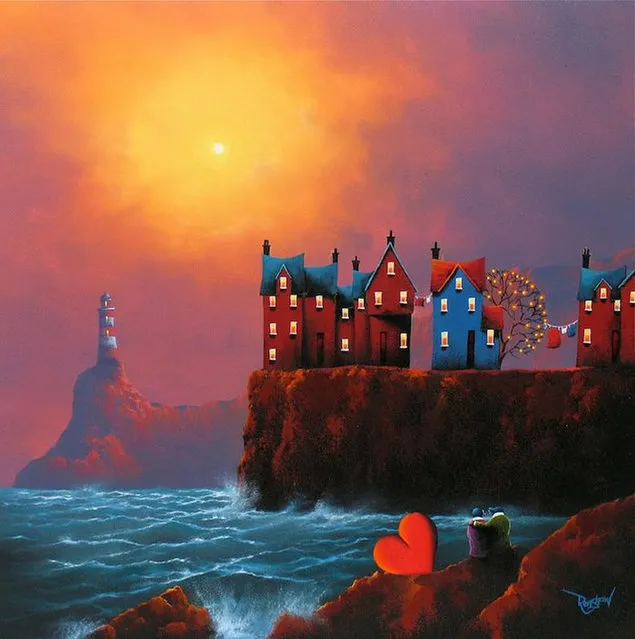
A Northern Romance Series By David Renshaw

Lovely is the correct work to describe this beautiful paintings series by David Renshaw from “Ted n’ Doris – A Northern Romance”. “Deep down I always knew what I wanted to do for a living and in my school years I remember my father teaching me some basic elements of drawing and I dreamed of one day becoming an artist. Being only really interested in art I left school and studied Graphic Design, after which I started work at a local art gallery as a picture framer. I continued to paint alongside my job, mainly developing techniques and ideas and in 2005 decided it was time to follow my dreams and dedicate myself to painting full time. I always try to make my work feel atmospheric, and I like to pay particular attention to sky and cloud formations as I consider this element of my work to be extremely important to the mood of the finished painting, whether it be a dramatic sunset or a misty moonlit night.”
Details
19 Oct 2013 11:48:00
Vinyl Clock By Pavel Sidorenko Part 2

Pavel Sidorenko is an award winning Estonian designer who was born in 1980 in Tallinn and studied product design at Estonian Academy of Arts and Graduated in 2006. Not only does he incorporate pragmatic necessity, but also transmits an emotional qualities within the everyday environment. His fantastic collection of Re Vinyl designs are a result of upcycling a product fashioned from old vinyl records. Beautifully crafted and working with a range of themes from scenography to animal creatures, there is sure to be something for everyone with these stylish selection of recycled vinyl clocks!


See also: Part 1
Details
01 Mar 2014 11:09:00
Pineapple

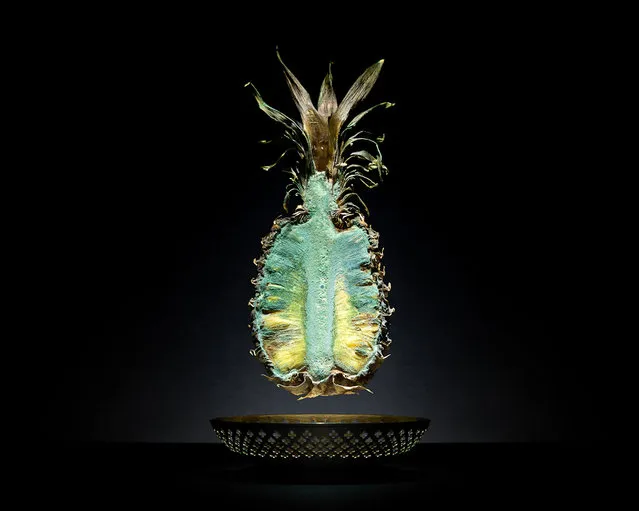
“One Third” – a project on food waste by an Austrian photography Klaus Pichler. According to a UN study one third of the world's food goes to waste – the largest part thereof in the industrialized nations of the global north. Equally, 925 million people around the world are threatened by starvation. The series “One Third” describes the connection between individual wastage of food and globalized food production.

Photo: Pineapple. Place of production: Guayaquil, Ecuador. Cultivation method: Outdoor plantation • Time of harvest: All- season. Transporting distance: 10.666 km (linear distance) • Means of transportation: Aircraft, truck. Carbon footprint (total) per kg: 11,94 kg • Water requirement (total) per kg: 360 l. Price: 2,10 € / kg. (Photo by Klaus Picher)
Details
02 May 2012 11:01:00
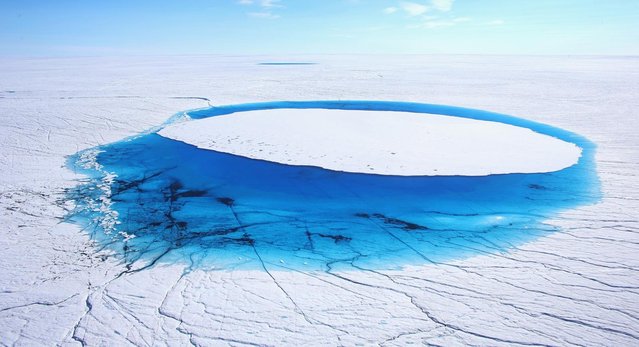
Water is seen on part of the glacial ice sheet that covers about 80 percent of the country is seen on July 17, 2013 on the Glacial Ice Sheet, Greenland. (Photo by Joe Raedle/Getty Images via The Atlantic)

Water is seen on part of the glacial ice sheet that covers about 80 percent of the country is seen on July 17, 2013 on the Glacial Ice Sheet, Greenland. As the sea levels around the globe rise, researchers affilitated with the National Science Foundation and other organizations are studying the phenomena of the melting glaciers and its long-term ramifications. The warmer temperatures that have had an effect on the glaciers in Greenland also have altered the ways in which the local populace farm, fish, hunt and even travel across land. In recent years, sea level rise in places such as Miami Beach has led to increased street flooding and prompted leaders such as New York City Mayor Michael Bloomberg to propose a $19.5 billion plan to boost the citys capacity to withstand future extreme weather events by, among other things, devising mechanisms to withstand flooding. (Photo by Joe Raedle)
Details
02 Aug 2013 10:51:00