Loading...
Done
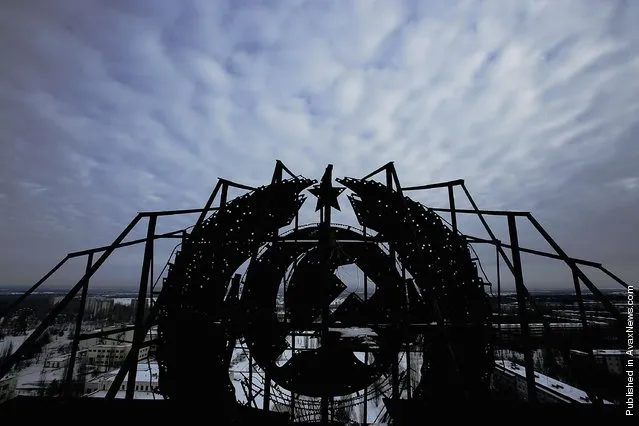
Chernobyl

Scaffolding holding a remnant of the Soviet Union, the hammer and sickle, is seen on a rooftop of an abandoned building in the town of Pripyat on January 25, 2006 near Chernobyl, Ukraine. The town of Pripyat, deserted since the 1986 catastrophe, once housed 30,000 people, the majority of being workers from the Chernobyl Nuclear Power Plant. Days after the catastrophe the inhabitants were relocated to other locations in the Soviet Union. The town of Pripyat has remained uninhabited since. Prypyat and the surrounding area will not be safe for human habitation for several centuries. Scientists estimate that the most dangerous radioactive elements will take up to 900 years to decay sufficiently to render the area safe.
Details
14 Mar 2011 10:20:00
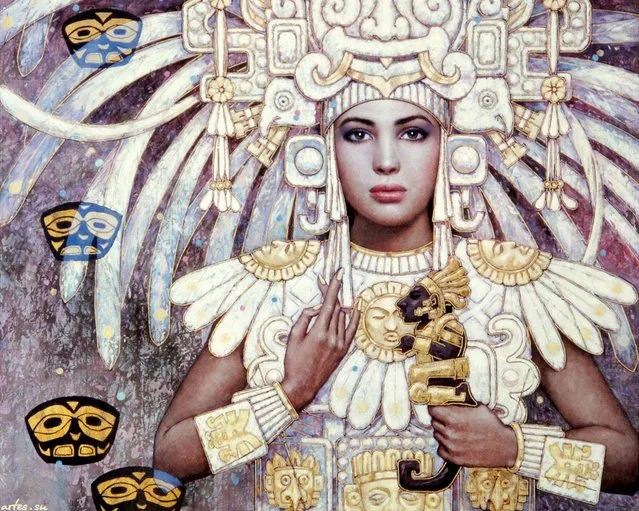
Drawing By Karl Bang

Karl Bang's paintings are unique because he combines totally different styles of painting within the same format. It is very difficult to design a balanced composition with realistic elements that are juxtaposed with flat colors and patterns. The faces of his subjects are painted realistically in the Western tradition with subtle gradations of color; while, his figures and costumes vignette into abstracted shapes, lines, flat colors and patterns that reflect Karl's background in China. It is as though there are different visual languages being spoken within his paintings.
Details
30 Jul 2013 09:16:00
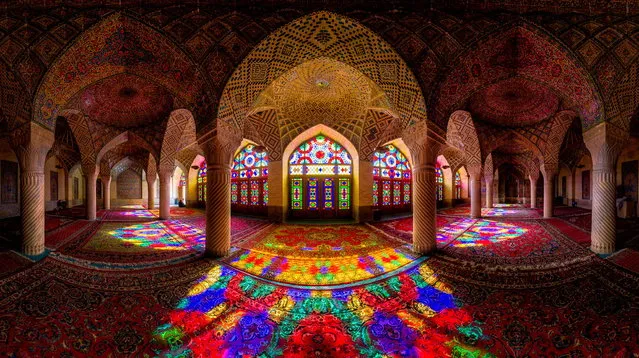
The Nasir Al-Mulk Mosque

The Nasīr al-Mulk Mosque or Pink Mosque is a traditional mosque in Shiraz, Iran, located in Goade-e-Araban place (near the famous Shah Cheragh mosque). The mosque was built during the Qājār era, and is still in use under protection by Nasir al Mulk's Endowment Foundation. It was built by the order of Mirza Hasan Ali Nasir al Molk, one of the lords of the Qajar Dynasty, in 1876 and was finished in 1888. The designers were Muhammad Hasan-e-Memar and Muhammad Reza Kashi Paz-e-Shirazi. The mosque extensively uses colored glass in its facade, and displays other traditional elements such as panj kāseh-i (five concaves) in its design, it is also named in popular culture as Pink Mosque due to the usage of beautiful pink color tiles for its interior design.
Details
26 Mar 2014 14:04:00
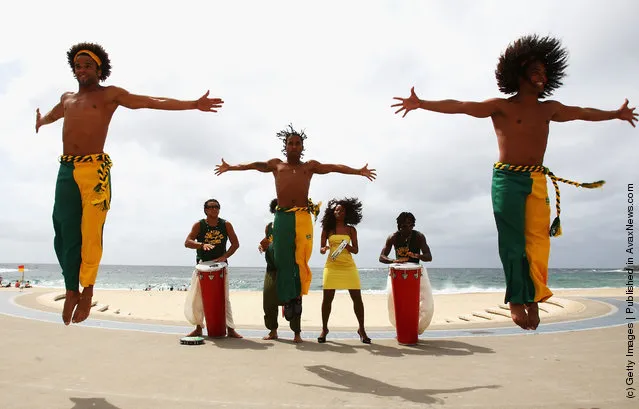
Warriors Of Brazil: Capoeira Spectacular

“Capoeira is a Brazilian art form that combines elements of martial arts, sports, and music. It was created in Brazil mainly by descendants of African slaves with Brazilian native influences, probably beginning in the 16th century. It is known by quick and complex moves, using mainly power kicks and quick leg sweeps, with some ground and aerial acrobatics, knee strikes, take-downs, elbow strikes, punches and headbutts. The word capoeira comes from Tupi, referring to the areas of low vegetation in the Brazilian interior”. – Wikipedia

Photo: The Warriors of Brazil perform on Coogee Beach on November 23, 2009 in Sydney, Australia. The Warriors of Brazil show is a spectacular stage show which combines the extraordinary martial art of Capoeira with the uplifting music and dance of Carnival. (Photo by Ryan Pierse/Getty Images)
Details
19 Sep 2011 14:13:00
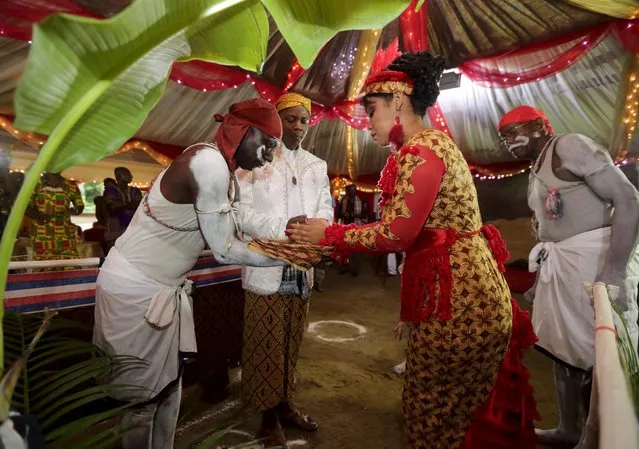
Winti spiritual leader Ramon Mac-Nack (2nd L) looks on as as his bride Melissa Karwafodi (2nd R) hands a gourd to a Maroon priest (L) as they are wedded in the first Winti marriage ever to be held in public, in district Para, Suriname, November 16, 2015. (Photo by Ranu Abhelakh/Reuters)

Winti spiritual leader Ramon Mac-Nack (2nd L) looks on as as his bride Melissa Karwafodi (2nd R) hands a gourd to a Maroon priest (L) as they are wedded in the first Winti marriage ever to be held in public, in district Para, Suriname, November 16, 2015. The Winti religion, which formed centuries ago out of elements of different religious traditions that African slaves brought with them to Suriname, was considered a form idolatry and prohibited by law since the days of slavery until it was finally officially recognized in 1971. (Photo by Ranu Abhelakh/Reuters)
Details
27 Nov 2015 05:51:00
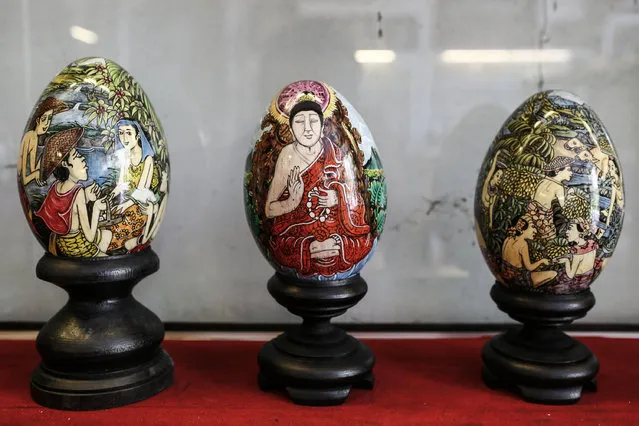
Painted eggshell displayed at Wayan Sadra's workshop on April 14, 2014 in Sukawati, Gianyar, Bali, Indonesia. (Photo by Putu Sayoga/Getty Images)

Painted eggshell displayed at Wayan Sadra's workshop on April 14, 2014 in Sukawati, Gianyar, Bali, Indonesia. 50-year-old Wayan Sadra got the idea to start his eggshell painting business, after his niece who worked in a five star hotel asked for his help to paint on an egg for an Easter egg competition. Now the business he started in 1997 attracts customers for his painted eggs from Germany, France, Italy, and the Netherlands. Sadra usually experiences a surge in sales ahead of Easter. (Photo by Putu Sayoga/Getty Images)
Details
15 Apr 2014 10:40:00
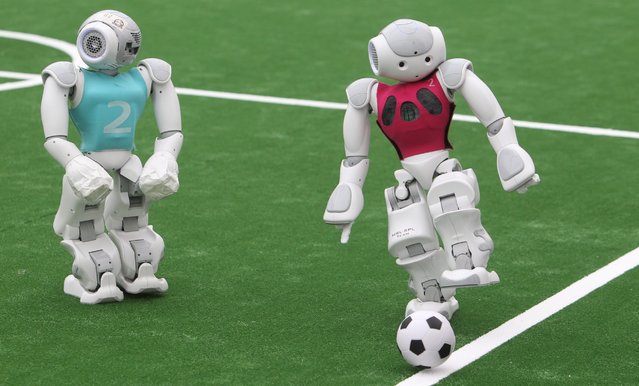
Humanoid robots compete in a group match of the 20th RoboCup in Leipzig, Germany, June 30, 2016. Thousands of participants from over 40 countries are competing this year in RoboCup 2016 with their humanoid soccer playing robots in Leipzig, Germany. “When established in 1997, the original mission was to field a team of robots capable of winning against the human soccer World Cup champions by 2050”, according to RoboCup. Now participants compete in five different soccer categories as well as RoboCup Rescue, which researches robotic effectiveness and usefulness to first responders. (Photo by Sebastian Willnow/EPA)

Humanoid robots compete in a group match of the 20th RoboCup in Leipzig, Germany, June 30, 2016. About 3,500 participants from 45 countries and regions compete in the robot world championship until 04 July. (Photo by Sebastian Willnow/EPA)
Details
02 Jul 2016 12:39:00
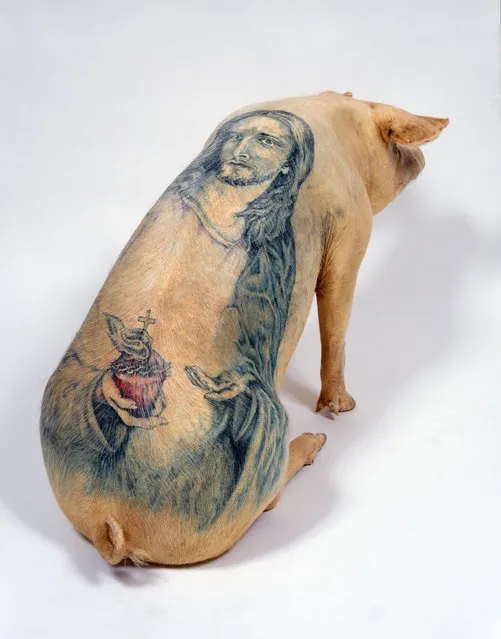
Tattooing Pigs By Wim Delvoye

Wim Delvoye is a notorious tattoo artist, who became famous when he started tattooing live pigs. He first began in 1997 and after animal rights activists found out about what he was doing, he had to move to China to continue his business. There is nothing special about the tattoos that Wim Delvoye creates, they look mediocre at best, and the only reason why he’s famous is his acts of animal cruelty. Nevertheless, Wim states that the pigs feel just fine and are well fed and taken care off. Full anesthesia is used to ensure that the pig doesn’t feel pain during the course of the whole procedure. During this time three tattoo artists work on the tattoo simultaneously to complete it as quickly as possible. Skins of those pigs are then sold for as much as £50k a piece.
Details
02 Apr 2015 09:06:00