Loading...
Done
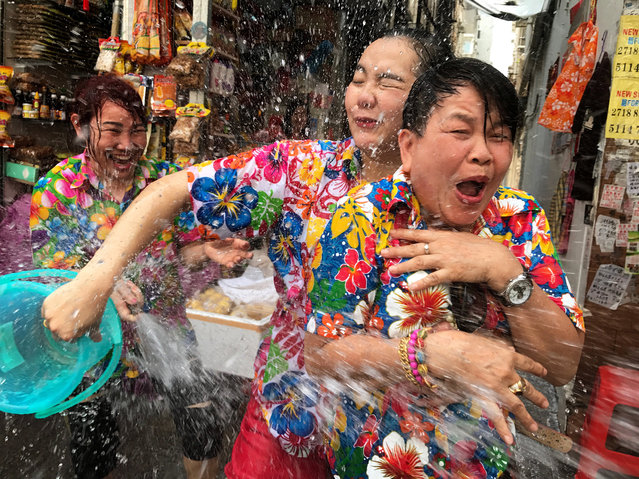
People spray water in the street ahead of “Songkran”, the annual Thai New Year water-throwing festival, in Kowloon City, Hong Kong, China, 09 April 2017. The pouring of water is a key element in the festival as it represents purification and the washing away of one's sins and bad luck for the year. The event also includes a “Miss Songkran” pageant where contestants are clothed in traditional Thai dress, and a winner is crowned. This year's “Songkran” will begin in Thailand on 13 April 2017. (Photo by Alex Hofford/EPA)

People spray water in the street ahead of “Songkran”, the annual Thai New Year water-throwing festival, in Kowloon City, Hong Kong, China, 09 April 2017. The pouring of water is a key element in the festival as it represents purification and the washing away of one's sins and bad luck for the year. The event also includes a “Miss Songkran” pageant where contestants are clothed in traditional Thai dress, and a winner is crowned. This year's “Songkran” will begin in Thailand on 13 April 2017. (Photo by Alex Hofford/EPA)
Details
10 Apr 2017 09:05:00
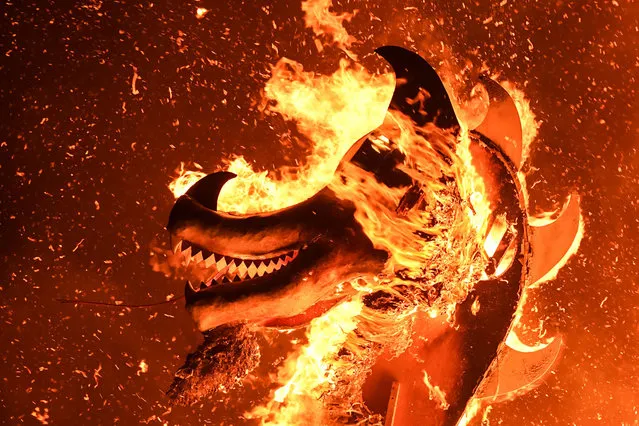
A ship on fire is picture during the parade of members of the Up Helly Aa “Jarl Squad” through the streets of in Lerwick, Shetland Islands on January 30, 2024 during the Up Helly Aa festival later in the day. Up Helly Aa celebrates the influence of the Scandinavian Vikings in the Shetland Islands and culminates with up to 1,000 “guizers” (men in costume) throwing flaming torches into their Viking longboat and setting it alight later in the evening. (Photo by Andy Buchanan/AFP Photo)

A ship on fire is picture during the parade of members of the Up Helly Aa “Jarl Squad” through the streets of in Lerwick, Shetland Islands on January 30, 2024 during the Up Helly Aa festival later in the day. Up Helly Aa celebrates the influence of the Scandinavian Vikings in the Shetland Islands and culminates with up to 1,000 “guizers” (men in costume) throwing flaming torches into their Viking longboat and setting it alight later in the evening. (Photo by Andy Buchanan/AFP Photo)
Details
30 Mar 2024 05:27:00
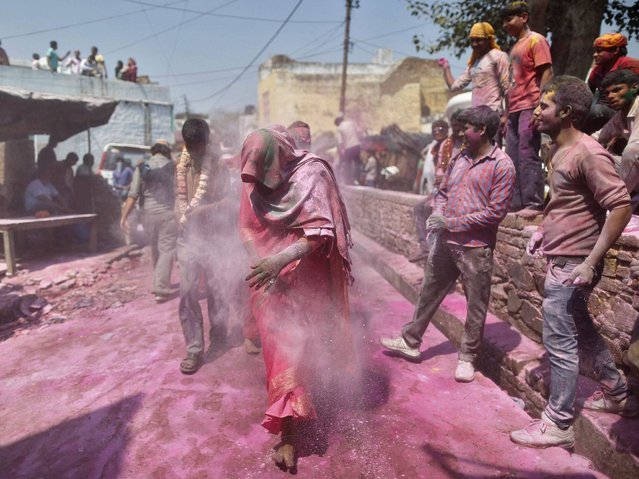
In a Holi tradition unique to Barsana and Nandgaon villages, men sing provocative songs to gain the attention of women, who then “beat” them with bamboo sticks called “lathis”. (Photo by Anindito Mukherjee/Reuters)

A woman covers her face as men throw colored powder at her during “Lathmar Holi” at the village of Barsana in the northern Indian state of Uttar Pradesh March 9, 2014. (Photo by Anindito Mukherjee/Reuters)
Details
13 Mar 2014 08:05:00
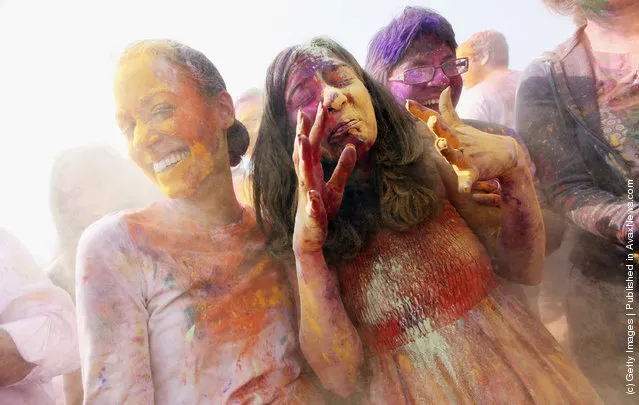
Revelers celebrate the Indian festival of Holi on a boat cruise around part of Manhattan

Revelers celebrate the Indian festival of Holi on a boat cruise around part of Manhattan on March 17, 2012 in New York City. During the Hindu festival of Holi, also known as the Festival of Colors, which marks the arrival of spring, participants throw colored powder and water on one another. Many of the New York participants are Indian-American. (Photo by Mario Tama/Getty Images)
Details
18 Mar 2012 09:29:00


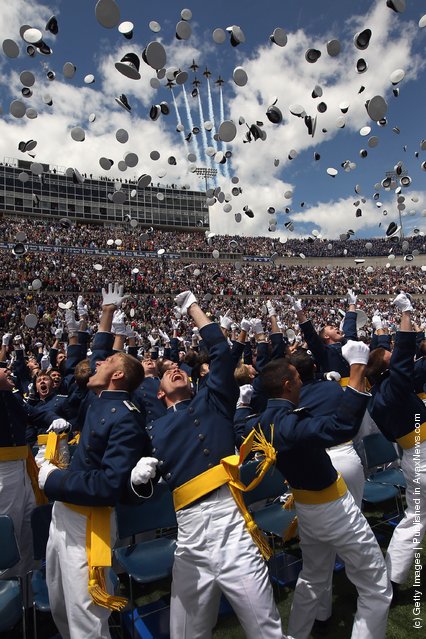
Newly commissioned 2nd lieutenants throw their caps in the air as a team of F-16 Air Force Thunderbirds fly over the 2011 graduating class of the U.S. Air Force Academy on May 25, 2011 in Colorado Springs, Colorado. A total of 1,021 graduates received their diplomas in front of their families and dignitaries at the Academy's Falcon Stadium. (Photo by John Moore/Getty Images)
Details
26 May 2011 08:27:00
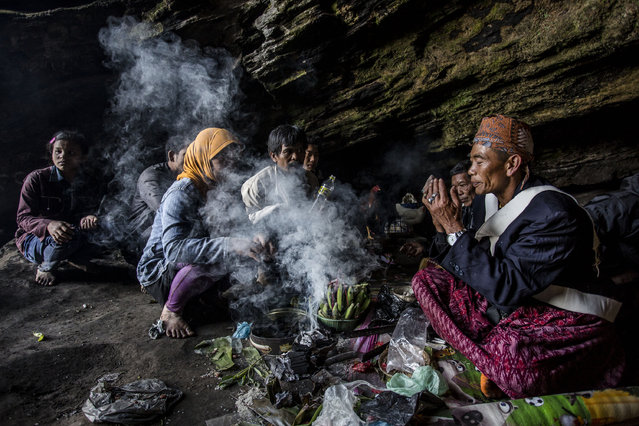
A Tenggerese shaman praying for worshippers at Widodaren cave during the Tenggerese Hindu Yadnya Kasada festival on July 31, 2015 in Probolinggo, East Java, Indonesia. The festival is the main festival of the Tenggerese people and lasts about a month. On the fourteenth day, the Tenggerese make the journey to Mount Bromo to make offerings of rice, fruits, vegetables, flowers and livestock to the mountain gods by throwing them into the volcano's caldera. (Photo by Ulet Ifansasti/Getty Images)

A Tenggerese shaman praying for worshippers at Widodaren cave during the Tenggerese Hindu Yadnya Kasada festival on July 31, 2015 in Probolinggo, East Java, Indonesia. The festival is the main festival of the Tenggerese people and lasts about a month. On the fourteenth day, the Tenggerese make the journey to Mount Bromo to make offerings of rice, fruits, vegetables, flowers and livestock to the mountain gods by throwing them into the volcano's caldera. The origin of the festival lies in the 15th century when a princess named Roro Anteng started the principality of Tengger with her husband Joko Seger, and the childless couple asked the mountain Gods for help in bearing children. The legend says the Gods granted them 24 children but on the provision that the 25th must be tossed into the volcano in sacrifice. The 25th child, Kesuma, was finally sacrificed in this way after initial refusal, and the tradition of throwing sacrifices into the caldera to appease the mountain Gods continues today. (Photo by Ulet Ifansasti/Getty Images)
Details
01 Aug 2015 12:07:00
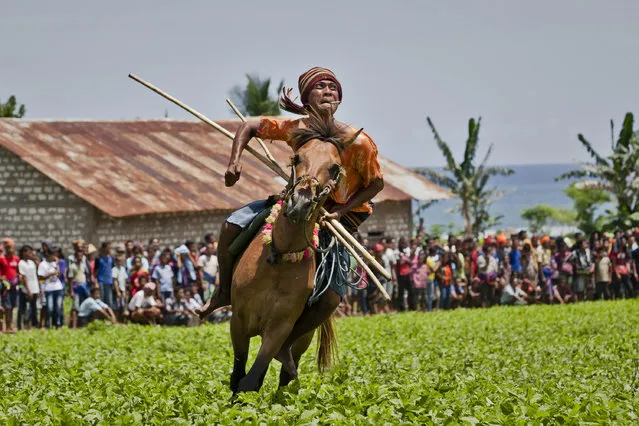
A Pasola rider reacts after throwing his spear during the Pasola war festival at Ratenggaro village on March 22, 2014 in Sumba Island, Indonesia. The Pasola Festival is an important annual event to welcome the new harvest season, which coincides with the arrival of  “Nyale” sea worms during February or March each year. Pasola, an ancient ritual fighting game, involves two teams of men on horseback charging towards each other while trying to hit their rivals with “pasol” javelins and avoid being hit themselves. (Photo by Ulet Ifansasti/Getty Images)

A Pasola rider reacts after throwing his spear during the Pasola war festival at Ratenggaro village on March 22, 2014 in Sumba Island, Indonesia. The Pasola Festival is an important annual event to welcome the new harvest season, which coincides with the arrival of “Nyale” sea worms during February or March each year. Pasola, an ancient ritual fighting game, involves two teams of men on horseback charging towards each other while trying to hit their rivals with “pasol” javelins and avoid being hit themselves. (Photo by Ulet Ifansasti/Getty Images)
Details
25 Mar 2014 07:54:00
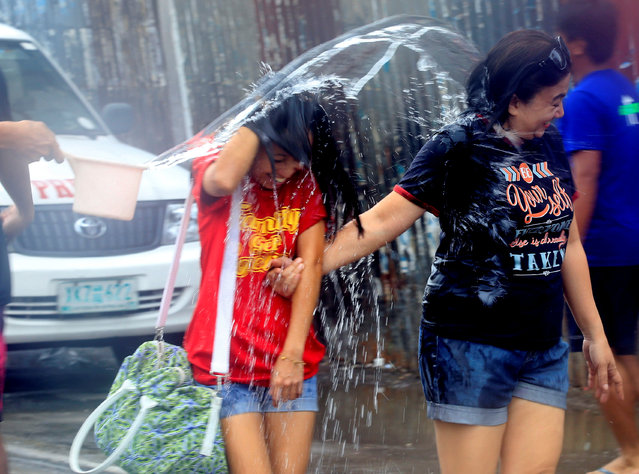
A man throws water at pedestrians as residents join in a water-splashing frenzy to honor their patron Saint John the Baptist's Feast Day in San Juan, Metro Manila, Philippines June 24, 2016. San Juan is renowned for its celebration of the Nativity of St. John the Baptist every year of June 24. In a nod to the saint's characteristic act, San Juaneños engage in Basaan (“wetting”), where revellers splash people with water. (Photo by Romeo Ranoco/Reuters)

A man throws water at pedestrians as residents join in a water-splashing frenzy to honor their patron Saint John the Baptist's Feast Day in San Juan, Metro Manila, Philippines June 24, 2016. San Juan is renowned for its celebration of the Nativity of St. John the Baptist every year of June 24. In a nod to the saint's characteristic act, San Juaneños engage in Basaan (“wetting”), where revellers splash people with water. (Photo by Romeo Ranoco/Reuters)
Details
26 Jun 2016 13:34:00