Loading...
Done
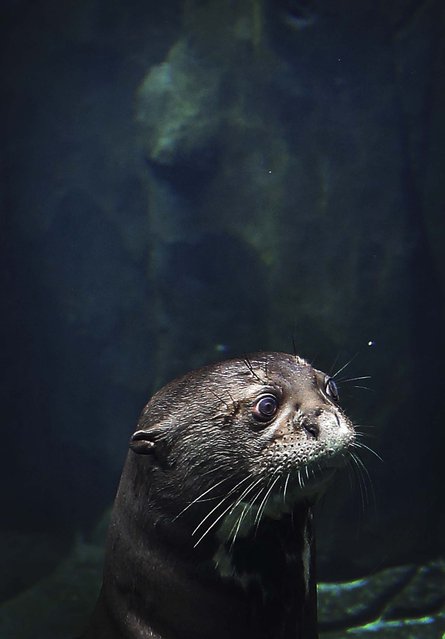
A giant river otter, the world's largest otter species, looks out of its enclosure at the newly completed River Safari in Singapore, on March 25, 2013. (Photo by Wong Maye-E/Associated Press)

A giant river otter, the world's largest otter species, looks out of its enclosure at the newly completed River Safari in Singapore, on March 25, 2013. (Photo by Wong Maye-E/Associated Press)
Details
30 Mar 2013 12:22:00
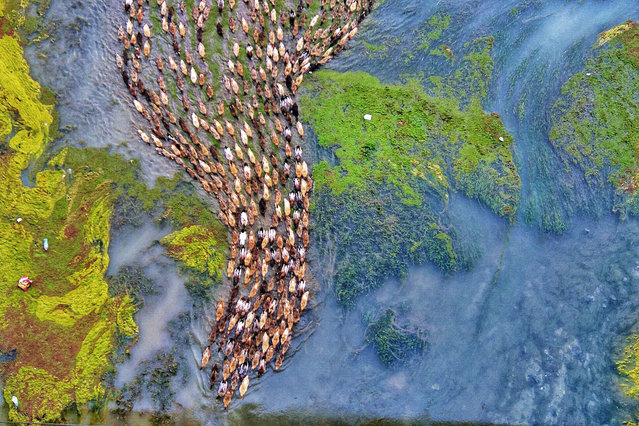
Ducks in the river Baral in Bangladesh. (Photo by Rafeur Rahman/Caters News Agency)

These photographs of hundreds of ducks following their leader down a river are truly mesmerizing. Rafeur Rahman of Bangladesh climbed a high bridge and saw hundreds of ducks apparently playing a game of follow the leader. More than 500 ducks live on the river, where the mosses and snails provide the perfect habitat. Here: Ducks in the river Baral in Bangladesh. (Photo by Rafeur Rahman/Caters News Agency)
Details
08 May 2018 00:05:00
Staff of a boat restaurant on the Taedong River line up at the entrance as they wait to greet customers Sunday, June 18, 2017, in Pyongyang, North Korea. The boat is berthed along the river, which is the fifth longest river on the Korean Peninsula and runs through the country's capital, Pyongyang. (Photo by Wong Maye-E/AP Photo)

Staff of a boat restaurant on the Taedong River line up at the entrance as they wait to greet customers Sunday, June 18, 2017, in Pyongyang, North Korea. The boat is berthed along the river, which is the fifth longest river on the Korean Peninsula and runs through the country's capital, Pyongyang. (Photo by Wong Maye-E/AP Photo)
Details
29 Jun 2017 07:59:00
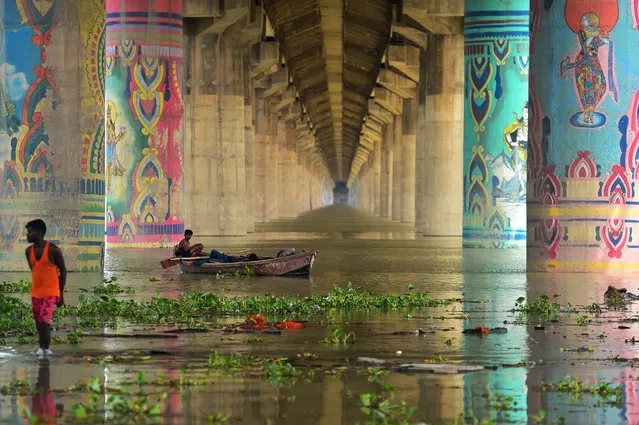
Men rest on a boat in the overflowed Ganges River under the Shastri Bridge in Allahabad on August 17, 2022, as water levels of the Ganges and Yamuna rivers rose following monsoon rainfalls. (Photo by Sanjay Kanojia/AFP Photo)

Men rest on a boat in the overflowed Ganges River under the Shastri Bridge in Allahabad on August 17, 2022, as water levels of the Ganges and Yamuna rivers rose following monsoon rainfalls. (Photo by Sanjay Kanojia/AFP Photo)
Details
24 Aug 2022 04:51:00
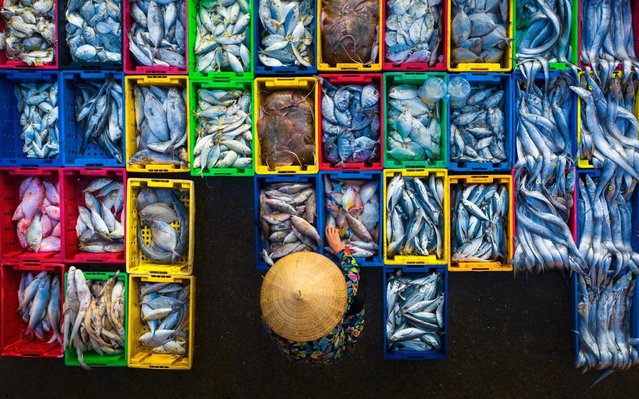
Traders lay out their stools in a fishing village of Long Hai commune in Vung Tau province, Vietnam on June 17, 2020 with the market opening at midnight and trading into the early hours of the morning each day. It is the largest wholesale fishing market in the region and market traders can be seen sorting their fish into their different types before putting them into different coloured boxes for sale. (Photo by Pham Huy Trung/Solent News)

Traders lay out their stools in a fishing village of Long Hai commune in Vung Tau province, Vietnam on June 17, 2020 with the market opening at midnight and trading into the early hours of the morning each day. It is the largest wholesale fishing market in the region and market traders can be seen sorting their fish into their different types before putting them into different coloured boxes for sale. (Photo by Pham Huy Trung/Solent News)
Details
23 Jun 2020 00:01:00
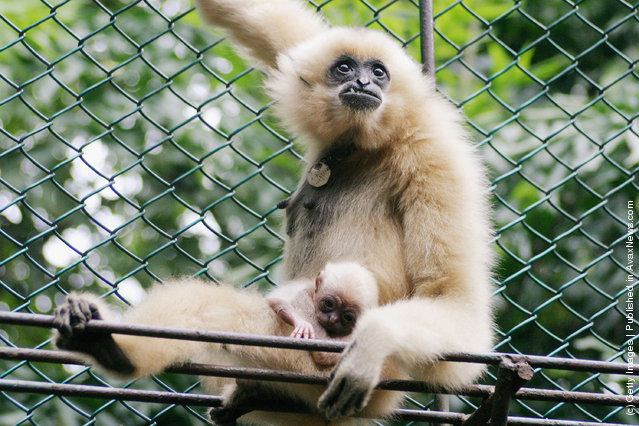
Newborn White-Cheeked Gibbon Nomascus

“Nomascus is the second most speciose genus of gibbons (family Hylobatidae). Originally this genus was a subgenus of Hylobates, and all individuals were considered one species, Hylobates concolor. Species within Nomascus are characterized by 52 chromosomes. Some species are all black, some light with a distinct black tuft of crown fur, and some by distinct, light-colored cheek patches. Nomascus is found from southern China (Yunnan) to southern Vietnam, and also on Hainan Island. One of the genus' species, Nomascus nasutus, has been deemed “the most critically endangered ape species in the world”. All of the species in this genus are endangered or critically endangered”. – Wikipedia

Photo: A newborn White-Cheeked Gibbon clings to its mother in the Nanning Zoo on April 12, 2004 in Nanning, Guangxi province, China. The White-Cheeked Gibbon's natural habitat is Southern China as well as Vietnam and Laos. They are classified as highly endangered and are on the brink of extinction due to poaching and reduction of natural rainforests. (Photo by Getty Images)
Details
12 Aug 2011 11:51:00
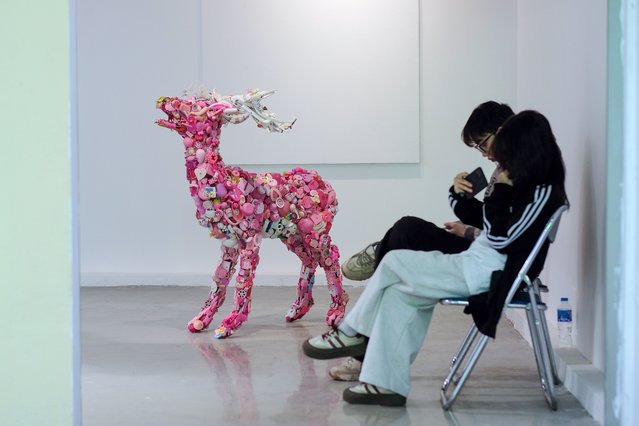
People sit next to an art installation during the “Plastic Dinoland” exhibition by Japanese artist Hiroshi Fuji, in Hanoi, Vietnam, 17 March 2025. The exhibition, which features colorful installations of dinosaurs made from discarded toys, runs from 15 March to 01 June 2025 at The Japan Foundation in Hanoi. (Photo by Luong Thai Linh/EPA/EFE)

People sit next to an art installation during the “Plastic Dinoland” exhibition by Japanese artist Hiroshi Fuji, in Hanoi, Vietnam, 17 March 2025. The exhibition, which features colorful installations of dinosaurs made from discarded toys, runs from 15 March to 01 June 2025 at The Japan Foundation in Hanoi. (Photo by Luong Thai Linh/EPA/EFE)
Details
11 Apr 2025 02:58:00
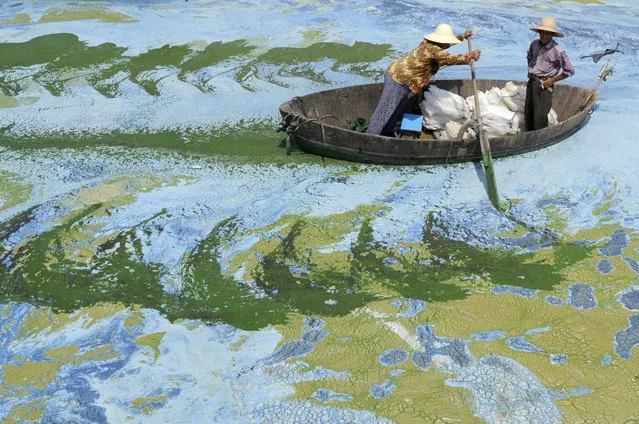
Fishermen row a boat in the algae-filled Chaohu Lake in Hefei, Anhui province, June 19, 2009. The country has invested 51 billion yuan ($7.4 billion) towards the construction of 2,712 projects for the treatment of eight rivers and lakes including Huaihe River, Haihe River, Liaohe River, Chaohu Lake, Dianchi Lake, Songhua River, the Three Gorges region of the Yangtze River and its upstream area, Xinhua News Agency reported. (Photo by Jianan Yu/Reuters)

Growing cities, overuse of fertilizers and factory wastewater have degraded China's water supplies to the extent that half the nation's rivers and lakes are severely polluted. China aims to spend $850 billion to improve filthy water supplies over the next decade, but even such huge outlays may do little to reverse damage caused by decades of pollution and overuse in Beijing's push for rapid economic growth. Photo: Fishermen row a boat in the algae-filled Chaohu Lake in Hefei, Anhui province, June 19, 2009. (Photo by Jianan Yu/Reuters)
Details
03 Aug 2014 08:01:00