Loading...
Done
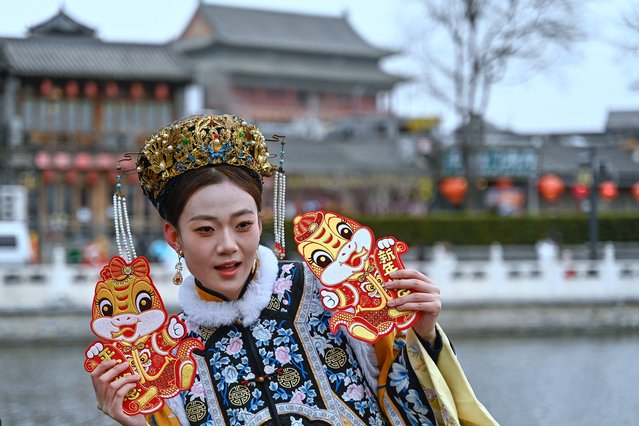
A woman wearing traditional Chinese costumes holds two snake figurines as she poses for a photo by Houhai Lake in Beijing on January 26, 2025, ahead of the Lunar New Year of the Snake which falls on January 29. (Photo by Pedro Pardo/AFP Photo)

A woman wearing traditional Chinese costumes holds two snake figurines as she poses for a photo by Houhai Lake in Beijing on January 26, 2025, ahead of the Lunar New Year of the Snake which falls on January 29. (Photo by Pedro Pardo/AFP Photo)
Details
04 Feb 2025 03:44:00
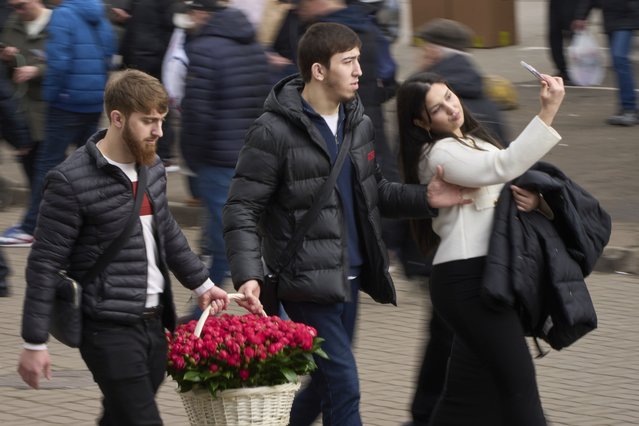
Two men carrie a basket of flowers purchased from the flower market as a woman makes a selfie on the eve of an International Women's Day, in Moscow, Russia, on Friday, March 7, 2025. (Photo by Alexander Zemlianichenko/AP Photo)

Two men carrie a basket of flowers purchased from the flower market as a woman makes a selfie on the eve of an International Women's Day, in Moscow, Russia, on Friday, March 7, 2025. (Photo by Alexander Zemlianichenko/AP Photo)
Details
20 Mar 2025 03:53:00
This photo taken on November 20, 2022 shows a woman wearing the Chinese transitional dress, known as Hanfu, taking part in a parade in Shenyang in China's northeastern Liaoning province. (Photo by AFP Photo/China Stringer Network)

This photo taken on November 20, 2022 shows a woman wearing the Chinese transitional dress, known as Hanfu, taking part in a parade in Shenyang in China's northeastern Liaoning province. (Photo by AFP Photo/China Stringer Network)
Details
29 Nov 2022 06:03:00
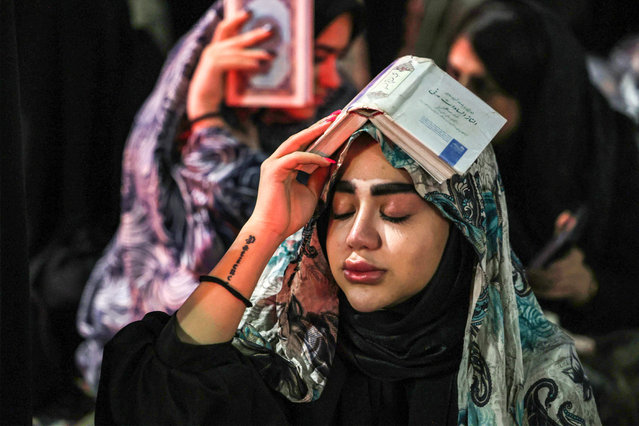
A woman prays during a gathering with other devotees for the ritual prayers for Laylat al-Qadr (Night of Destiny), one of the holiest nights during the Muslim fasting month of Ramadan, outside the Imamzadeh Saleh mosque in Tehran, on April 10, 2023. (Photo by Atta Kenare/AFP Photo)

A woman prays during a gathering with other devotees for the ritual prayers for Laylat al-Qadr (Night of Destiny), one of the holiest nights during the Muslim fasting month of Ramadan, outside the Imamzadeh Saleh mosque in Tehran, on April 10, 2023. (Photo by Atta Kenare/AFP Photo)
Details
18 Apr 2023 04:39:00
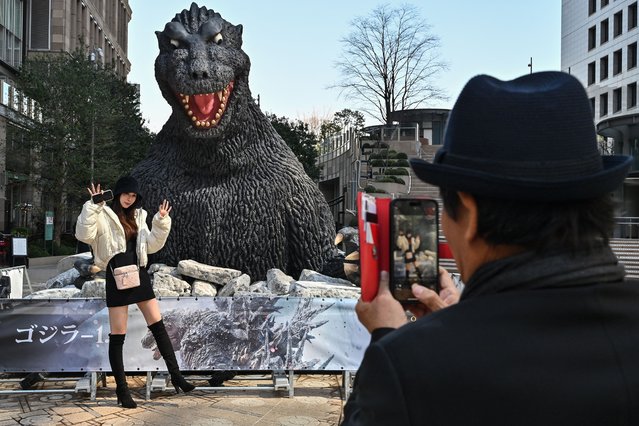
A woman poses for a photo in front of an installation to promote the film “Godzilla Minus One”, which won the Oscar for best visual effects at the Academy Awards in Los Angeles, outside a popular shopping centre and official development in the Hibiya area of Tokyo on March 11, 2024. (Photo by Richard A. Brooks/AFP Photo)

A woman poses for a photo in front of an installation to promote the film “Godzilla Minus One”, which won the Oscar for best visual effects at the Academy Awards in Los Angeles, outside a popular shopping centre and official development in the Hibiya area of Tokyo on March 11, 2024. (Photo by Richard A. Brooks/AFP Photo)
Details
18 Jul 2025 02:27:00
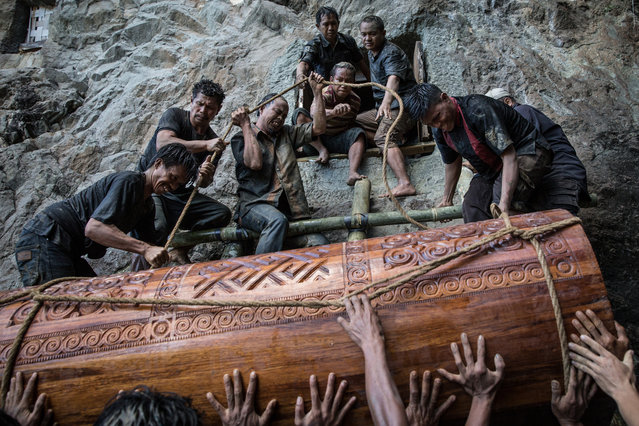
It is said that Torajans are people who “live to die”. For this Indonesian ethnic group, funerals are such extravagant events that they sometimes attract tourists. Families can postpone burials years (and the deceased are considered sick and hosted at home until the funeral) until the family can raise enough money and gather as many relatives as possible. And then it’s a jubilant multiday social event with a parade, dances and animal sacrifices. Agung Parameswara photographed these funerary practices when he traveled to South Sulawesi province, where the Torajans live. But often, their funeral isn’t the last time the dead are seen. In August, crypts are opened, coffins are slid back out and bodies delicately unsheathed. This tender ritual is known as Ma’Nene, which is customarily performed every few years. (Photo by Agung Parameswara/The Washington Post)

It is said that Torajans are people who “live to die”. For this Indonesian ethnic group, funerals are such extravagant events that they sometimes attract tourists. Families can postpone burials years (and the deceased are considered sick and hosted at home until the funeral) until the family can raise enough money and gather as many relatives as possible. And then it’s a jubilant multiday social event with a parade, dances and animal sacrifices. Agung Parameswara photographed these funerary practices when he traveled to South Sulawesi province, where the Torajans live. (Photo by Agung Parameswara/The Washington Post)
Details
06 Oct 2016 09:15:00
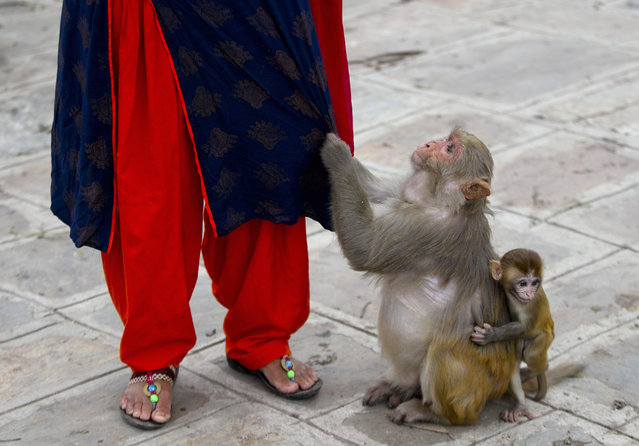
In this July 8, 2019, photo, a monkey pulls on the clothes of Saraswati Dangol as she arrives to feed monkeys in the forest near Pashupatinath temple in Kathmandu, Nepal. For the past four years, Dangol has been bringing the bread every day to feed the monkeys. As soon as they see her with her white sack, they gather around her, some patiently waiting for their turn while others less patiently snatching the bread from her hands. Many of Dangol's regulars are elderly, or are mother or baby monkeys who are unable to fight for their share of food in the wild. (Photo by Niranjan Shrestha/AP Photo)

In this July 8, 2019, photo, a monkey pulls on the clothes of Saraswati Dangol as she arrives to feed monkeys in the forest near Pashupatinath temple in Kathmandu, Nepal. For the past four years, Dangol has been bringing the bread every day to feed the monkeys. As soon as they see her with her white sack, they gather around her, some patiently waiting for their turn while others less patiently snatching the bread from her hands. Many of Dangol's regulars are elderly, or are mother or baby monkeys who are unable to fight for their share of food in the wild. (Photo by Niranjan Shrestha/AP Photo)
Details
26 Jul 2019 00:03:00


“The Trabant is a car that was produced by former East German auto maker VEB Sachsenring Automobilwerke Zwickau in Zwickau, Sachsen. It was the most common vehicle in East Germany, and was also exported to countries both inside and outside the communist bloc. The main selling points was that it had room for four adults and luggage in a compact, light and durable shell and that it was fast (when introduced) and durable. With its mediocre performance, smoky two-stroke engine, and production shortages, the Trabant is often cited as an example of the disadvantages of centralized planning; on the other hand, it is regarded with derisive affection as a symbol of the failed former East Germany and of the fall of communism (in former West Germany, as many East Germans streamed into West Berlin and West Germany in their Trabants after the opening of the Berlin Wall in 1989). It was in production without any significant changes for nearly 30 years with 3,096,099 Trabants produced in total”. – Wikipedia

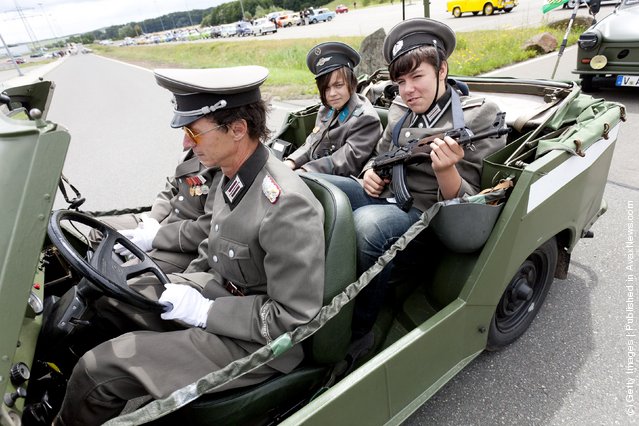
Photo: Enthusiasts weared in uniforms of the former eastern german army trive in a military Trabant car as fans and owners of East German-era Trabant cars gather at the 2011 International Trabantfahrer Treffen (International Trabant Drivers Meeting) on June 26, 2011 in Zwickau, Germany. The Trabant, also known as the Trabi, was among the main cars produced in communist East Germany and built by VEB Sachsenring Automobilwerke in Zwickau for 30 years until 1989. Today the car has cult status for many followers and one company, IndiKar, is even seeking to revive the brand in a modern, electric version. (Photo by Carsten Koall/Getty Images)

Details
27 Jun 2011 12:21:00