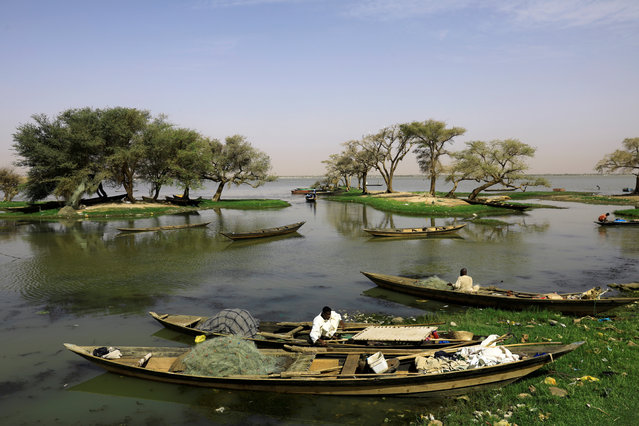
Sudanese fishermen check their boats and nets before they row through the waters of Nile River near Jebel Aulia, Sudan, May 3, 2019. (Photo by Umit Bektas/Reuters)
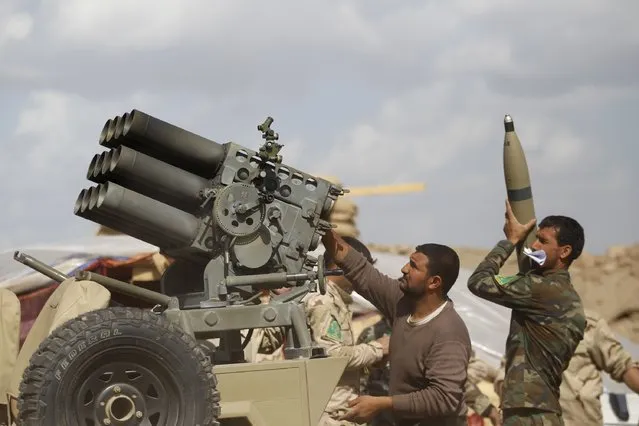
Iraqi security forces and Shi'ite fighters reload a weapon during clashes with Islamic State militants in Salahuddin province March 2, 2015. Iraq's armed forces, backed by Shi'ite militia, attacked Islamic State strongholds north of Baghdad on Monday as they launched an offensive to retake the city of Tikrit and the surrounding Sunni Muslim province of Salahuddin. REUTERS/Thaier Al-Sudani
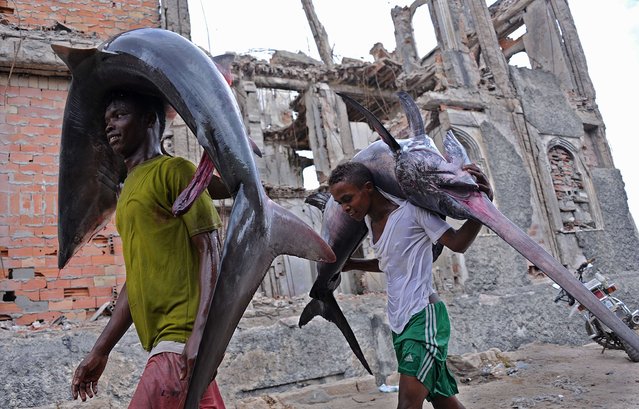
Porters carry the carcasses of a shark (L) and a Marlin (R) to the local market in Hamarweyne near the port of Mogadishu on the Indian Ocean coast on November 18, 2014 in the Somalia capital as fishermen bring in their catch. (Photo by Mohamed Abdiwahab/AFP Photo)
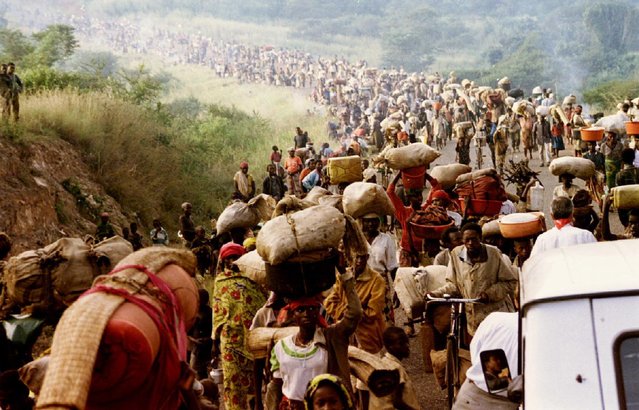
Rwandan refugees cross the Rusumo border to Tanzania from Rwanda carrying their belongings, goats, mattresses and cows, May 30, 1994. The bloodshed that claimed 800,000 Tutsi and moderate Hutu lives began 25 years ago on April 7, 1994, when a plane carrying Rwandan President Juvenal Habyarimana, Burundi President Cyprien Ntaryamira and a French air crew was shot down. (Photo by Jeremiah Kamau/Reuters)
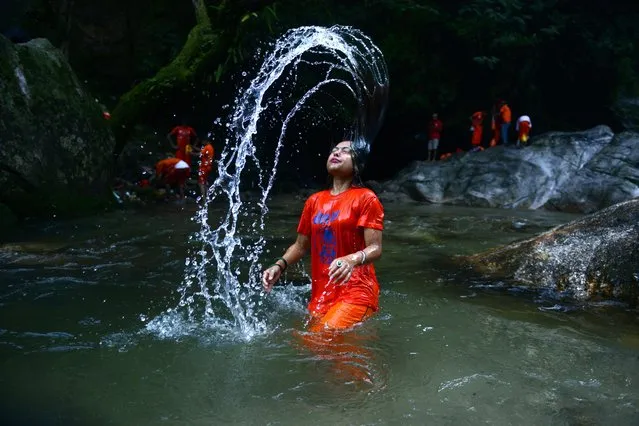
A Nepalese Hindu devotee bathes in the Bagmati River on her way to the Pashupatinath Temple to offer prayers to Lord Shiva, Hindu god of destruction during Shravan festivities in Sundarijal, on the outskirts of Kathmandu on August 3, 2015. According to the Nepali calendar, Shravan is considered the holiest month of the year with each Monday of the month known as Shravan Somvar when worshippers offer prayers for a happy and prosperous life. (Photo by Prakash Mathema/AFP Photo)
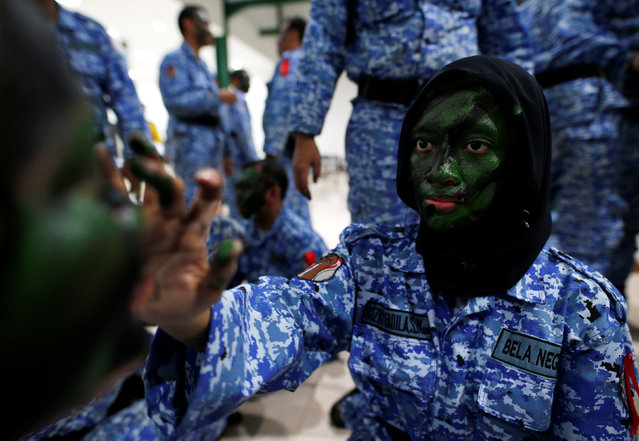
A female participant of the Bela Negara – “defend the nation” – programme applies camouflage face paint on another participant's face at a training centre in Rumpin, Bogor, West Java, Indonesia June 2, 2016. (Photo by Darren Whiteside/Reuters)
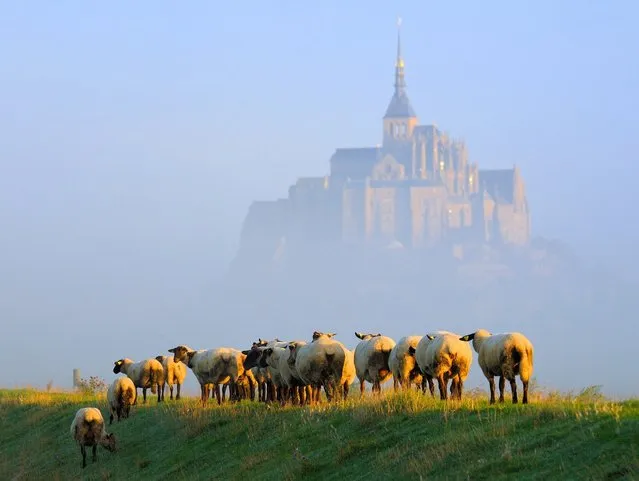
During the feudal times, the society was very structured where everyone knew their place. Fishermen knew that they would always have to bend their knee for highborn ladies and gentlemen, while the latter considered themselves to be far too superior to even look at the common folk. Mont Saint-Michel is a living memorial of those times. Its structural composition clearly reflects the structure of feudal society: The monastery and abbey were built on the highest point; housing and stores were built some distance below; finally, fishermen’s and farmer’s houses were constructed, not even being within the city walls, making them the most vulnerable to the possible attack.