Loading...
Done
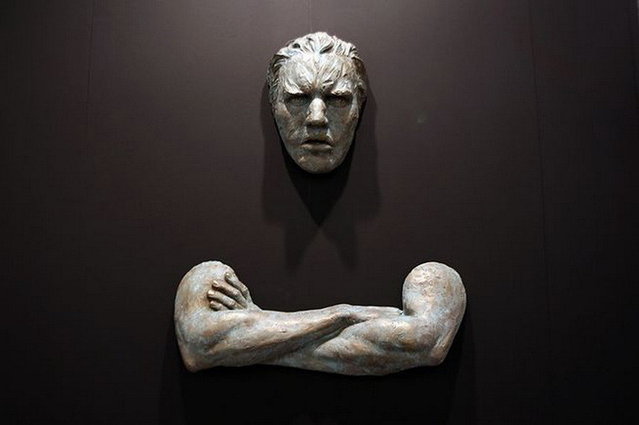
Matteo Pugliese Sculptor

Matteo Pugliese was born in Milan in 1969. In 1978 his family moved to Sardinia and lived there for the next 12 years. During this time he developed a strong love for drawing and sculpture and practiced without formal education. After finishing his secondary school studies in classics in Cagliari, he returned to Milan to attend university. In 1995 he was awarded his degree in modern literature at the University of Milan with a graduation thesis on art criticism.
Details
25 Oct 2013 12:56:00
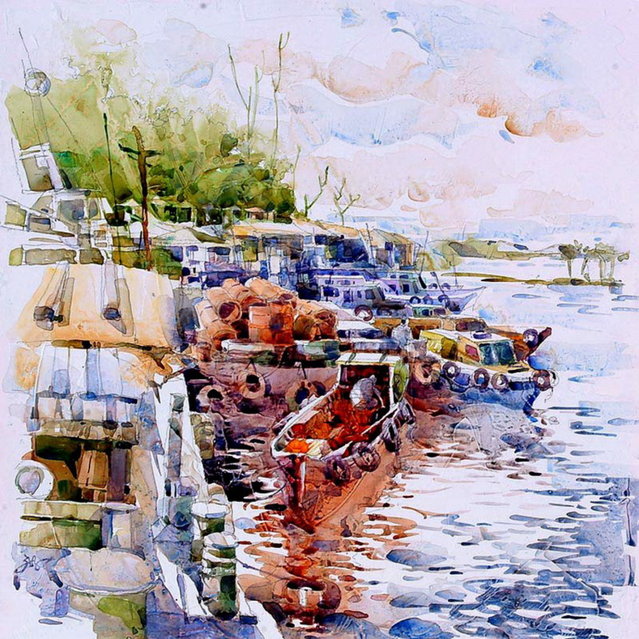
Watercolor Painting By Jack Tia Kee Woon

Jack Tia Kee Woon is an artist from Singapore. He is famous through his technique of watercolor painting in acrylic environment. His painting style is very light and radiant, where the watercolors add the transparence to the picture, while acrylic make the colors look very deep. One can see the influence of Chinese and Japanese culture on his art.
Details
26 May 2014 13:24:00
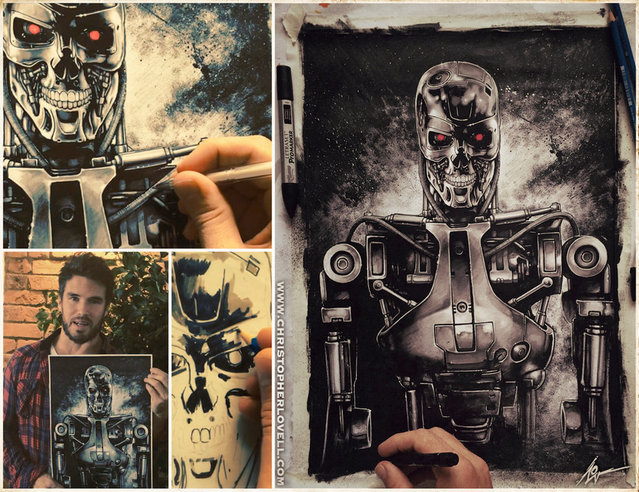
Drawing By Christopher Lovell

Artist Christopher Lovell counts himself lucky to have been a child of the 80s. The toys, cartoons and movies of the era left him spellbound, fueling his imagination. He finds this inspiration allows him to express himself very naturally through his art. Having developed a deep interest in fantasy and sci-fi, he spent his childhood and teen years immersed in every aspect of creativity he could access.
Details
30 May 2015 09:22:00
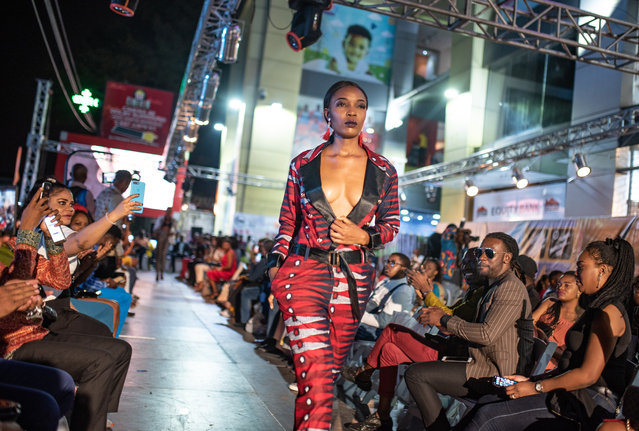
Action on the catwalk during the Congo fashion week. (Photo by Olivia Acland/The Guardian)

The Democratic Republic of the Congo’s misfortunes have often eclipsed its good news, with ongoing armed conflicts and most recently an Ebola outbreak. Much of the world knows little of the country’s vibrant arts scene, and last weekend in the capital, Kinshasa, models showed off daring new looks dreamed up by local designers on the catwalk. (Photo by Olivia Acland/The Guardian)
Details
20 Aug 2018 00:05:00
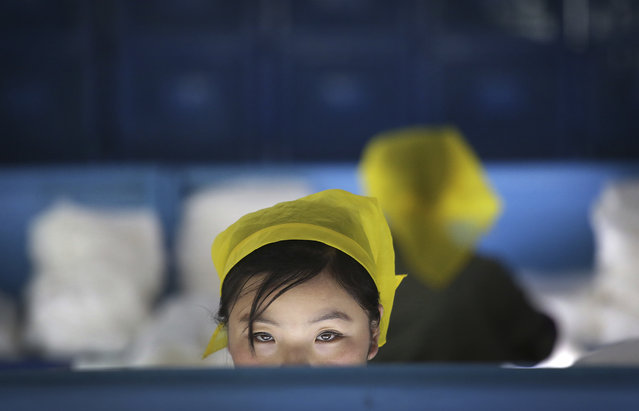
In this Friday, January 6, 2017, photo, a North Korean woman working at the Kim Jong Suk Silk Mill looks up from her workstation in Pyongyang, North Korea. The silk mill, named after North Korean leader Kim Jong Un's grandmother, is where 1,600 workers – mostly women – sort and process silkworms to produce silk thread that officials at the Pyongyang factory say is made into roughly 200 tons of silk a year. (Photo by Wong Maye-E/AP Photo)

In this Friday, January 6, 2017, photo, a North Korean woman working at the Kim Jong Suk Silk Mill looks up from her workstation in Pyongyang, North Korea. The silk mill, named after North Korean leader Kim Jong Un's grandmother, is where 1,600 workers – mostly women – sort and process silkworms to produce silk thread that officials at the Pyongyang factory say is made into roughly 200 tons of silk a year. (Photo by Wong Maye-E/AP Photo)
Details
17 Jan 2017 12:01:00
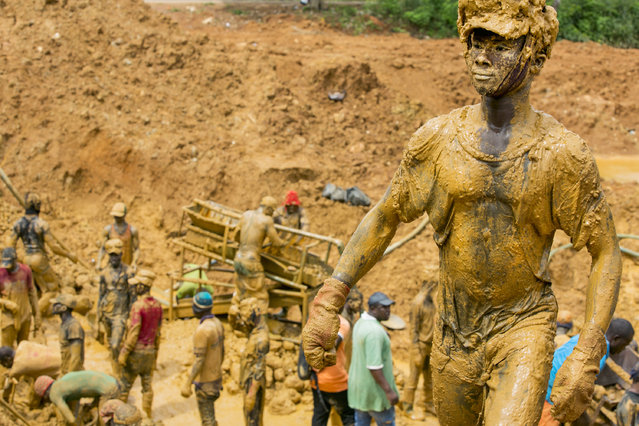
Miners work extremely long days under the hot sun and the hours are often longer in illegal mines in Ghana, West Africa, 2014. An Australian photographer has captured the harsh reality of illegal mining under the unforgiving sun with these Ghanaian miners. Heidi Woodman travelled to Ghana, West Africa to explore the regionís booming mining business, including the growing number of illegal mines. Using Accra as her base, Heidi visited the areas of Tarkwa, Kyebi, East Akim, Kumasi, Obuasi and Takoradi to find areas with a high concentration of galamsey – illegal mining activity. (Photo by Heidi Woodman/Barcroft Images)

Miners work extremely long days under the hot sun and the hours are often longer in illegal mines in Ghana, West Africa, 2014. An Australian photographer has captured the harsh reality of illegal mining under the unforgiving sun with these Ghanaian miners. (Photo by Heidi Woodman/Barcroft Images)
Details
24 Feb 2017 00:02:00
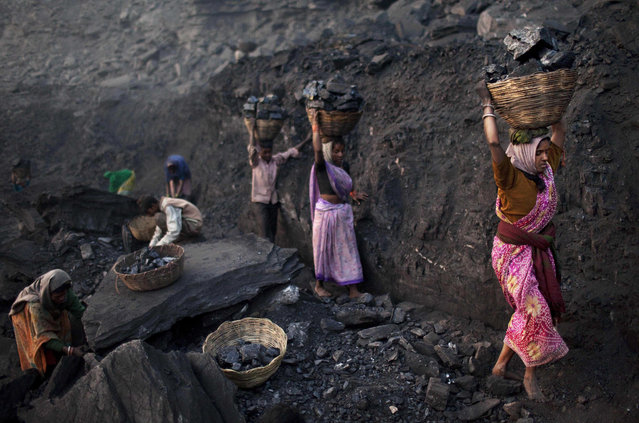
In this Friday, January 7, 2011 photo, people carry baskets of coal scavenged illegally at an open-cast mine in the village of Bokapahari in the eastern Indian state of Jharkhand where a community of coal scavengers live and work. The world's biggest coal users – China, the United States and India – have boosted coal mining in 2017, in an abrupt departure from last year's record global decline for the heavily polluting fuel and a setback to efforts to rein in climate change emissions. (Photo by Kevin Frayer/AP Photo)

In this Friday, January 7, 2011 photo, people carry baskets of coal scavenged illegally at an open-cast mine in the village of Bokapahari in the eastern Indian state of Jharkhand where a community of coal scavengers live and work. The world's biggest coal users – China, the United States and India – have boosted coal mining in 2017, in an abrupt departure from last year's record global decline for the heavily polluting fuel and a setback to efforts to rein in climate change emissions. (Photo by Kevin Frayer/AP Photo)
Details
28 Jun 2017 08:08:00
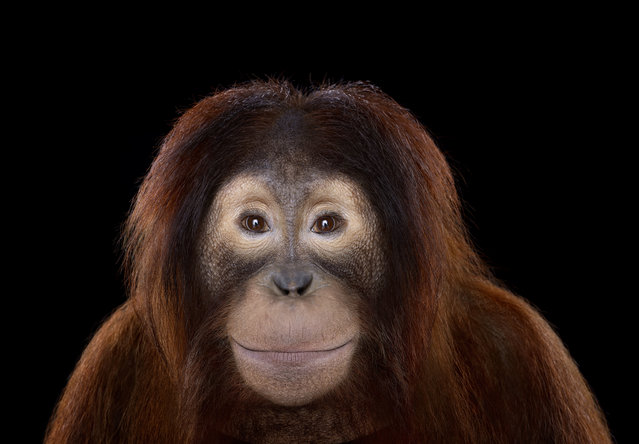
A talented portrait photographer has moved on from capturing traditional human subjects – instead photographing a stunning variety of wild animals. Brad Wilson, 51, stands just feet away from the likes of tigers, rhinos, elephants and primates. Each animal is given the same respect and dignity as any human subject, with Brad setting up a full photographic studio, either at or near sanctuaries and zoos across the U.S. (Photo by Brad Wilson/Caters News)

A talented portrait photographer has moved on from capturing traditional human subjects – instead photographing a stunning variety of wild animals. Brad Wilson, 51, stands just feet away from the likes of tigers, rhinos, elephants and primates. Each animal is given the same respect and dignity as any human subject, with Brad setting up a full photographic studio, either at or near sanctuaries and zoos across the U.S. The works are the second part of Brad's Affinity series, which the photographer – based in Los Angeles, California, first started working on in 2010. Here: Orangutan. (Photo by Brad Wilson/Caters News)
Details
16 Sep 2015 14:53:00