Loading...
Done
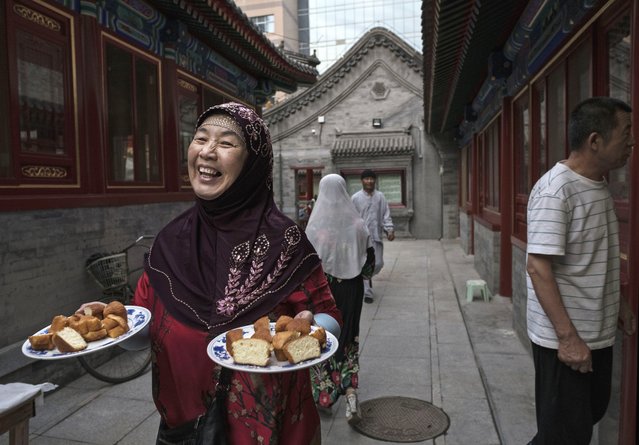
A woman from the Hui Muslim community carries food that will be eaten by her and others to break their fast during the holy fasting month of Ramadan at the Nanxiapo Mosque on June 8, 2018 in Beijing, China. (Photo by Kevin Frayer/Getty Images)

A woman from the Hui Muslim community carries food that will be eaten by her and others to break their fast during the holy fasting month of Ramadan at the Nanxiapo Mosque on June 8, 2018 in Beijing, China. (Photo by Kevin Frayer/Getty Images)
Details
04 Jul 2018 00:05:00
Two horses appear to burst into laughter before a sweet embrace. The horses both turn their head to look at the camera and flash their teeth, treating the lucky photographer to a rare shot. Moments later the pair show their affectionate side by coming together and “hugging”. Photographer Nir Amos, 34, said he was “amazed” to capture the horses “laughing” in a field near Skógar, in the south east of Iceland on July 31, 2018. (Photo by Nir Amos/Solent News & Photo Agency)

Two horses appear to burst into laughter before a sweet embrace. The horses both turn their head to look at the camera and flash their teeth, treating the lucky photographer to a rare shot. Moments later the pair show their affectionate side by coming together and “hugging”. Photographer Nir Amos, 34, said he was “amazed” to capture the horses “laughing” in a field near Skógar, in the south east of Iceland on July 31, 2018. (Photo by Nir Amos/Solent News & Photo Agency)
Details
05 Aug 2018 00:03:00
Guests attend preview event for “Candytopia”, the outrageously interactive candy wonderland, opening in San Francisco on September 6, 2018. (Photo by Kelly Sullivan/Getty Images for Candytopia)

Guests attend preview event for “Candytopia”, the outrageously interactive candy wonderland, opening in San Francisco, USA on September 6, 2018. (Photo by Kelly Sullivan/Getty Images for Candytopia)
Details
07 Sep 2018 05:27:00
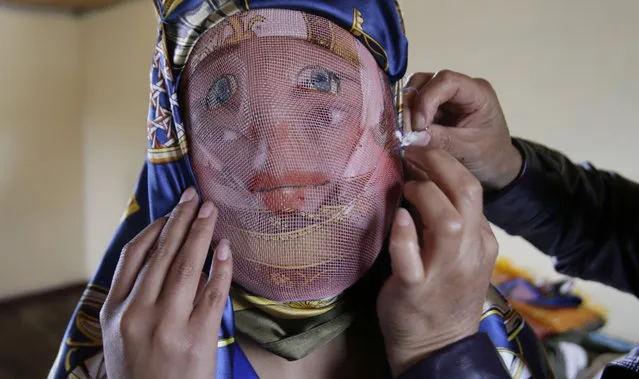
Woman dons a mask a she prepares to dance in the streets during the feast of La Diablada, in Pillaro, Ecuador, Friday, January 4, 2019. The town of Pillaro kicks off the feast of the La Diablada with neighborhoods competing to bring as many people dressed as different characters. (Photo by Dolores Ochoa/AP Photo)

Woman dons a mask a she prepares to dance in the streets during the feast of La Diablada, in Pillaro, Ecuador, Friday, January 4, 2019. The town of Pillaro kicks off the feast of the La Diablada with neighborhoods competing to bring as many people dressed as different characters. (Photo by Dolores Ochoa/AP Photo)
Details
06 Jan 2019 00:08:00
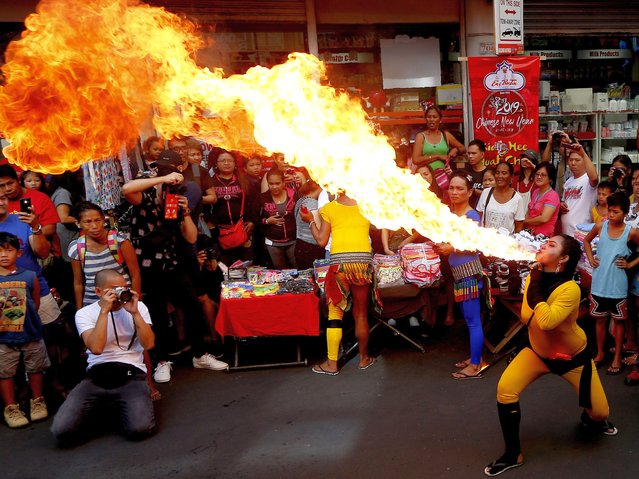
In this Tuesday, February 5, 2019, photo, fire-eater performs during celebrations of the Lunar New Year in the Chinatown district of Manila, Philippines. This year is the Year of the Earth Pig in the Chinese Lunar calendar and is supposed to represent abundance, diligence and generosity. (Photo by Bullit Marquez/AP Photo)

In this Tuesday, February 5, 2019, photo, fire-eater performs during celebrations of the Lunar New Year in the Chinatown district of Manila, Philippines. This year is the Year of the Earth Pig in the Chinese Lunar calendar and is supposed to represent abundance, diligence and generosity. (Photo by Bullit Marquez/AP Photo)
Details
07 Feb 2019 08:22:00
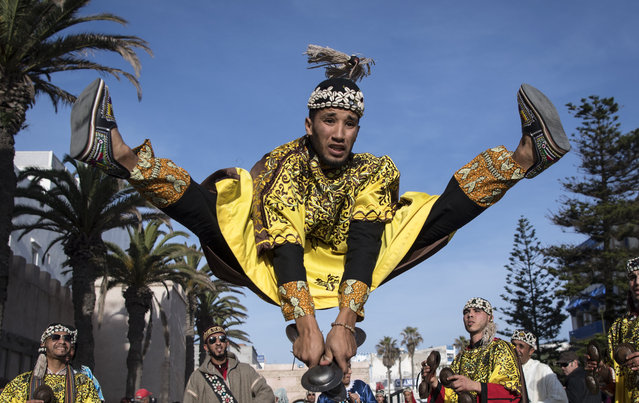
A Gnawa traditional group performs in the city of Essaouira on December 14, 2019, to celebrate the decision of adding the Gnawa culture to UNESCO's list of Intangible Cultural Heritage of Humanity. Gnawa culture, a centuries-old Moroccan practice rooted in music, African rituals and Sufi traditions, was added to UNESCO's list of Intangible Cultural Heritage of Humanity earlier in the week. Gnawa refers to a “set of musical productions, fraternal practices and therapeutic rituals where the secular mixes with the sacred”, according to the nomination submitted by Morocco. Often dressed in colourful outfits, Gnawa musicians play the guenbri, a type of lute with three strings, accompanied by steel castanets called krakebs. (Photo by Fadel Senna/AFP Photo)

A Gnawa traditional group performs in the city of Essaouira on December 14, 2019, to celebrate the decision of adding the Gnawa culture to UNESCO's list of Intangible Cultural Heritage of Humanity. Gnawa culture, a centuries-old Moroccan practice rooted in music, African rituals and Sufi traditions, was added to UNESCO's list of Intangible Cultural Heritage of Humanity earlier in the week. Gnawa refers to a “set of musical productions, fraternal practices and therapeutic rituals where the secular mixes with the sacred”, according to the nomination submitted by Morocco. Often dressed in colourful outfits, Gnawa musicians play the guenbri, a type of lute with three strings, accompanied by steel castanets called krakebs. (Photo by Fadel Senna/AFP Photo)

Details
18 Dec 2019 00:05:00
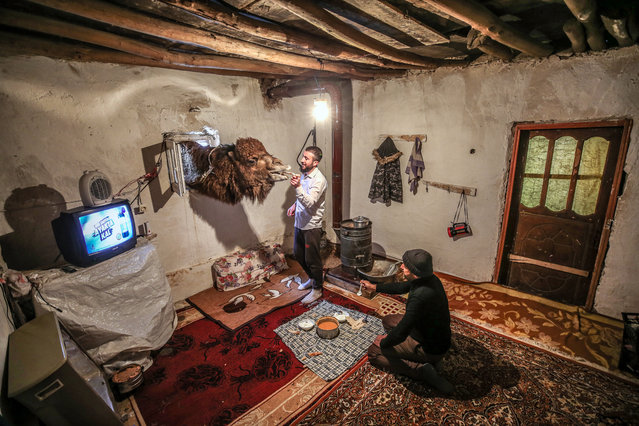
Shepherd brothers Mustafa Erbay and Baran Erbay train their camels on snowy grounds, enabling them to become champions in competitions held in the Aegean and Mediterranean regions in Baskale district of Van, Turkey on February 1, 2020. (Photo by Ozkan Bilgin/Anadolu Agency via Getty Images)

Shepherd brothers Mustafa Erbay and Baran Erbay train their camels on snowy grounds, enabling them to become champions in competitions held in the Aegean and Mediterranean regions in Baskale district of Van, Turkey on February 1, 2020. (Photo by Ozkan Bilgin/Anadolu Agency via Getty Images)
Details
07 Feb 2020 00:01:00
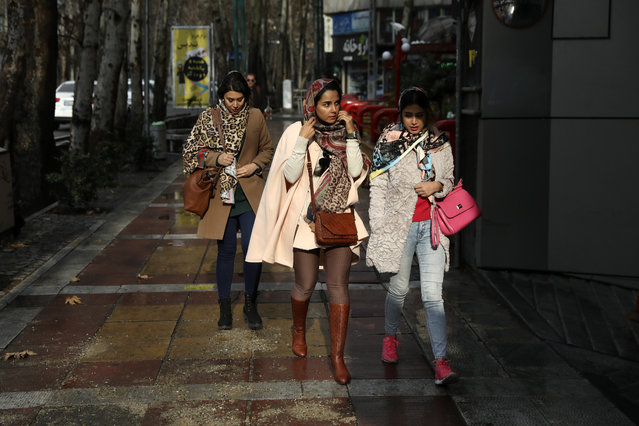
Women walk on a sidewalk in northern Tehran, Iran, Thursday, January 9, 2020. (Photo by Vahid Salemi/AP Photo)

Women walk on a sidewalk in northern Tehran, Iran, Thursday, January 9, 2020. (Photo by Vahid Salemi/AP Photo)
Details
25 Feb 2020 00:05:00