Loading...
Done
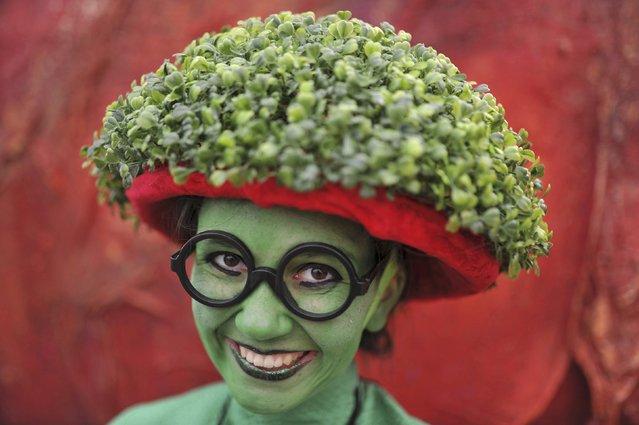
An Indian girl dressed in traditional attire reacts to camera as she watches a cultural performance during Lohri festival in Jammu, India, Monday, January 13, 2014. Lohri is a celebration of the winter solstice observed by Hindus and Sikhs in northern India. (Photo by Channi Anand/AP Photo)

An Indian girl dressed in traditional attire reacts to camera as she watches a cultural performance during Lohri festival in Jammu, India, Monday, January 13, 2014. Lohri is a celebration of the winter solstice observed by Hindus and Sikhs in northern India. (Photo by Channi Anand/AP Photo)
Details
18 Jan 2014 13:28:00
This picture taken on February 16, 2017 in Fangshan village in China's coastal province Fujians, shows a villager performing the “eating flowers” ritual. Villagers in eastern China have a unique way of washing away the taint of evil spirits – by bathing in a shower of scorching sparks. (Photo by Johannes Eisele/AFP Photo)

This picture taken on February 16, 2017 in Fangshan village in China's coastal province Fujians, shows a villager performing the “eating flowers” ritual. Villagers in eastern China have a unique way of washing away the taint of evil spirits – by bathing in a shower of scorching sparks. (Photo by Johannes Eisele/AFP Photo)
Details
19 Feb 2017 09:55:00
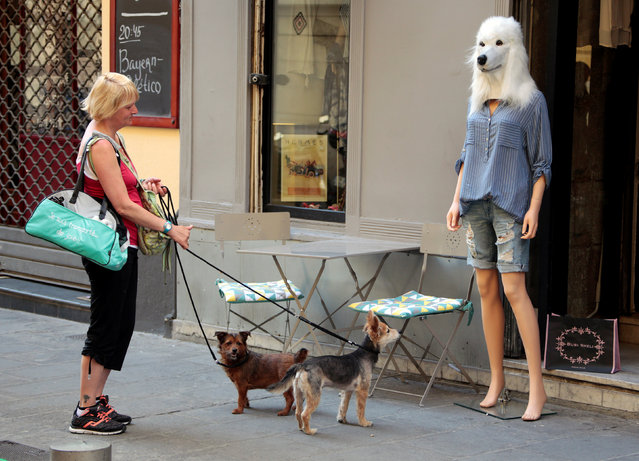
“Don't look at me, I'm not ready!!!!” (Photo and caption by Yves Lecoq)

“Don't look at me, I'm not ready!!!!” (Photo and caption by Yves Lecoq)
Details
11 Apr 2015 09:25:00
Singer Rita Ora enters her hotel on April 27, 2017 in New York City. (Photo by MEGA)

Singer Rita Ora enters her hotel on April 27, 2017 in New York City. (Photo by MEGA)
Details
30 Apr 2017 07:06:00
Soap Bubble Structures by Kym Cox. Bubbles optimise space and minimise their surface area for a given volume of air. This phenomenon makes them a useful tool in many areas of research, in particular, materials science and ‘packing’ – how things fit together. Bubble walls drain under gravity, thin at the top, thick at the bottom, which interferes with travelling lightwaves to create bands of colour. Black spots show the wall is too thin for interference colours, indicating the bubble is about to burst. (Photo by Kym Cox/2019 Science Photographer of the Year/RPS)

Soap Bubble Structures by Kym Cox. Bubbles optimise space and minimise their surface area for a given volume of air. This phenomenon makes them a useful tool in many areas of research, in particular, materials science and “packing” – how things fit together. Bubble walls drain under gravity, thin at the top, thick at the bottom, which interferes with travelling lightwaves to create bands of colour. Black spots show the wall is too thin for interference colours, indicating the bubble is about to burst. (Photo by Kym Cox/2019 Science Photographer of the Year/RPS)
Details
15 Aug 2019 00:03:00
Model Adriana Lima attends Madonna presents An Evening of Music, Art, Mischief and Performance to benefit Raising Malawi at Faena Forum on December 2, 2016 in Miami Beach, Florida. (Photo by Jeff Kravitz/FilmMagic for Raising Malawi)

Model Adriana Lima attends Madonna presents An Evening of Music, Art, Mischief and Performance to benefit Raising Malawi at Faena Forum on December 2, 2016 in Miami Beach, Florida. (Photo by Jeff Kravitz/FilmMagic for Raising Malawi)
Details
04 Dec 2016 10:15:00
“Don't Leave Any Food On Your Plate”. The giraffes at Nairobi's Giraffe Manor are totally at home with humans. They will eat out of your hand, or even off your plate. Photo location: Giraffe Manor, Nairobi, Kenya. (Photo and caption by Gavin Werbeloff/National Geographic Photo Contest)

“Don't Leave Any Food On Your Plate”. The giraffes at Nairobi's Giraffe Manor are totally at home with humans. They will eat out of your hand, or even off your plate. Photo location: Giraffe Manor, Nairobi, Kenya. (Photo and caption by Gavin Werbeloff/National Geographic Photo Contest)
Details
20 Jun 2014 10:23:00
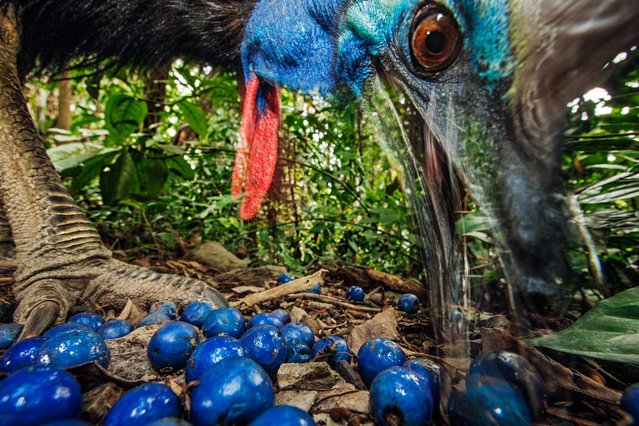
“Cassowaries are large, flightless birds related to emus and (more distantly) to ostriches, rheas, and kiwis”, writes Olivia Judson in the September issue of National Geographic magazine. (Photo by Christian Ziegler/National Geographic)

“Cassowaries are large, flightless birds related to emus and (more distantly) to ostriches, rheas, and kiwis”, writes Olivia Judson in the September issue of National Geographic magazine. How large? People-size: Adult males stand well over five foot five and top 110 pounds. Females are even taller, and can weigh more than 160 pounds. Dangerous when roused, they’re shy and peaceable when left alone. But even birds this big and tough are prey to habitat loss. The dense New Guinea and Australia rain forests where they live have dwindled. Today cassowaries might number 1,500 to 2,000. And because they help shape those same forests – by moving seeds from one place to another – “if they vanish”, Judson writes, “the structure of the forest would gradually change” too. (Photo by Christian Ziegler/National Geographic)

Details
06 Jan 2014 12:21:00