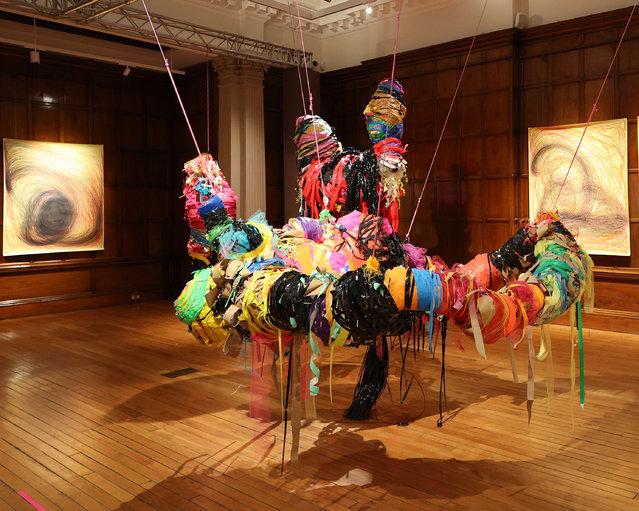
British artist Nnena Kalu's presentation during a press preview for the 2025 Turner Prize at Cartwright Hall Art Gallery in Bradford, Britain, 23 September 2025. The Turner Prize is awarded to a British artist for an outstanding exhibition or presentation during the previous year. The shortlisted artists are Nnena Kalu, Rene Matic, Mohammed Sami, and Zadie Xa. The 2025 Turner Prize is held at Cartwright Hall in recognition of Bradford's status as UK City of Culture 2025. (Photo by Adam Vaughan/EPA)
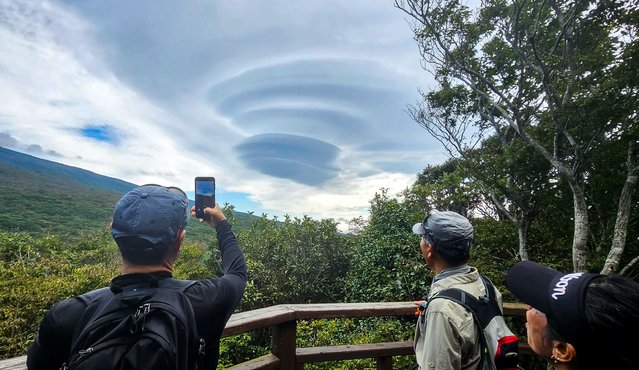
On the morning of the October 4, 2025, the second day of the Chuseok holiday, a lenticular cloud resembling an unidentified flying object (UFO) appeared in the northeastern sky as seen from the Healing Forest in Hogun-dong, Seogwipo-si, Jeju-do, creating a spectacular sight. (Photo by Newsis)
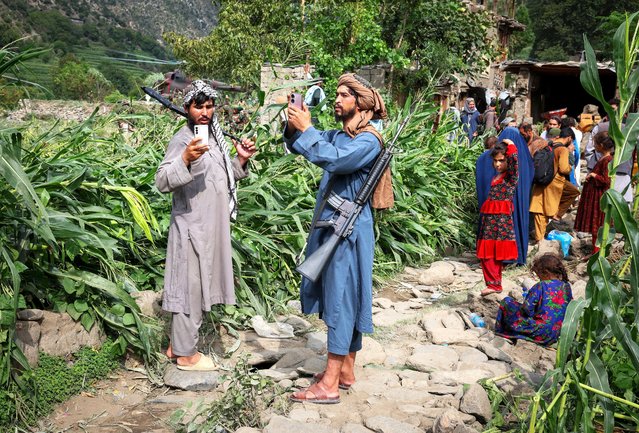
Members of Taliban take pictures of the devastated village of Mazar Dara following a deadly magnitude-6 earthquake that struck Afghanistan, Kunar province, Afghanistan, on September 1, 2025. (Photo by Sayed Hassib/Reuters)
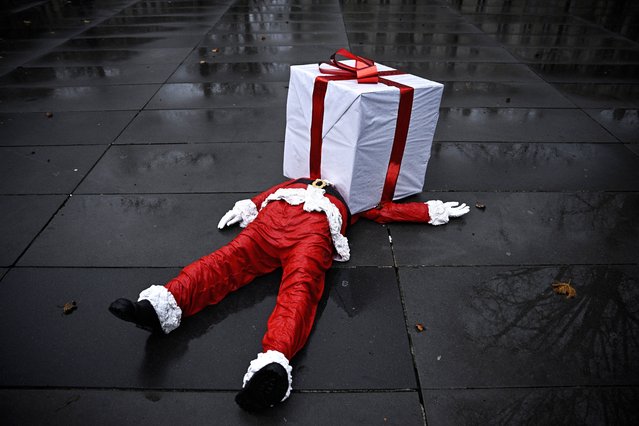
This photograph shows French street artist James Colomina's Santa Claus work, depicting a Santa Claus lying on the ground, his head and torso crushed by a huge white gift box adorned with a red ribbon on the Place de la Republique in Paris, on December 19, 2024. (Photo by Julien de Rosa/AFP Photo)
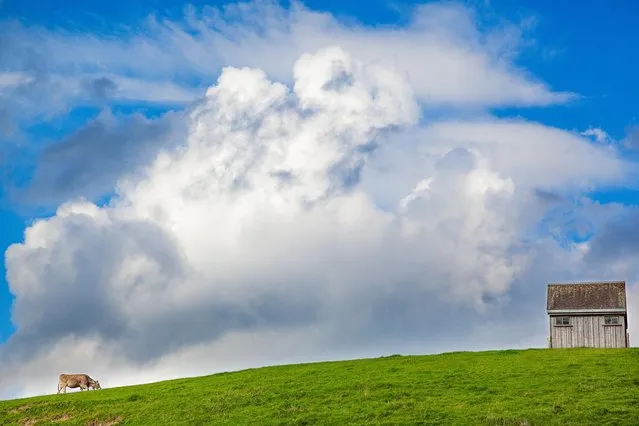
“Sniff out the Appenzell Cheese”. Alexander Hunter, 30, of Greenwich, Conn., took this photo in Appenzell, Switzerland, in September 2014. (Photo by Alexander Hunter)
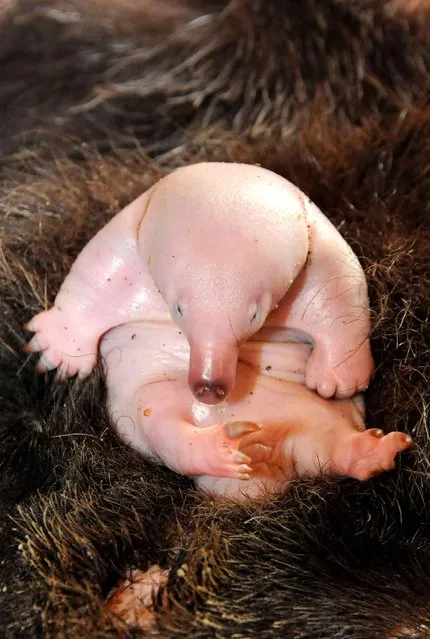
It's a 30-day-old Echidna baby, known as a “puggle” – one of only 24 ever bred in captivity. The proud parents are Tippy and Pickle of Australia Zoo. The tiny baby, whose s*x has not yet been identified, hatched from a soft egg and will continue to develop and nurse inside Tippy's warm pouch. (Photo by Australia Zoo/Rex/Sipa Press)
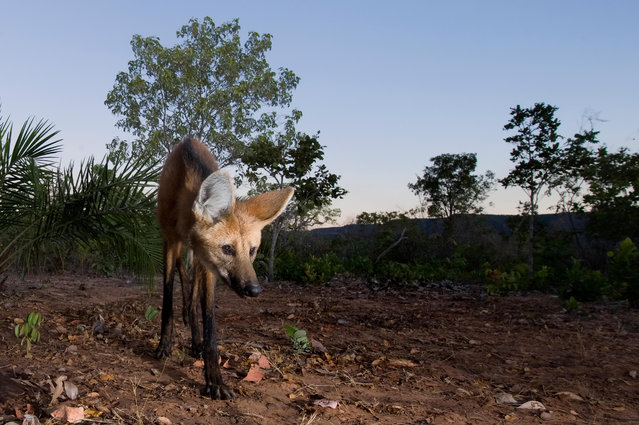
Global wildlife populations will decline by 67% by 2020 unless urgent action is taken to reduce human impact on species and ecosystems, warns the biennial Living Planet Index report from WWF (World Wide Fund for Nature) and ZSL (Zoological Society of London). From elephants to eels, here are some of the wildlife populations most affected by human activity. Here: The maned wolf is among the large mammals in the Brazilian Cerrado that are threatened by the increasing conversion of grasslands into farmland for grazing and growing crops. (Photo by Ben Cranke/Nature Picture Library/Alamy Stock Photo)