Loading...
Done
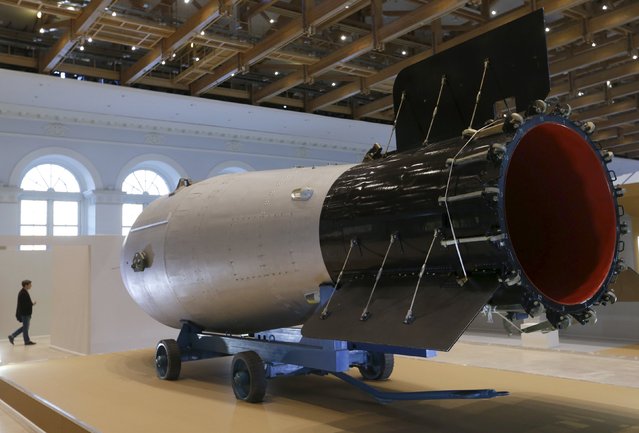
Shell, which is the replica of the biggest detonated Soviet nuclear bomb AN-602 (Tsar-Bomb), is on display in Moscow, Russia, August 31, 2015. (Photo by Maxim Zmeyev/Reuters)

Shell, which is the replica of the biggest detonated Soviet nuclear bomb AN-602 (Tsar-Bomb), is on display in Moscow, Russia, August 31, 2015. The shell is part of an exhibition organized by the state nuclear corporation Rosatom. (Photo by Maxim Zmeyev/Reuters)
Details
01 Sep 2015 13:24:00
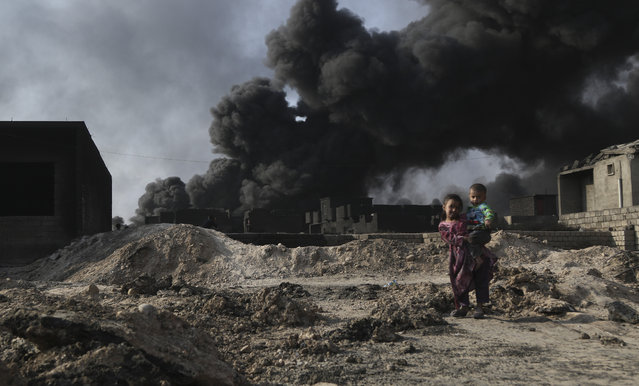
A girl holds her brother in her arm as black smoke rises after an oil well set on fire in the center of al-Kayyara town to the south of Daesh terror organization-held Mosul in Iraq on October 25, 2016. The oil well in the center of al-Kayyara town, which was set alight by retreating Daesh militants in advance of the Iraqi army's takeover of the town on August 24, 2016 has still not entirely been put out. The raw petrol which is still alight is creating black clouds above the city. The residents and wildlife beneath this polluting smoke cloud may find their health at risk. The effects of the fire in the town center on unprotected civilians' health can easily be seen on the hands and faces of children playing on the street. (Photo by dris Okuducu/Anadolu Agency/Getty Images)

A girl holds her brother in her arm as black smoke rises after an oil well set on fire in the center of al-Kayyara town to the south of Daesh terror organization-held Mosul in Iraq on October 25, 2016. The oil well in the center of al-Kayyara town, which was set alight by retreating Daesh militants in advance of the Iraqi army's takeover of the town on August 24, 2016 has still not entirely been put out. The raw petrol which is still alight is creating black clouds above the city. The residents and wildlife beneath this polluting smoke cloud may find their health at risk. The effects of the fire in the town center on unprotected civilians' health can easily be seen on the hands and faces of children playing on the street. (Photo by dris Okuducu/Anadolu Agency/Getty Images)
Details
27 Oct 2016 11:54:00
Animal rights activist, stained with fake blood, perform during a protest against the use of animal skins in the clothes and fashion industry, in Madrid, Sunday, December 10, 2017. (Photo by Francisco Seco/AP Photo)

Animal rights activist, stained with fake blood, perform during a protest against the use of animal skins in the clothes and fashion industry, in Madrid, Sunday, December 10, 2017. (Photo by Francisco Seco/AP Photo)
Details
11 Dec 2017 09:50:00
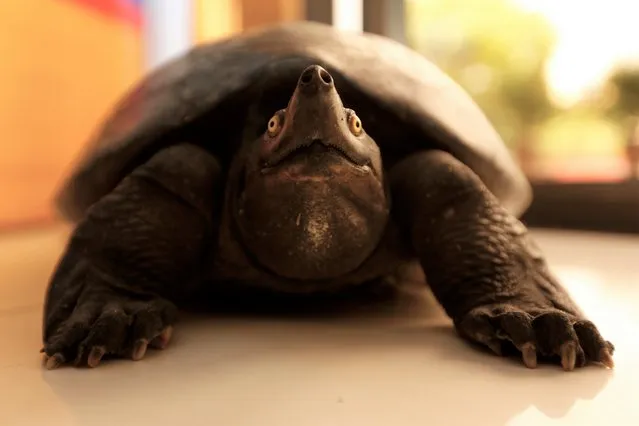
A view of a turtle during an event at the Ministry of Environment in Phnom Penh, Cambodia, 24 June 2020. A Cambodian woman recently bought endangered Royal Turtles from local villagers and gave them to Ministry of Environment. (Photo by Kith Serey/EPA/EFE)

A view of a turtle during an event at the Ministry of Environment in Phnom Penh, Cambodia, 24 June 2020. A Cambodian woman recently bought endangered Royal Turtles from local villagers and gave them to Ministry of Environment. (Photo by Kith Serey/EPA/EFE)
Details
28 Jun 2020 00:01:00
In this Friday, February 1, 2019, photo, Filipino-Chinese display piggy banks at the start of celebrations leading to next week's Lunar New Year in Chinatown, Manila, Philippines. This year is the Year of the Earth Pig on the Lunar calendar and is supposed to represent abundance, diligence and generosity. (Photo by Bullit Marquez/AP Photo)

In this Friday, February 1, 2019, photo, Filipino-Chinese display piggy banks at the start of celebrations leading to next week's Lunar New Year in Chinatown, Manila, Philippines. This year is the Year of the Earth Pig on the Lunar calendar and is supposed to represent abundance, diligence and generosity. (Photo by Bullit Marquez/AP Photo)
Details
09 Feb 2019 00:05:00
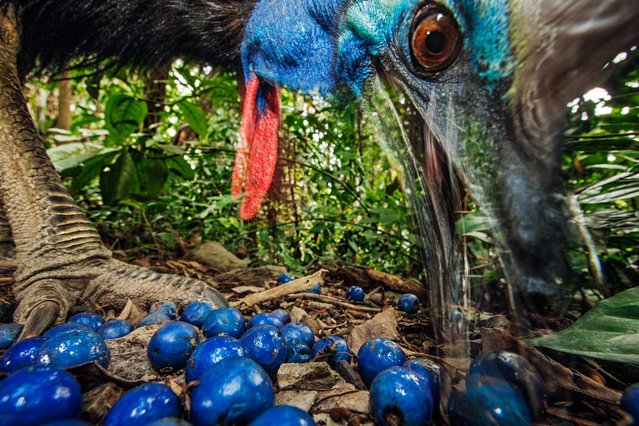
“Cassowaries are large, flightless birds related to emus and (more distantly) to ostriches, rheas, and kiwis”, writes Olivia Judson in the September issue of National Geographic magazine. (Photo by Christian Ziegler/National Geographic)

“Cassowaries are large, flightless birds related to emus and (more distantly) to ostriches, rheas, and kiwis”, writes Olivia Judson in the September issue of National Geographic magazine. How large? People-size: Adult males stand well over five foot five and top 110 pounds. Females are even taller, and can weigh more than 160 pounds. Dangerous when roused, they’re shy and peaceable when left alone. But even birds this big and tough are prey to habitat loss. The dense New Guinea and Australia rain forests where they live have dwindled. Today cassowaries might number 1,500 to 2,000. And because they help shape those same forests – by moving seeds from one place to another – “if they vanish”, Judson writes, “the structure of the forest would gradually change” too. (Photo by Christian Ziegler/National Geographic)

Details
06 Jan 2014 12:21:00
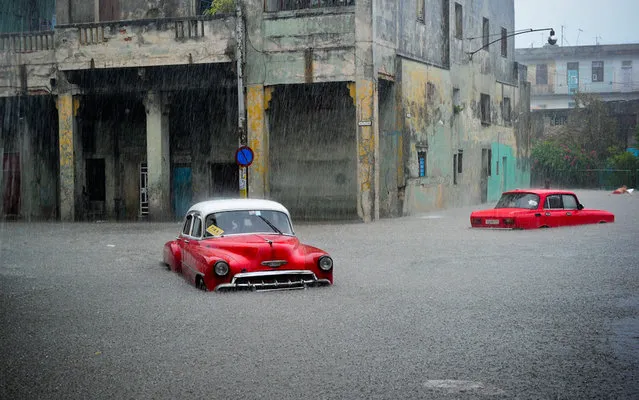
Stranded cars remain in a flooded street during an intense rainstorm in Havana, on April 29, 2015.  Two people were killed, three buildings collapsed and another 24 suffered some kind of damage due to the heavy rain that affected several sectors of Havana Wednesday. (Photo by Yamil Lage/AFP Photo)

Stranded cars remain in a flooded street during an intense rainstorm in Havana, on April 29, 2015. Two people were killed, three buildings collapsed and another 24 suffered some kind of damage due to the heavy rain that affected several sectors of Havana Wednesday. (Photo by Yamil Lage/AFP Photo)
Details
02 May 2015 14:04:00
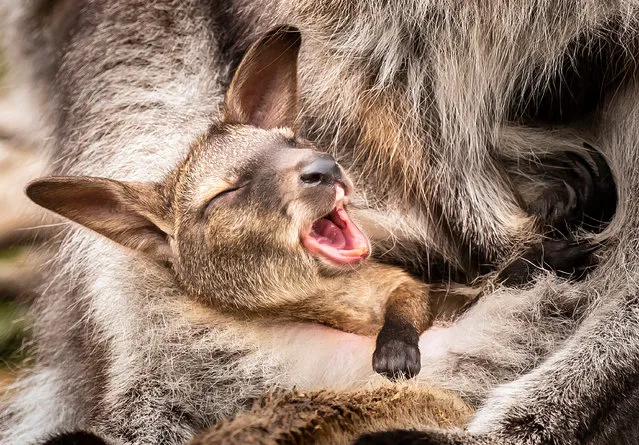
The head of a Bennett's Wallaby Joey emerges from its mothers' pouch at Yorkshire Wildlife Park in Doncaster, England on March 19, 2020, where the park still remains open to the public as coronavirus continues to hit the UK. (Photo by Danny Lawson/PA Images via Getty Images)

The head of a Bennett's Wallaby Joey emerges from its mothers' pouch at Yorkshire Wildlife Park in Doncaster, England on March 19, 2020, where the park still remains open to the public as coronavirus continues to hit the UK. (Photo by Danny Lawson/PA Images via Getty Images)
Details
22 Mar 2020 00:03:00