Loading...
Done


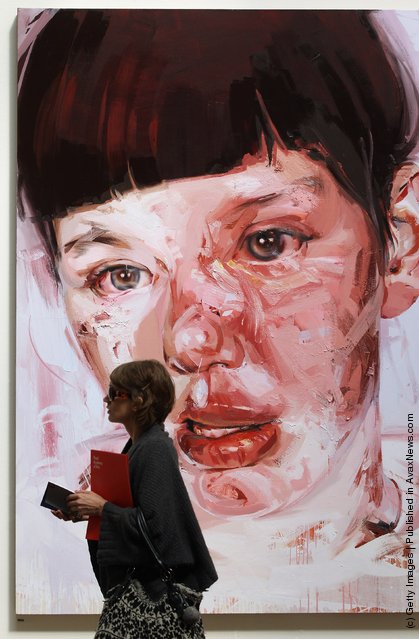
A woman walks past a painting by Jenny Saville entitled “Red Stare Head IV” on display in the Royal Academy of Arts' Summer Exhibition on June 2, 2011 in London, England. The Summer Exhibition is the world's largest open submission contemporary art show, now in its 243rd year, with over 12,000 entries received from 27 countries. The exhibition features over 1100 works of art including: painting, sculpture, photography, architecture and film, it officially opens to the public on June 7, 2011. (Photo by Oli Scarff/Getty Images)
Details
03 Jun 2011 08:34:00
Arson Attacks Against Cars In Berlin Continue

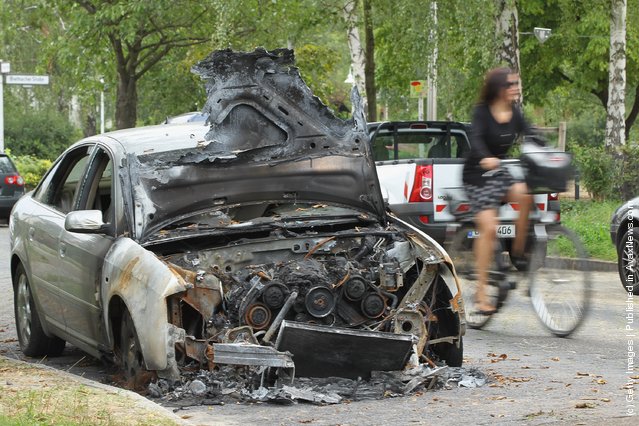
A woman on a bicycle rides past the remains of an Audi sedan set afire by an arsonist recently in Zehlendorf district in a street where two more cars were torched on August 23, 2011 in Berlin, Germany. Police have so far made no arrests in a series of arson attacks that have destroyed at least 70 cars within the last week and show no signs of abating. In recent years several hundred cars have been torched annually and police suspect left-wing radicals. The recent series of attacks, averaging about 10 a day, has been particularly severe. (Photo by Sean Gallup/Getty Images)
Details
23 Aug 2011 12:39:00
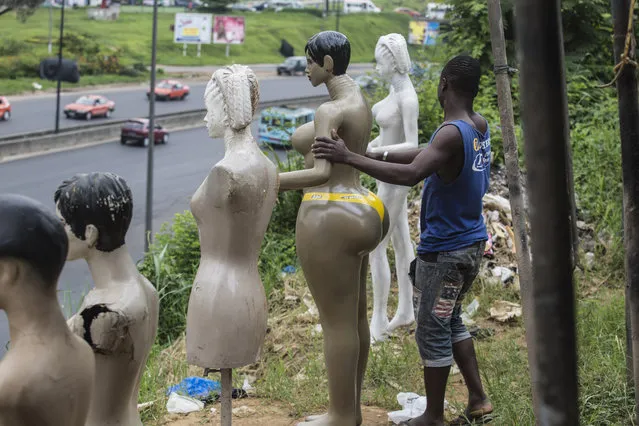
A curvy woman is considered prosperous, healthy and s*xy in Ivory Coast, photographer Joana Choumali explains. Here: An apprentice lines up his work on a roadside. (Photo by Joana Choumali)

Photographer Joana Choumali’s latest project explores body image and beauty by documenting the men building Abidjan’s clothing models. The “Awoulaba” mannequin is a customised model designed with the African ideal of beauty in mind, curvier than the stick-thin examples usually seen in the west. They first appeared in 2011, and have since become a familiar sight outside the numerous clothing shops dotted throughout Ivory Coast’s capital, Abidjan. Here: An apprentice lines up his work on a roadside. (Photo by Joana Choumali)
Details
06 Jun 2016 11:05:00
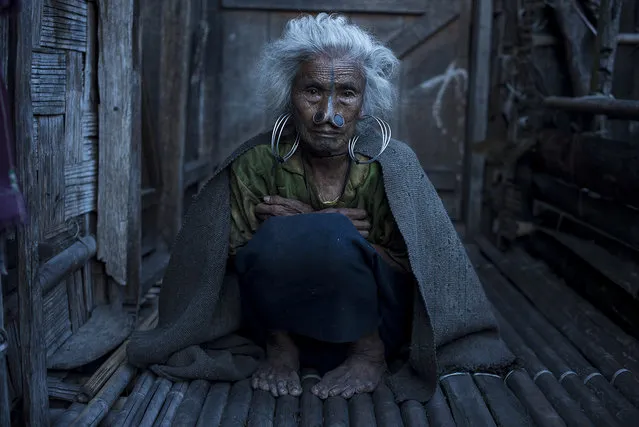
“YagYang”. The Apatani are tribal people living in north east of India in the region of Arunachal Pradesh. Tattooing and stuffing of large nose plugs is the particularity of these women. YagYang 75 years old, her husband passed away few months ago and she feels very alone, during my visit I was very fond of this woman and I wanted to spend some more time with her, so I asked her which was her favorite dish. Photo location: India. (Photo and caption by Passarini Mattia/National Geographic Photo Contest)

“YagYang”. The Apatani are tribal people living in north east of India in the region of Arunachal Pradesh. Tattooing and stuffing of large nose plugs is the particularity of these women. YagYang 75 years old, her husband passed away few months ago and she feels very alone, during my visit I was very fond of this woman and I wanted to spend some more time with her, so I asked her which was her favorite dish. The next day i returned with the fresh fish, as she mentioned, and when she saw me she was very happy and welcomed me with a big smile. Photo location: India. (Photo and caption by Passarini Mattia/National Geographic Photo Contest)
Details
05 Nov 2014 11:55:00
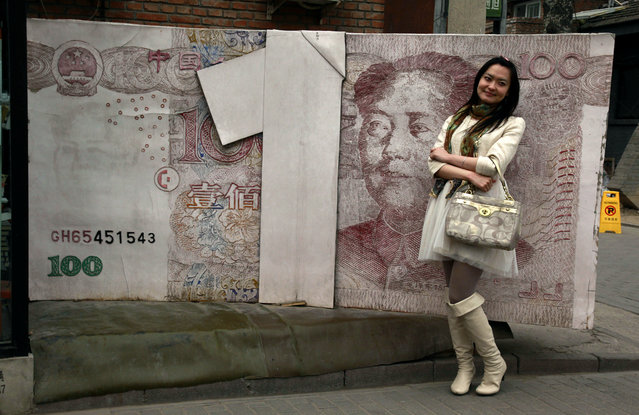
In this March 15, 2012 file photo, a Chinese woman poses for photos near a sculpture depicting a Chinese yuan note at an art district in Beijing, China. China devalued its tightly controlled currency on Tuesday, August 11,2015,  following a slump in trade, triggering the yuan's biggest one-day decline in a decade. The central bank said the yuan's 1.3 percent fall was due to a change aimed at making its exchange rate controls more market-oriented. But any change raises the risk of tensions with China's trading partners. (Photo by Ng Han Guan/AP Photo)

In this March 15, 2012 file photo, a Chinese woman poses for photos near a sculpture depicting a Chinese yuan note at an art district in Beijing, China. China devalued its tightly controlled currency on Tuesday, August 11,2015, following a slump in trade, triggering the yuan's biggest one-day decline in a decade. The central bank said the yuan's 1.3 percent fall was due to a change aimed at making its exchange rate controls more market-oriented. But any change raises the risk of tensions with China's trading partners. (Photo by Ng Han Guan/AP Photo)
Details
12 Aug 2015 13:11:00
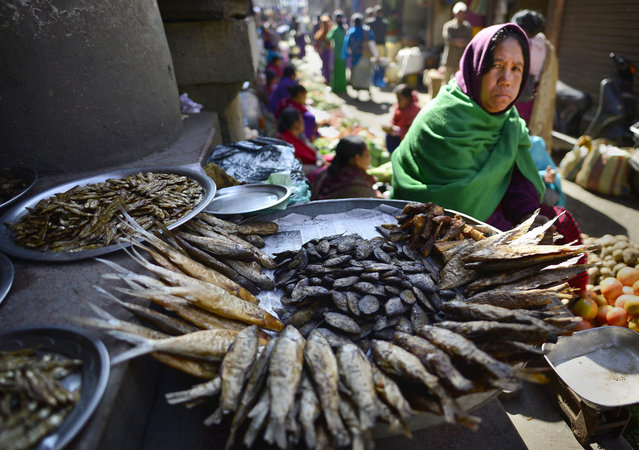
A Manipuri woman sells smoked and dry fish in Ima market - the world's largest all women market - in Imphal city, Manipur state, 06 January 2016. The 150-year-old Ima Keithel or 'Mothers's market' complex, which is run exclusively by women and was damaged in the 04 January 2016 earthquake, is returning back to normal. Nine deaths have been reported from in and around Imphal due to falling debris. (Photo by EPA/Stringer)

A Manipuri woman sells smoked and dry fish in Ima market - the world's largest all women market – in Imphal city, Manipur state, 06 January 2016. The 150-year-old Ima Keithel or “Mothers's market” complex, which is run exclusively by women and was damaged in the 04 January 2016 earthquake, is returning back to normal. Nine deaths have been reported from in and around Imphal due to falling debris. Imphal has a population of some 270,000 and people were jolted from their sleep and ran out of their homes in panic when the earth shook 04 January, reports say. (Photo by EPA/Stringer)
Details
08 Jan 2016 08:04:00
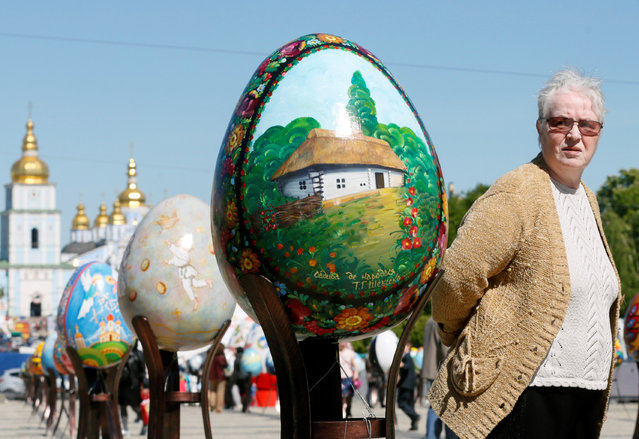
A woman looks at traditional Ukrainian Easter eggs “Pysanka”, installed as part of the upcoming celebrations of Easter, in central Kiev, Ukraine, April 29, 2016. A pysanka is a Ukrainian Easter egg, decorated with traditional Ukrainian folk designs using a wax-resist (batik) method. The word pysanka comes from the verb pysaty, “to write”, as the designs are not painted on, but written with beeswax. Many other eastern European ethnic groups decorate eggs using wax resist for Easter. These include the Belarusians, Bulgarians, Croats, Czechs, Hungarians, Lithuanians, Poles, Romanians, Serbs, Slovaks, Slovenes and Sorbs. (Photo by Valentyn Ogirenko/Reuters)

A woman looks at traditional Ukrainian Easter eggs “Pysanka”, installed as part of the upcoming celebrations of Easter, in central Kiev, Ukraine, April 29, 2016. A pysanka is a Ukrainian Easter egg, decorated with traditional Ukrainian folk designs using a wax-resist (batik) method. The word pysanka comes from the verb pysaty, “to write”, as the designs are not painted on, but written with beeswax. Many other eastern European ethnic groups decorate eggs using wax resist for Easter. These include the Belarusians, Bulgarians, Croats, Czechs, Hungarians, Lithuanians, Poles, Romanians, Serbs, Slovaks, Slovenes and Sorbs. (Photo by Valentyn Ogirenko/Reuters)
Details
30 Apr 2016 09:00:00
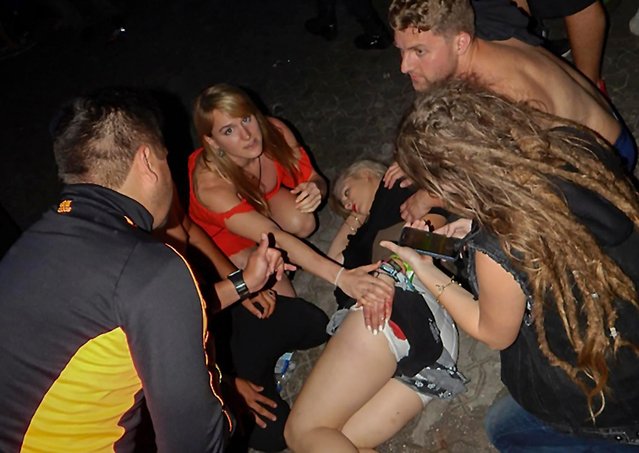
An injured woman is pictured near the Blue Parrot nightclub in Playa del Carmen, Quintana Ro state, Mexico where 5 people were killed, three of them foreigners, during a music festival on January 16, 2017. A shooting erupted at an electronic music festival in the Mexican resort of Playa del Carmen early Monday, leaving at least five people dead and sparking a stampede, the mayor said. Fifteen people were injured, some in the stampede, after at least one shooter opened fire before dawn at the Blue Parrot nightclub during the BPM festival. (Photo by Victor Vargas/AFP Photo)

An injured woman is pictured near the Blue Parrot nightclub in Playa del Carmen, Quintana Ro state, Mexico where 5 people were killed, three of them foreigners, during a music festival on January 16, 2017. A shooting erupted at an electronic music festival in the Mexican resort of Playa del Carmen early Monday, leaving at least five people dead and sparking a stampede, the mayor said. Fifteen people were injured, some in the stampede, after at least one shooter opened fire before dawn at the Blue Parrot nightclub during the BPM festival. (Photo by Victor Vargas/AFP Photo)
Details
17 Jan 2017 12:35:00