Loading...
Done
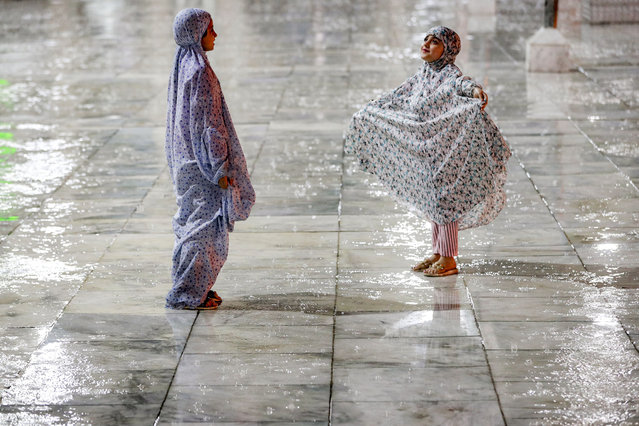
Young Muslim worshippers stand in the rain at the shrine of the 12th-century Sunni cleric Abdul Qadir al-Jilani (Gilani) in Baghdad as people gather to perform the prayers for Eid al-Fitr, which marks the end of the Muslim holy fasting month of Ramadan, as observed locally on March 31, 2025. (Photo by Ahmad Al-Rubaye/AFP Photo)

Young Muslim worshippers stand in the rain at the shrine of the 12th-century Sunni cleric Abdul Qadir al-Jilani (Gilani) in Baghdad as people gather to perform the prayers for Eid al-Fitr, which marks the end of the Muslim holy fasting month of Ramadan, as observed locally on March 31, 2025. (Photo by Ahmad Al-Rubaye/AFP Photo)
Details
24 Apr 2025 03:13:00
A pupil arrives on the first day of school at Yas American Academy in Abu Dhabi in the last decade of August 2025. (Photo by Victor Besa/The National)

A pupil arrives on the first day of school at Yas American Academy in Abu Dhabi in the last decade of August 2025. (Photo by Victor Besa/The National)
Details
17 Sep 2025 03:32:00
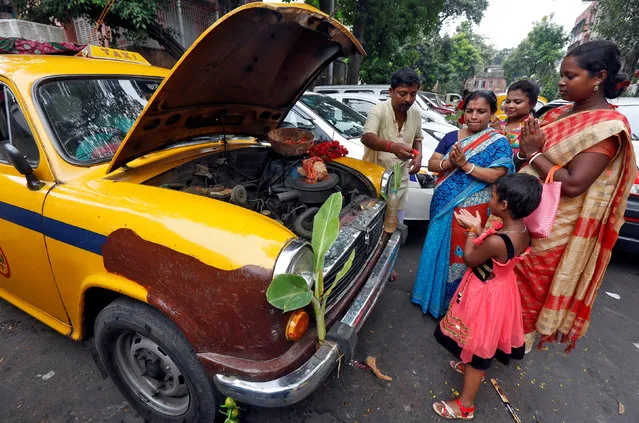
Family members of a taxi driver offer prayer in front of their taxi during the Vishwakarma Puja or the festival of the Hindu deity of architecture and machinery in Kolkata, India, September 17, 2017. (Photo by Rupak De Chowdhuri/Reuters)

Family members of a taxi driver offer prayer in front of their taxi during the Vishwakarma Puja or the festival of the Hindu deity of architecture and machinery in Kolkata, India, September 17, 2017. (Photo by Rupak De Chowdhuri/Reuters)
Details
22 Sep 2017 07:09:00
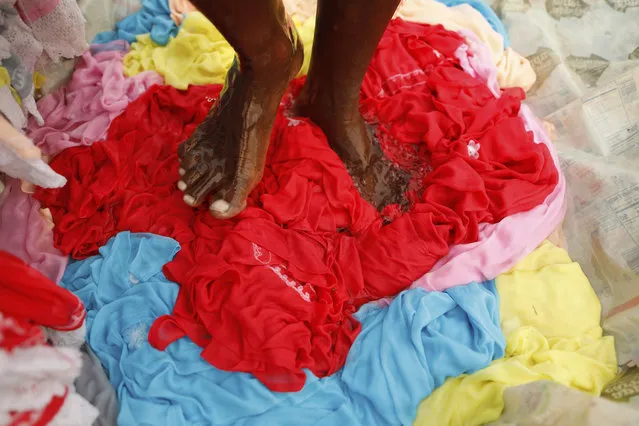
A dhobi, or a washerman washes cloths on the banks of the River Gomti in Lucknow, India, Saturday, September 12, 2020. Dhobis are traditional laundry workers who wash clothes by hand and dry them in the sun, an occupation which has been in existence for generations. Most cities in India have a Dhobi Ghat, or washermen's area, where the city's pile of clothes is laundered. This practice is still popular in India, despite of modern technology. Around 1,000 families work in Lucknow's Dhobi Ghat. However, in light of the novel coronavirus, their wages have decreased drastically. With each family earning around US$100-200 per month. (Photo by Rajesh Kumar Singh/AP Photo)

A dhobi, or a washerman washes cloths on the banks of the River Gomti in Lucknow, India, Saturday, September 12, 2020. Dhobis are traditional laundry workers who wash clothes by hand and dry them in the sun, an occupation which has been in existence for generations. Most cities in India have a Dhobi Ghat, or washermen's area, where the city's pile of clothes is laundered. This practice is still popular in India, despite of modern technology. Around 1,000 families work in Lucknow's Dhobi Ghat. However, in light of the novel coronavirus, their wages have decreased drastically. With each family earning around US$100-200 per month. (Photo by Rajesh Kumar Singh/AP Photo)
Details
25 Sep 2020 00:03:00
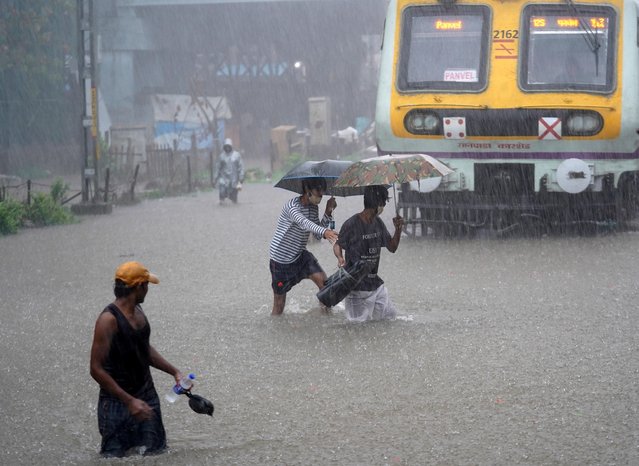
People cross waterlogged railway tracks next to a parked passenger train during heavy rains in Mumbai, India, June 9, 2021. (Photo by Hemanshi Kamani/Reuters)

People cross waterlogged railway tracks next to a parked passenger train during heavy rains in Mumbai, India, June 9, 2021. (Photo by Hemanshi Kamani/Reuters)
Details
10 Jun 2021 08:01:00
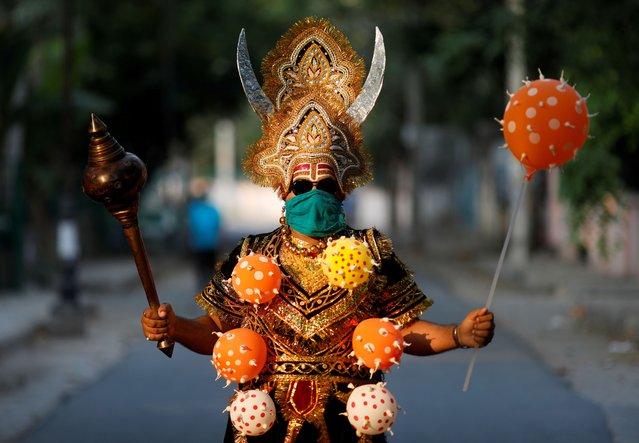
A local resident dressed as Yamraj or Hindu god of death, wearing a novel coronavirus-themed balloon necklace, gestures as he poses during an awareness about social distancing and staying at home organised by Delhi police during a nationwide lockdown to slow the spreading of the coronavirus disease (COVID-19), in New Delhi, India, April 28, 2020. (Photo by Adnan Abidi/Reuters)

A local resident dressed as Yamraj or Hindu god of death, wearing a novel coronavirus-themed balloon necklace, gestures as he poses during an awareness about social distancing and staying at home organised by Delhi police during a nationwide lockdown to slow the spreading of the coronavirus disease (COVID-19), in New Delhi, India, April 28, 2020. (Photo by Adnan Abidi/Reuters)
Details
04 May 2020 00:01:00
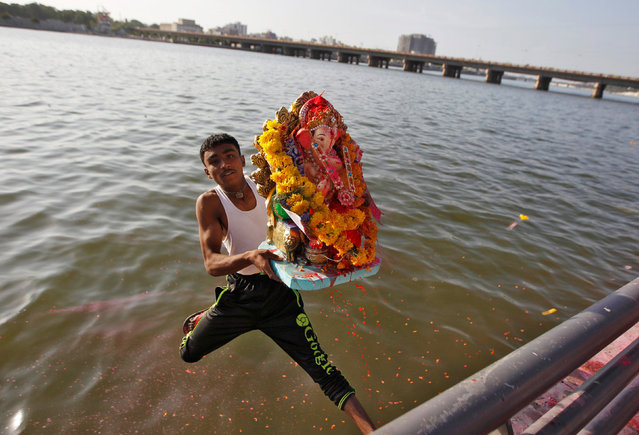
A devotee carrying an idol of the Hindu god Ganesh, the deity of prosperity, jumps into the Sabarmati river to immerse the idol during the 10-day-long Ganesh Chaturthi festival in Ahmedabad, India, September 11, 2016. (Photo by Amit Dave/Reuters)

A devotee carrying an idol of the Hindu god Ganesh, the deity of prosperity, jumps into the Sabarmati river to immerse the idol during the 10-day-long Ganesh Chaturthi festival in Ahmedabad, India, September 11, 2016. (Photo by Amit Dave/Reuters)
Details
16 Sep 2016 10:37:00
Members of the Paraguay-African cultural group Kamba Cua dance during celebrations in honor of Saint Balthazar, one of the Three Kings, on Epiphany in Fernando de la Mora, Paraguay, late Saturday, January 8, 2022, just days after the official holiday. The annual procession is a tradition that keeps Paraguay's Afro-descendants connected with their African roots through ancestral dance, drumming and customs. (Photo by Jorge Saenz/AP Photo)

Members of the Paraguay-African cultural group Kamba Cua dance during celebrations in honor of Saint Balthazar, one of the Three Kings, on Epiphany in Fernando de la Mora, Paraguay, late Saturday, January 8, 2022, just days after the official holiday. The annual procession is a tradition that keeps Paraguay's Afro-descendants connected with their African roots through ancestral dance, drumming and customs. (Photo by Jorge Saenz/AP Photo)
Details
29 Jan 2022 07:01:00