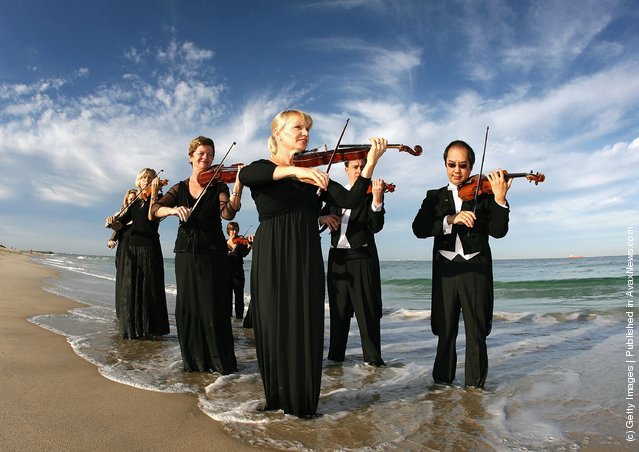
Musicians from the West Australian Symphony Orchestra perform a “Symphony in the Sea” at North Cottesloe Beach on December 2, 2008 in Perth, Australia. (Photo by Paul Kane/Getty Images)
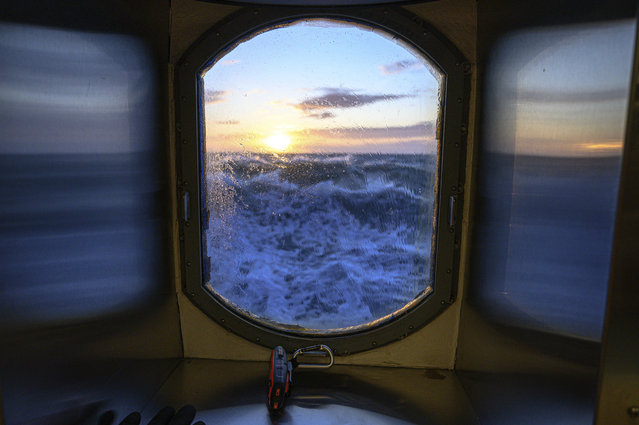
This November 8, 2019, photo provided by John Guillote shows a view from the main lab of the Sikuliaq in the Chukchi Sea. University of Washington scientists onboard the research vessel are studying the changes and how less sea ice will affect coastlines, which already are vulnerable to erosion because increased waves delivered by storms. More erosion would increase the chance of winter flooding in villages and danger to hunters in small boats. (Photo by John Guillote via AP Photo)
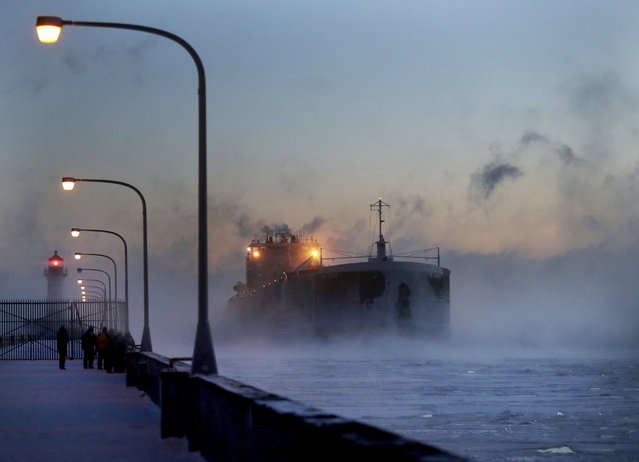
Steam rises from Lake Superior as the ship St. Clair comes to harbor during some of the coldest temps of the year, Sunday, December 31, 2017, at Canal Park in Duluth, Minn. The St. Clair is a self-unloader built in 1976 at Sturgeon Bay, Wis., and is 770 feet long and has 26 hatches that open into 5 cargo holds, providing a load capacity of 45,000 tons. (Photo by David Joles/Star Tribune via AP Photo)
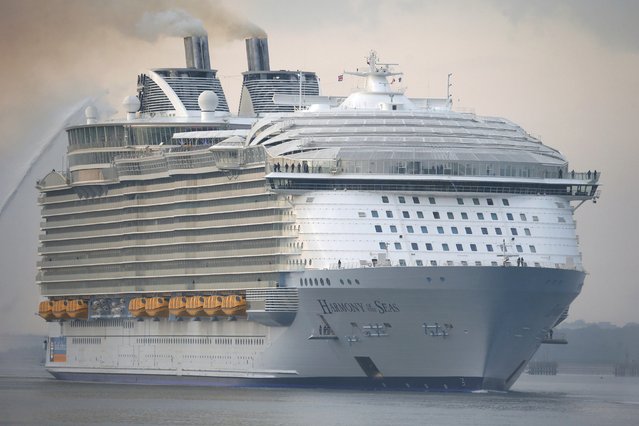
The worlds largest cruise ship, the 361 metres long, Harmony of the Seas, arrives in port for her mayden voyage, in Southampton, Britain May 17, 2016. (Photo by Peter Nicholls/Reuters)
People manoeuvre into position as they take part in a mass nude art installation entitled Sea of Hull by New York based artist Spencer Tunick in Hull, England, Saturday July 9, 2016. (Photo by Danny Lawson/PA Wire via AP Photo)
The sea otter (Enhydra lutris) is a marine mammal native to the coasts of the northern and eastern North Pacific Ocean. Adult sea otters typically weigh between 14 and 45 kg (31 and 99 lb), making them the heaviest members of the weasel family, but among the smallest marine mammals. Unlike most marine mammals, the sea otter's primary form of insulation is an exceptionally thick coat of fur, the densest in the animal kingdom. Although it can walk on land, the sea otter lives mostly in the ocean.
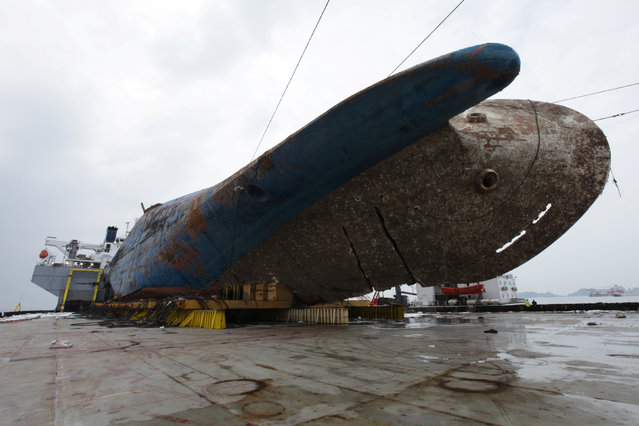
The sunken ferry Sewol sits on a semi-submersible ship during its salvage operations at the sea off Jindo, South Korea, in this handout picture provided by the Ministry of Oceans and Fisheries and released by Yonhap on March 26, 2017. (Photo by Reuters/Yonhap/The Ministry of Oceans and Fisheries)
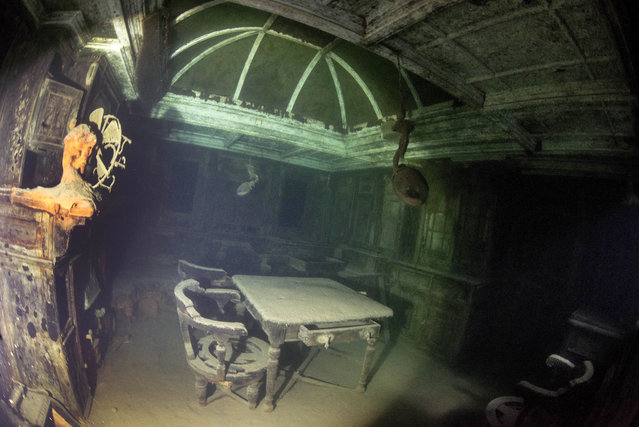
These stunning images reveal the remains of a more than century-old sunken ship that has been preserved beneath freezing Lake Superior. The ship looks almost exactly the same as it did the day it sunk beneath waves all those years ago. At 60 meters long (approximately 198 feet), the «Gunilda» sunk after it struck some rocks and was not saved. Now, these stunning images have been captured 107 years after the sinking when a small group of divers revisited the vessel. (Photo by Becky Kagan Schott/Caters News Agency)