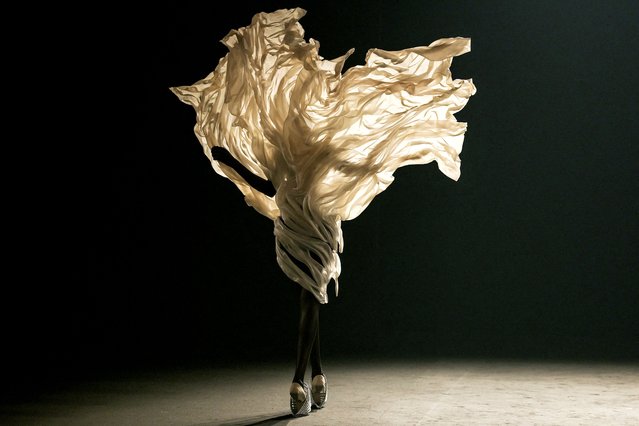
A model presents a creation for Iris Van Herpen during the Women's Haute-Couture Fall/Winter 2025-26 collection show in Paris, on July 7, 2025. (Photo by Thomas Samson/AFP Photo)
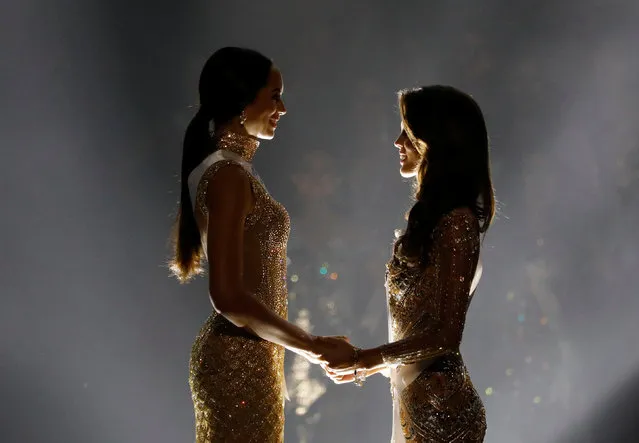
Miss France Iris Mittenaere (R) and Miss Haiti Raquel Pelissier hold hands before Mittenaere is announced winner of the 65th Miss Universe beauty pageant at the Mall of Asia Arena, in Pasay, Metro Manila, Philippines January 30, 2017. (Photo by Erik De Castro/Reuters)
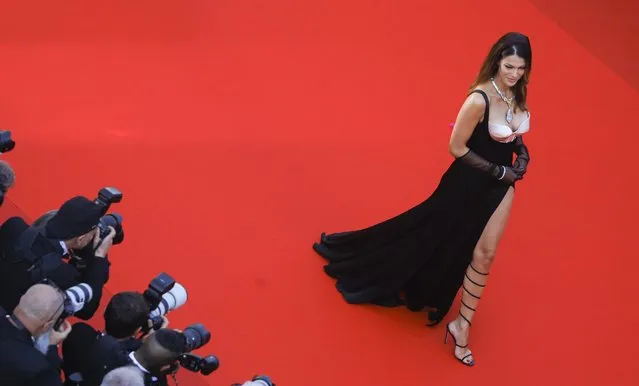
French model Iris Mittenaere attends the screening of “Final Cut (Coupez!)” and opening ceremony red carpet for the 75th annual Cannes film festival at Palais des Festivals on May 17, 2022 in Cannes, France. (Photo by Stephane Mahe/Reuters)
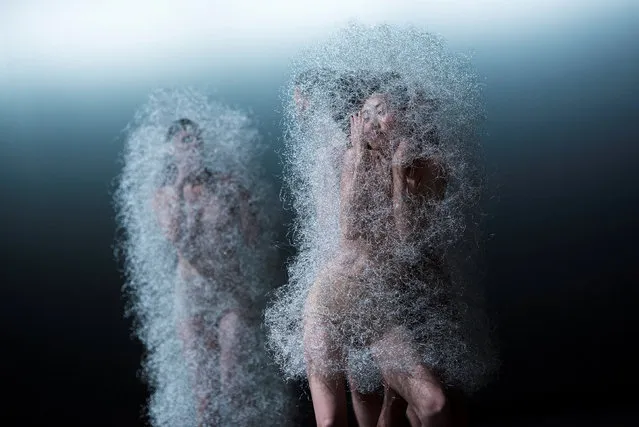
Dancers perform during a general rehearsal of “Kreatur” (Creature) by German choreographer Sasha Waltz in collaboration with artist and fashion designer Iris van Herpen and light designer Urs Schoenebaum in Berlin, Germany on June 8, 2017. (Photo by Stefanie Loos/Reuters)
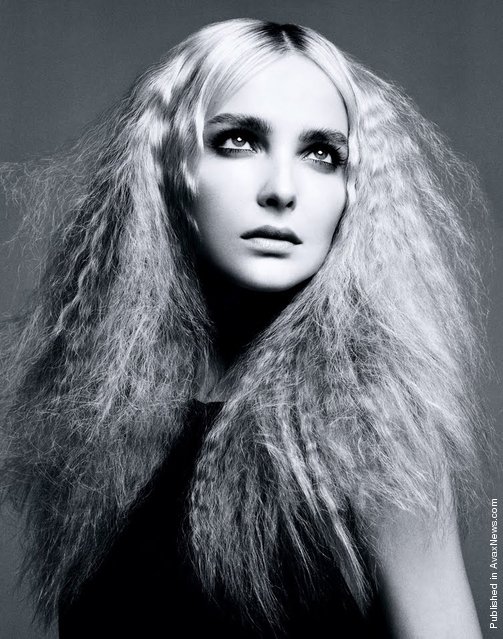
Karolina Kurkova, Alana Zimmer, Valerija Kelava, Eniko Mihalik, Snejana Onopka and Iris Strubegger star in “Hairy Tales” a focus on mostly big hair styled by Luigi Murenu (hair style; Make-up: Karim Rahman) for «Vogue» Germany April 2012. Joanne Blades styles the editorial with Daniele and Iango behind the lens.
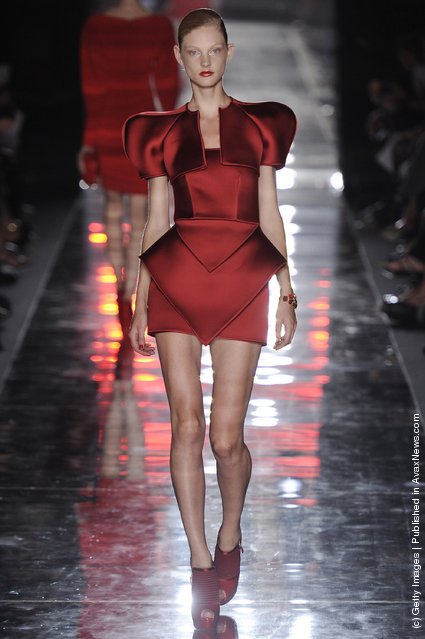
A model walks the runway at the Iris Van Herpen Haute Couture autumn winter 2011 fashion show during Paris Haute Couture Week on July 4, 2011 in Paris, France. (Photo by Nathalie Lagneau/Catwalking/Getty Images)
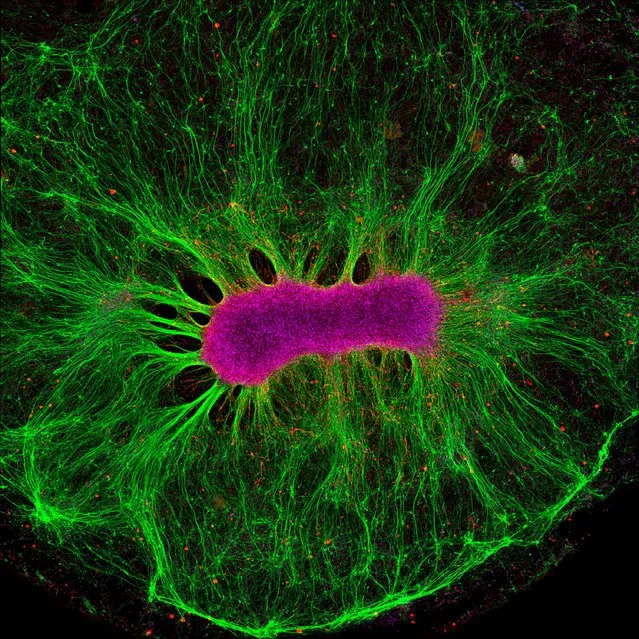
Brain-on-a-chip. Dazzling in green and magenta this image shows the nerve fibres (in green) produced by neural stem cells (in magenta) as they grow on a synthetic gel. Captured by a technique known as confocal microscopy, the image is part of research shedding light on how tinkering with the environment can affect the way in which nerve fibres grow. (Photo by Collin Edington and Iris Lee/Massachusetts Institute of Technology/Wellcome Images)
“In anatomy, heterochromia refers to a difference in coloration, usually of the iris (but also of hair or skin). Although infrequently seen in humans, complete heterochromia is more frequently observed in other species, where it almost always involves one blue eye”. – Wikipedia (Photo by StooMathiesen)