Loading...
Done
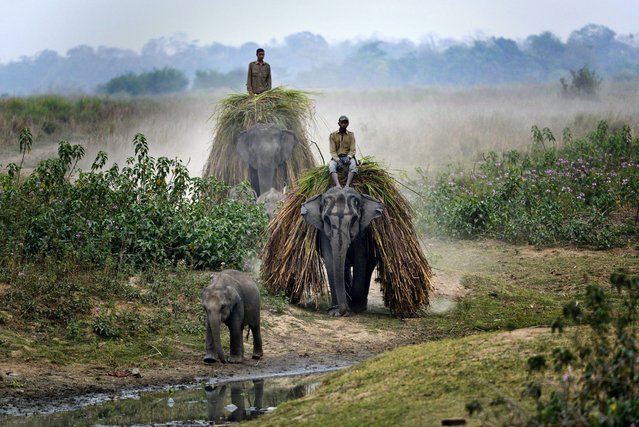
Mahouts return home with their elephants carrying grass to feed them on the eve of the rhino census in Kaziranga National Park in Assam state, India, 24 March 2015. Kaziranga will be closed to visitors for the next two days for a census of the rhinos commencing 25 March, in a previous census in 2013 in the park the population of the Indian rhinos was 2329. (Photo by EPA/Stringer)

Mahouts return home with their elephants carrying grass to feed them on the eve of the rhino census in Kaziranga National Park in Assam state, India, 24 March 2015. Kaziranga will be closed to visitors for the next two days for a census of the rhinos commencing 25 March, in a previous census in 2013 in the park the population of the Indian rhinos was 2329. (Photo by EPA/Stringer)
Details
28 Mar 2015 11:46:00
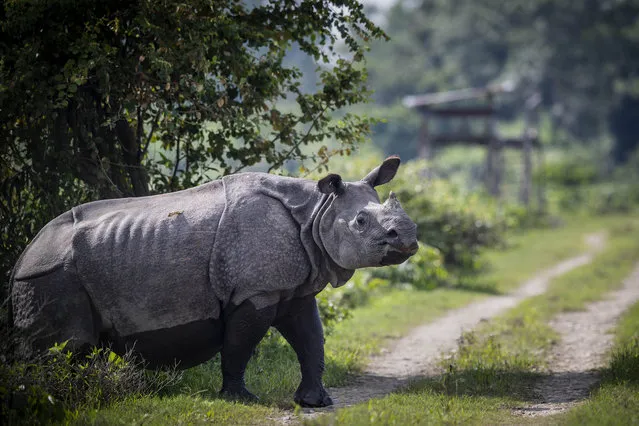
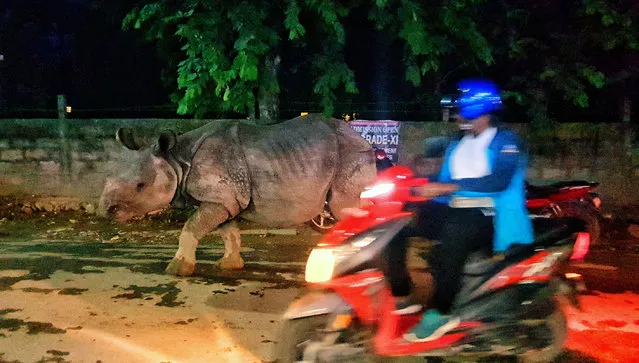
A one-horned rhinoceros crosses a road inside Kaziranga national park on the eve of the World Rhino Day in Gauhati, India, Tuesday, September 21, 2021. Kaziranga is home to nearly 2,500 one-horned rhinos and is the world’s largest habitat for the rare animal. (Photo by Anupam Nath/AP Photo)

A one-horned rhinoceros crosses a road inside Kaziranga national park on the eve of the World Rhino Day in Gauhati, India, Tuesday, September 21, 2021. Kaziranga is home to nearly 2,500 one-horned rhinos and is the world’s largest habitat for the rare animal. (Photo by Anupam Nath/AP Photo)
Details
06 Oct 2021 07:58:00
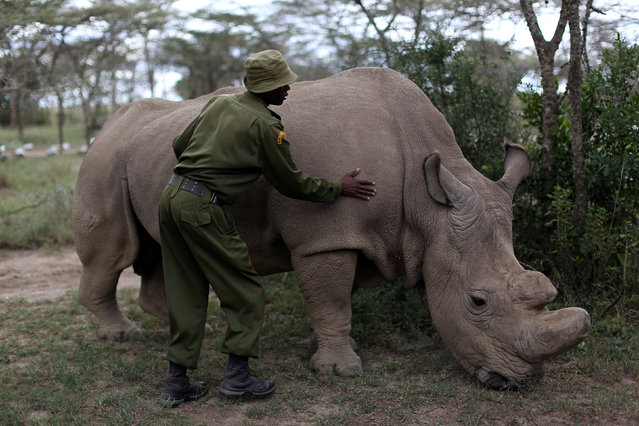
A wildlife ranger strokes a northern white rhino, only three of its kind left in the world, ahead of the Giant Club Summit of African leaders and others on tackling poaching of elephants and rhinos, Ol Pejeta conservancy near the town of Nanyuki, Laikipia County, Kenya, April 28, 2016. (Photo by Siegfried Modola/Reuters)

A wildlife ranger strokes a northern white rhino, only three of its kind left in the world, ahead of the Giant Club Summit of African leaders and others on tackling poaching of elephants and rhinos, Ol Pejeta conservancy near the town of Nanyuki, Laikipia County, Kenya, April 28, 2016. (Photo by Siegfried Modola/Reuters)
Details
30 Apr 2016 09:03:00
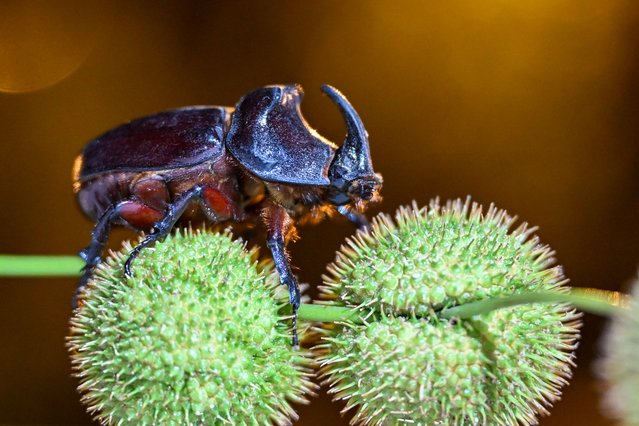
A “Rhino Beetle” (Oryctes nasicornis) is seen in Edremit, Van, Turkiye on August 2, 2024. Named “Rhino Beetle” due to the horn on its head, this beetle is commonly found in moist areas across Europe and Turkiye. (Photo by Ozkan Bilgin/Anadolu via Getty Images)

A “Rhino Beetle” (Oryctes nasicornis) is seen in Edremit, Van, Turkiye on August 2, 2024. Named “Rhino Beetle” due to the horn on its head, this beetle is commonly found in moist areas across Europe and Turkiye. (Photo by Ozkan Bilgin/Anadolu via Getty Images)
Details
24 Aug 2024 04:43:00
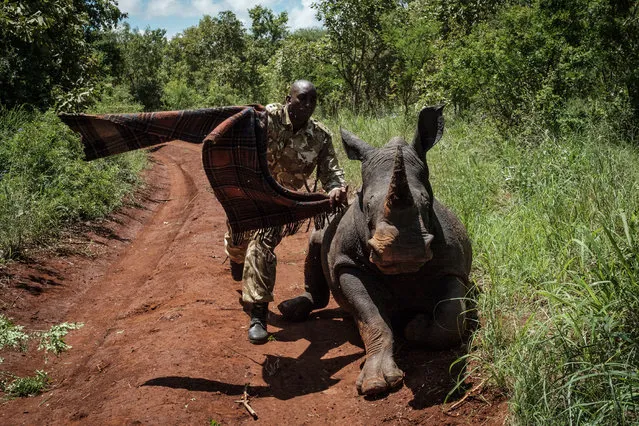
A Kenya Wildlife Services (KWS) veterinarian and security personnel back away from a tranquilised black-Rhino calf August 30, 2017 after she appeared to prematurely overcome the sedative at the Nairobi National Park, during an identification-tagging excercise to ease quick identification of resident rhino during anti-poaching patrols. (Photo by Tony Karumba/AFP Photo)

A Kenya Wildlife Services (KWS) veterinarian and security personnel back away from a tranquilised black-Rhino calf August 30, 2017 after she appeared to prematurely overcome the sedative at the Nairobi National Park, during an identification-tagging excercise to ease quick identification of resident rhino during anti-poaching patrols. (Photo by Tony Karumba/AFP Photo)
Details
31 Aug 2017 11:03:00
A ranger of Kenya Wildlife Services (KWS) tries to cover the eyes of 2.5-year-old female Southern white rhino, Elia, to calm down after being shot a tranquilizer from a helicopter during Kenya Wildlife Services (KWS) rhino ear notching exercise for identification at Meru National Park, 350 km from Nairobi, Kenya, on April 5, 2018. (Photo by Yasuyoshi Chiba/AFP Photo)

A ranger of Kenya Wildlife Services (KWS) tries to cover the eyes of 2.5-year-old female Southern white rhino, Elia, to calm down after being shot a tranquilizer from a helicopter during Kenya Wildlife Services (KWS) rhino ear notching exercise for identification at Meru National Park, 350 km from Nairobi, Kenya, on April 5, 2018. (Photo by Yasuyoshi Chiba/AFP Photo)
Details
07 Apr 2018 09:37:00
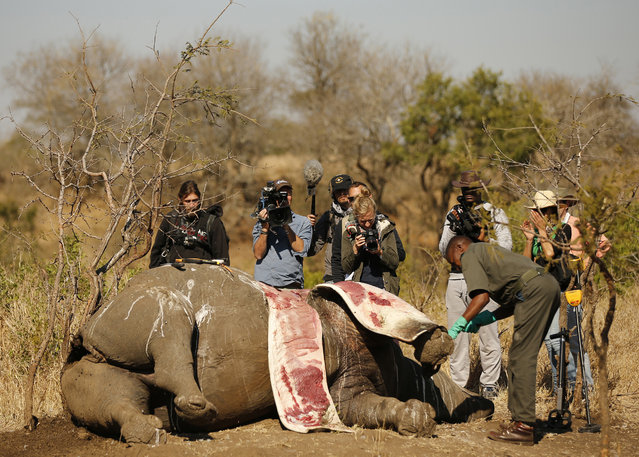
Members of the media film as a ranger performs a post mortem on the carcass of a rhino after it was killed for its horn by poachers at the Kruger national park in Mpumalanga province August 27, 2014. Rhino poachers in South Africa now risk giving themselves away when they shoot thanks to a high-tech, gunfire-detection system being piloted in the country's flagship Kruger National Park. (Photo by Siphiwe Sibeko/Reuters)

Members of the media film as a ranger performs a post mortem on the carcass of a rhino after it was killed for its horn by poachers at the Kruger national park in Mpumalanga province August 27, 2014. Rhino poachers in South Africa now risk giving themselves away when they shoot thanks to a high-tech, gunfire-detection system being piloted in the country's flagship Kruger National Park. The stakes are high, for rhinos are being slain in escalating numbers for their prized horns, alarming both conservationists and the government since wildlife in South Africa is an important tourist draw. (Photo by Siphiwe Sibeko/Reuters)
Details
07 Nov 2015 08:03:00

A one-horned rhino walks on the street of Sauraha, a tourism hub in southwest Nepal’s Chitwan district on July 10, 2018. (Photo by Sunil Sharma/Xinhua News Agency/Alamy Stock Photo)

A one-horned rhino walks on the street of Sauraha, a tourism hub in southwest Nepal’s Chitwan district on July 10, 2018. (Photo by Sunil Sharma/Xinhua News Agency/Alamy Stock Photo)
Details
06 Nov 2018 00:01:00