Loading...
Done
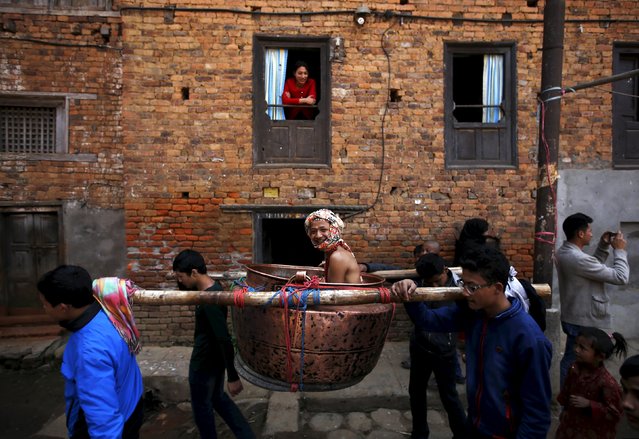
A devotee is carried around town in a vessel as part of rituals during the Swasthani Bratakatha festival at Thecho in Lalitpur, Nepal, February 19, 2016. During the month long festival, devotees recite one chapter of a Hindu tale daily from the 31-chapter sacred Swasthani Brata Katha book that is dedicated to God Madhavnarayan and Goddess Swasthani, alongside various other gods and goddess and the miraculous feats performed by them. (Photo by Navesh Chitrakar/Reuters)

A devotee is carried around town in a vessel as part of rituals during the Swasthani Bratakatha festival at Thecho in Lalitpur, Nepal, February 19, 2016. During the month long festival, devotees recite one chapter of a Hindu tale daily from the 31-chapter sacred Swasthani Brata Katha book that is dedicated to God Madhavnarayan and Goddess Swasthani, alongside various other gods and goddess and the miraculous feats performed by them. (Photo by Navesh Chitrakar/Reuters)
Details
21 Feb 2016 11:32:00
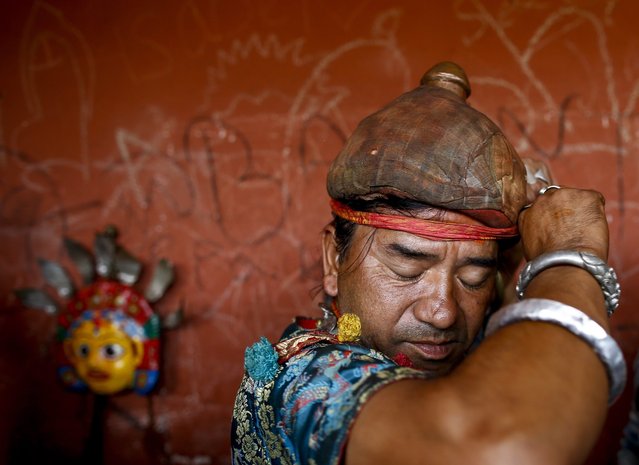
A Nepalese devotee prepares for a religious mask performance during the Seekaali Festival in Khokna village, near Kathmandu, Nepal, 07 October 2016. During the 300-year-old Seekali festival, elderly ethnic Newari devotees wear masks of 14 various goddesses including Lord Ganesha, Lord Shiva, Lord Laxmi, Lord Brahma and Lord Bishnu. The Khokna people celebrate the Seekaali festival as an alternative of the Dashain festival which is biggest festival of Nepalese Hindus that celebrates the victory of the gods over demons. (Photo by Narendra Shrestha/EPA)

A Nepalese devotee prepares for a religious mask performance during the Seekaali Festival in Khokna village, near Kathmandu, Nepal, 07 October 2016. During the 300-year-old Seekali festival, elderly ethnic Newari devotees wear masks of 14 various goddesses including Lord Ganesha, Lord Shiva, Lord Laxmi, Lord Brahma and Lord Bishnu. The Khokna people celebrate the Seekaali festival as an alternative of the Dashain festival which is biggest festival of Nepalese Hindus that celebrates the victory of the gods over demons. (Photo by Narendra Shrestha/EPA)
Details
09 Oct 2016 07:14:00
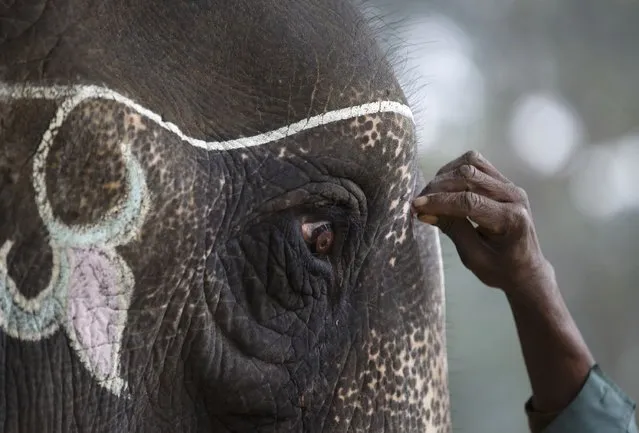
A mahout decorates his elephant using chalk while preparing for the Elephant Festival at Sauraha in Chitwan, south of Kathmandu, December 26, 2014. (Photo by Navesh Chitrakar/Reuters)

A mahout (a person who rides an elephant) decorates his elephant using chalk while preparing for the Elephant Festival at Sauraha in Chitwan, south of Kathmandu, December 26, 2014. Elephants and mahouts from Chitwan will participate in the Elephant festival, which involves elephant races, elephants playing an exhibition soccer match and taking part in various other sporting activities. The event will start from 26 December and will end on 30 December, 2014. (Photo by Navesh Chitrakar/Reuters)
Details
28 Dec 2014 11:38:00
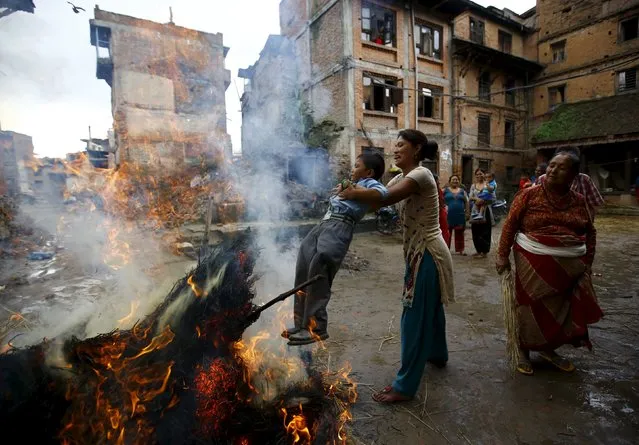
A woman swings a child around a fire, where an effigy of the demon Ghantakarna was burnt to symbolize the destruction of evil, during the Ghantakarna festival at the ancient city of Bhaktapur, Nepal August 12, 2015. (Photo by Navesh Chitrakar/Reuters)

A woman swings a child around a fire, where an effigy of the demon Ghantakarna was burnt to symbolize the destruction of evil, during the Ghantakarna festival at the ancient city of Bhaktapur, Nepal August 12, 2015. According to local folklore, the demon is believed to “steal” children and women from their homes and localities. (Photo by Navesh Chitrakar/Reuters)
Details
13 Aug 2015 11:48:00
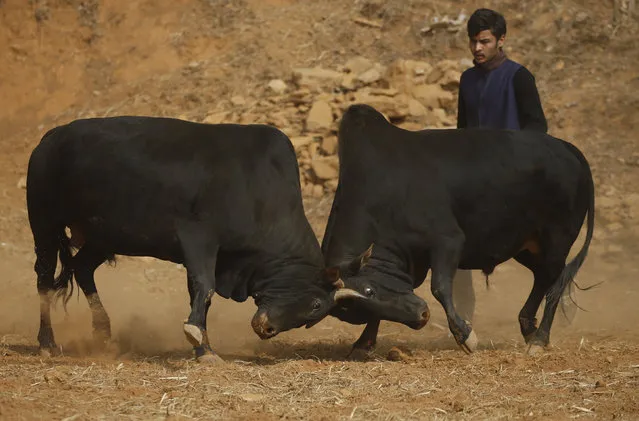
Bulls fight during the Maghesangranti festival at Talukachandani village in Nuwakot district near Kathmandu, Nepal January 15, 2016. (Photo by Navesh Chitrakar/Reuters)

Bulls fight during the Maghesangranti festival at Talukachandani village in Nuwakot district near Kathmandu, Nepal January 15, 2016. The village organizes the bullfight during the Maghesangranti festival that commemorates the start of the holy month of Magh, ushering in the coming of warmer weather and longer days. (Photo by Navesh Chitrakar/Reuters)
Details
17 Jan 2016 08:04:00
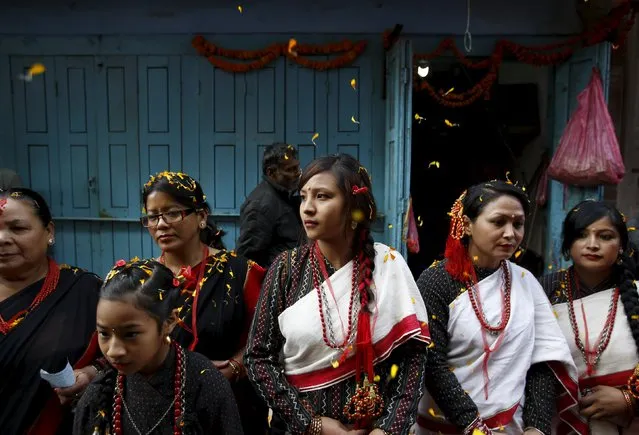
Participants from Newar community in traditional attire, takes part in the parade to celebrate Newari New Year that falls during the Tihar festival, also called Diwali, in Kathmandu, Nepal November 12, 2015. (Photo by Navesh Chitrakar/Reuters)

Participants from Newar community in traditional attire, takes part in the parade to celebrate Newari New Year that falls during the Tihar festival, also called Diwali, in Kathmandu, Nepal November 12, 2015. The Newar community observes the start of their Newari New Year 1136, in accordance with their lunar calendar, by worshipping their spiritual selves in a ritual known as "mahapuja". (Photo by Navesh Chitrakar/Reuters)
Details
16 Nov 2015 08:01:00
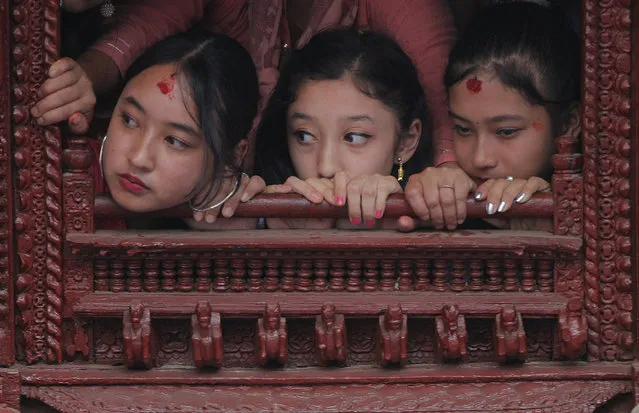
A former living goddess Kumari, middle, watches the Indra Jatra festival, an eight-day festival that honors Indra, the Hindu god of rain, in Kathmandu, Nepal, Friday, September 13, 2019. (Photo by Niranjan Shrestha/AP Photo)

A former living goddess Kumari, middle, watches the Indra Jatra festival, an eight-day festival that honors Indra, the Hindu god of rain, in Kathmandu, Nepal, Friday, September 13, 2019. (Photo by Niranjan Shrestha/AP Photo)
Details
18 Sep 2019 00:03:00
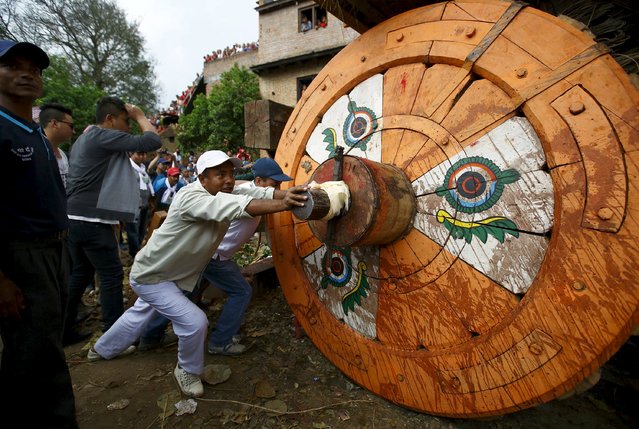
Devotees push the chariot of Rato Machhindranath during the chariot festival at Bungamati in Lalitpur April 22, 2015. Rato Machhindranath is known as the god of rain and both Hindus and Buddhists worship Machhindranath for good rain to prevent drought during the rice harvest season. (Photo by Navesh Chitrakar/Reuters)

Devotees push the chariot of Rato Machhindranath during the chariot festival at Bungamati in Lalitpur April 22, 2015. Rato Machhindranath is known as the god of rain and both Hindus and Buddhists worship Machhindranath for good rain to prevent drought during the rice harvest season. (Photo by Navesh Chitrakar/Reuters)
Details
23 Apr 2015 12:21:00