Loading...
Done
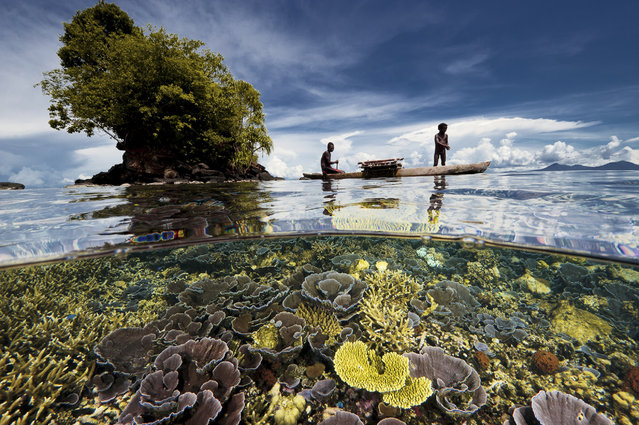
From the “Paradise Revisited” story in the November 2013 issue of National Geographic magazine, this image is a beautiful vision of father and son fishermen as they move through the multicolored coral gardens of Kembe Bay, Papua New Guinea, in a traditional outrigger canoe. (Photo by David Doubilet/National Geographic Creative)

From the “Paradise Revisited” story in the November 2013 issue of National Geographic magazine, this image is a beautiful vision of father and son fishermen as they move through the multicolored coral gardens of Kembe Bay, Papua New Guinea, in a traditional outrigger canoe. (Photo by David Doubilet/National Geographic Creative)
Details
29 Apr 2017 07:28:00
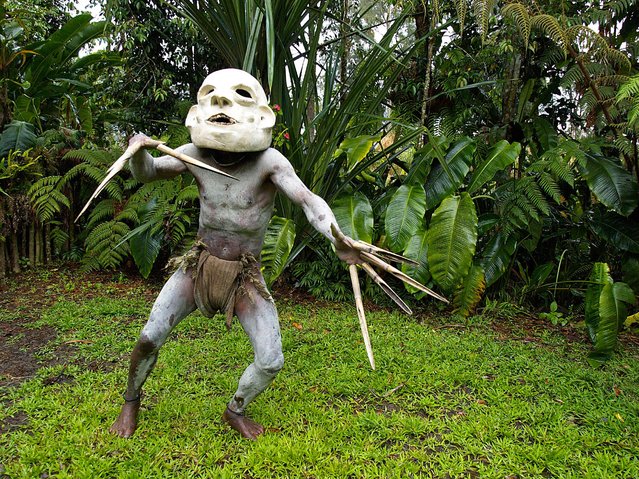
The mudmen come from the country’s western highlands, where there are virtually no roads, cars, electricity or shops. (Photo by Jeremy Hunter/Exclusivepix Media)

For centuries the Highlands peoples of Papua New Guinea fought over land, women and pigs. Sorcery and battle skills could elevate a clan to Bigmanship, where the bigger the “presentation”, the bigger the man. Clans therefore would paint their bodies and create fearsome masks as part of their psy. Here: These are the terrifying tribe of “mudmen” from a remote part of Papua New Guinea. (Photo by Jeremy Hunter/Exclusivepix Media)
Details
08 May 2017 08:12:00
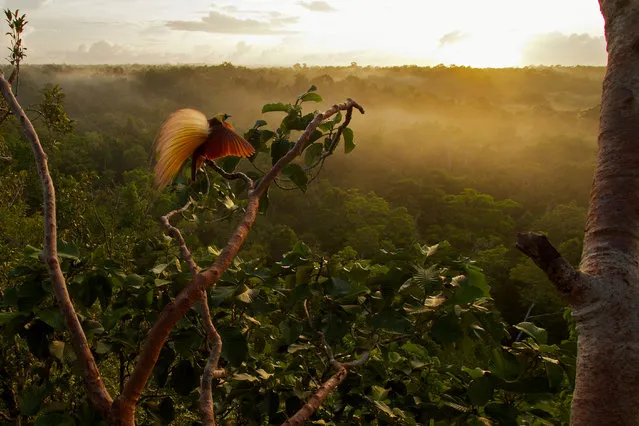
A greater bird of paradise (Paradisaea apoda) displaying in Badigaki Forest, Wokam Island (Aru Islands, Indonesia). Found here in Aru and on adjacent New Guinea, the greater bird of paradise represents about 40 different species of birds of paradise that depend on intact rainforest across the New Guinea region spanning eastern Indonesia and Papua New Guinea. With more than 80% of forest cover still intact, this region represents the largest remaining block of rainforest in the entire Asia-Pacific. (Photo by Tim Laman/naturepl.com/LDY Agency)

A greater bird of paradise (Paradisaea apoda) displaying in Badigaki Forest, Wokam Island (Aru Islands, Indonesia). Found here in Aru and on adjacent New Guinea, the greater bird of paradise represents about 40 different species of birds of paradise that depend on intact rainforest across the New Guinea region spanning eastern Indonesia and Papua New Guinea. With more than 80% of forest cover still intact, this region represents the largest remaining block of rainforest in the entire Asia-Pacific. (Photo by Tim Laman/naturepl.com/LDY Agency)
Details
14 Nov 2021 05:57:00
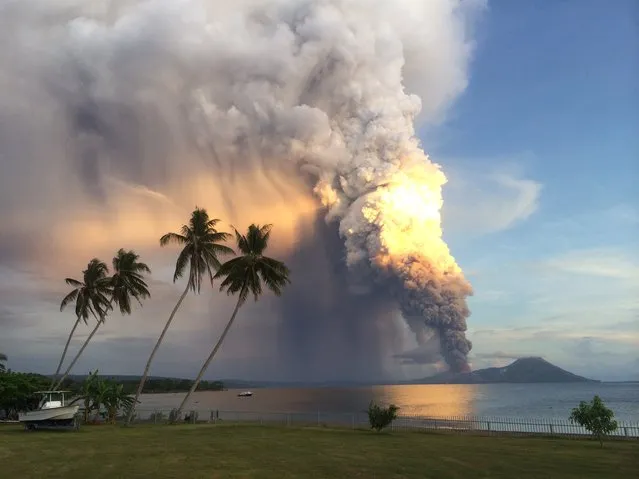
A photo taken on August 29, 2014, shows Mount Tavurvur erupting in eastern Papua New Guinea, spewing rocks and ash into the air, forcing the evacuation of local communities and international flights to be re-routed. Mount Tavurvur, which destroyed the town of Rabaul when it erupted simultaneously with nearby Mount Vulcan in 1994, rumbled to life early in the morning on the tip of the remote island of New Britain. (Photo by Oliver Bluett/AFP Photo)

A photo taken on August 29, 2014, shows Mount Tavurvur erupting in eastern Papua New Guinea, spewing rocks and ash into the air, forcing the evacuation of local communities and international flights to be re-routed. Mount Tavurvur, which destroyed the town of Rabaul when it erupted simultaneously with nearby Mount Vulcan in 1994, rumbled to life early in the morning on the tip of the remote island of New Britain. (Photo by Oliver Bluett/AFP Photo)
Details
30 Aug 2014 10:51:00
“Asaro from the Eastern Highlands”. The mudmen could not cover their faces with mud because the people of Papua New Guinea thought that the mud from the Asaro river was poisonous. So instead of covering their faces with this alleged poison, they made masks from pebbles that they heated and water from the waterfall, with unusual designs such as long or very short ears either going down to the chin or sticking up at the top, long joined eyebrows attached to the top of the ears, horns and sideways mouths. (Jimmy Nelson)

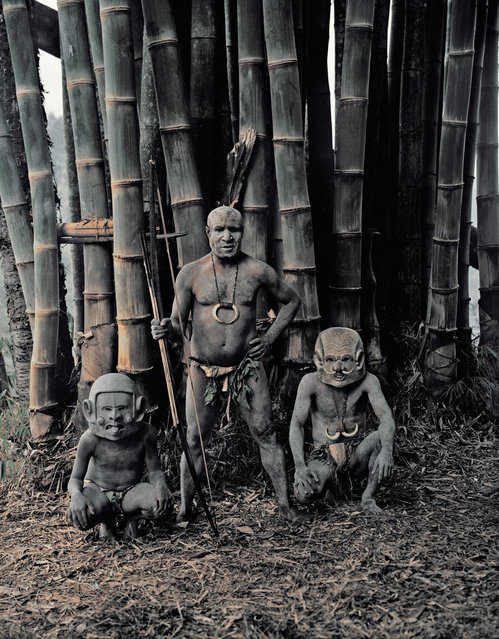
“Asaro from the Eastern Highlands”. The mudmen could not cover their faces with mud because the people of Papua New Guinea thought that the mud from the Asaro river was poisonous. So instead of covering their faces with this alleged poison, they made masks from pebbles that they heated and water from the waterfall, with unusual designs such as long or very short ears either going down to the chin or sticking up at the top, long joined eyebrows attached to the top of the ears, horns and sideways mouths. (Photo and caption by Jimmy Nelson)
Details
20 Oct 2013 08:54:00
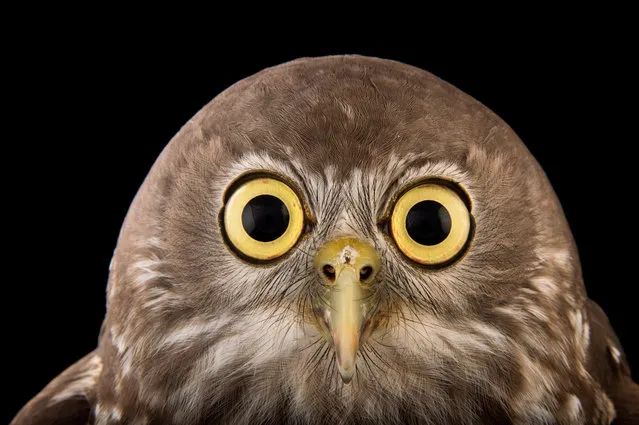
The National Geographic Photo Ark is a travelling exhibition of photographer Joel Sartore’s quest to create a photo archive of biodiversity around the world. So far, Sartore has captured studio portraits of more than 6,000 species – a number that he hopes to double. On 1 July, the ark will open at Melbourne zoo – the first time it has been exhibited in the southern hemisphere. More than 50 portraits will be on display, including many of Australian endangered animals being protected by programs at the zoo itself. These captions have been edited from text supplied by Melbourne zoo. Here: Barking owl. So-named because its call sounds like a barking dog, these birds are native to Australia, Indonesia and Papua New Guinea. In Victoria they are listed as an endangered species, and in 2003 there were estimated to be fewer than 50 breeding pairs. The main threat to the species in Victoria is loss of habitat, especially large trees with hollows in which they can nest and on which many of their prey depend. Apart from a bark, they may utter a chilling scream when they feel threatened. (Photo by Joel Sartore/National Geographic Photo Ark/The Guardian)

The National Geographic Photo Ark is a travelling exhibition of photographer Joel Sartore’s quest to create a photo archive of biodiversity around the world. So far, Sartore has captured studio portraits of more than 6,000 species – a number that he hopes to double. On 1 July, the ark will open at Melbourne zoo – the first time it has been exhibited in the southern hemisphere. More than 50 portraits will be on display, including many of Australian endangered animals being protected by programs at the zoo itself. These captions have been edited from text supplied by Melbourne zoo. Here: Barking owl. (Photo by Joel Sartore/National Geographic Photo Ark/The Guardian)
Details
01 Jul 2017 07:45:00
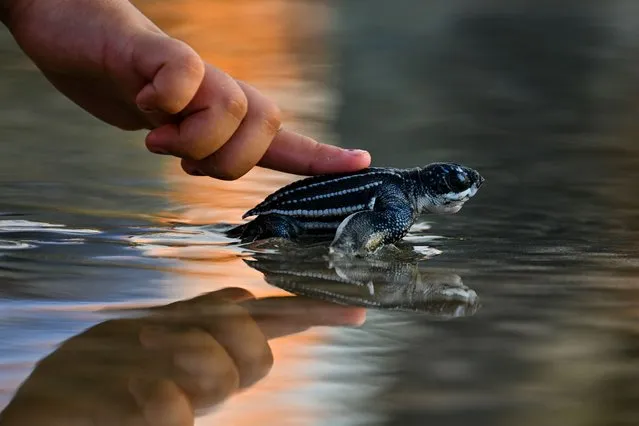
A small Leatherback sea turtle heads towards the sea during the sunset at Lhoknga beach in Aceh province on February 25, 2023. (Photo by Chaideer Mahyuddin/AFP Photo)

A small Leatherback sea turtle heads towards the sea during the sunset at Lhoknga beach in Aceh province on February 25, 2023. (Photo by Chaideer Mahyuddin/AFP Photo)
Details
07 Mar 2023 03:23:00
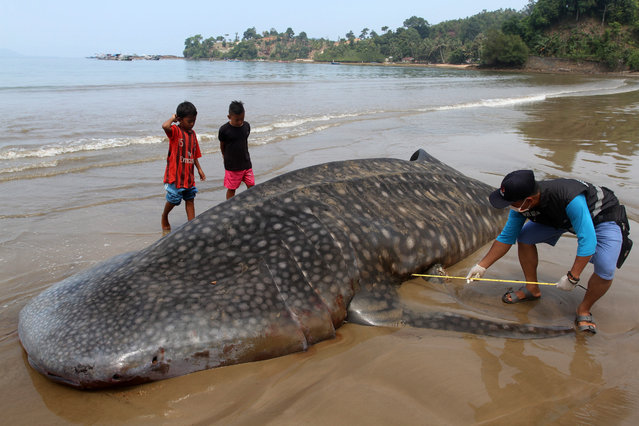
An official (R) measures the size of a whale shark (Rhincodon typus) carcass on the shore of Teluk Betung beach in West Sumatra, Indonesia, 08 October 2019. The dead whale shark washed ashore at Teluk Betung beach on 07 October 2019. (Photo by Rajo Batuah/EPA/EFE)

An official (R) measures the size of a whale shark (Rhincodon typus) carcass on the shore of Teluk Betung beach in West Sumatra, Indonesia, 08 October 2019. The dead whale shark washed ashore at Teluk Betung beach on 07 October 2019. (Photo by Rajo Batuah/EPA/EFE)
Details
10 Oct 2019 00:01:00