Loading...
Done
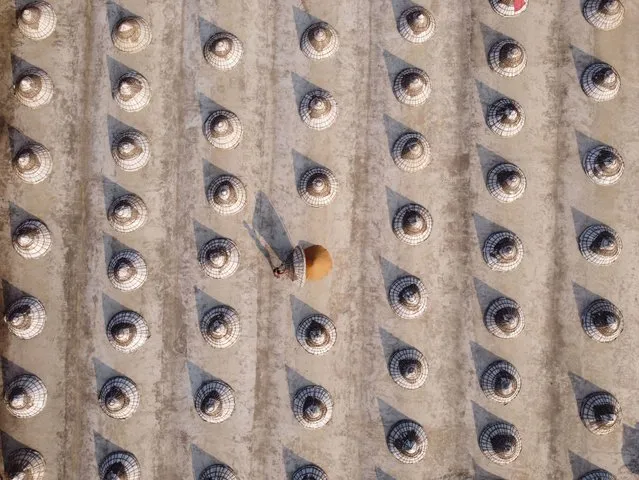
A worker covers mounds of rice with a giant hat-shaped bamboo cone in a field in Brahmanbaria, Bangladesh on September 21, 2023 after they have been dried in the scoring sun. (Photo by Joy Saha/Rex Features/Shutterstock)

A worker covers mounds of rice with a giant hat-shaped bamboo cone in a field in Brahmanbaria, Bangladesh on September 21, 2023 after they have been dried in the scoring sun. (Photo by Joy Saha/Rex Features/Shutterstock)
Details
11 Oct 2023 04:17:00
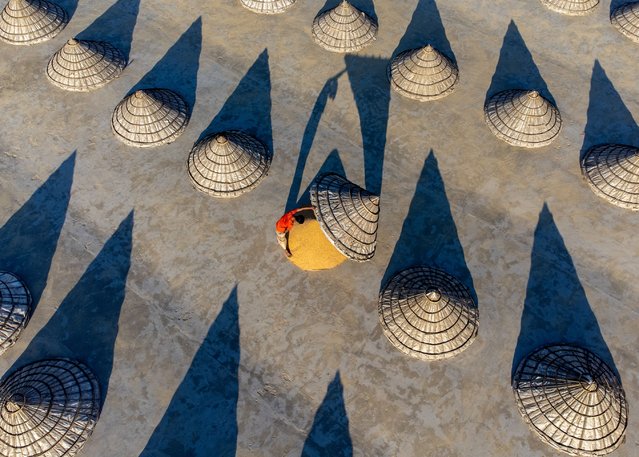
Giant bamboo cones, used to protect rice from overnight moisture during its drying process, in the Brahmanbaria district of Bangladesh in the second decade of April 2025. (Photo by Bipul Ahmed/Solent News & Photo Agency)

Giant bamboo cones, used to protect rice from overnight moisture during its drying process, in the Brahmanbaria district of Bangladesh in the second decade of April 2025. (Photo by Bipul Ahmed/Solent News & Photo Agency)
Details
09 Sep 2025 02:54:00
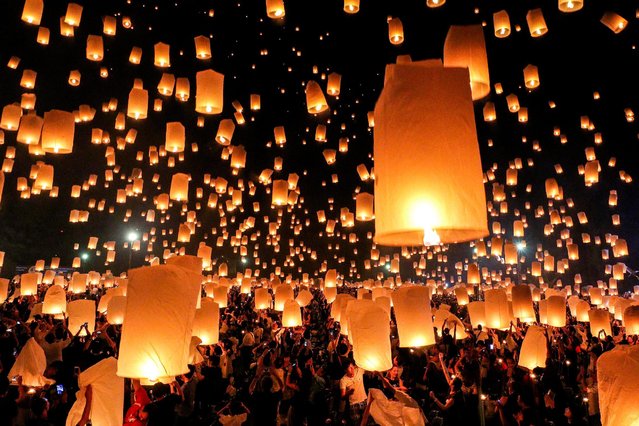
People release floating lanterns during the festival of Yee Peng in the northern capital of Chiang Mai, Thailand November 14, 2016. Yi Peng refers to the full moon day in the second month according to the Lanna lunar calendar (the twelfth month according to the Thai lunar calendar). Swarms of Lanna-style sky lanterns are launched into the air where they resemble large shoals of giant fluorescent jellyfish gracefully floating through the sky. The festival is meant as a time for tham bun, to make merit. Khom loi are made from a thin fabric, such as rice paper, stretched over a bamboo or wire frame, to which a candle or fuel cell is attached. When the fuel cell is lit, the resulting hot air is trapped inside the lantern and creates enough lift for the khom loi to float up into the sky. (Photo by Athit Perawongmetha/Reuters)

People release floating lanterns during the festival of Yee Peng in the northern capital of Chiang Mai, Thailand November 14, 2016. Yi Peng refers to the full moon day in the second month according to the Lanna lunar calendar (the twelfth month according to the Thai lunar calendar). Swarms of Lanna-style sky lanterns are launched into the air where they resemble large shoals of giant fluorescent jellyfish gracefully floating through the sky. The festival is meant as a time for tham bun, to make merit. Khom loi are made from a thin fabric, such as rice paper, stretched over a bamboo or wire frame, to which a candle or fuel cell is attached. When the fuel cell is lit, the resulting hot air is trapped inside the lantern and creates enough lift for the khom loi to float up into the sky. (Photo by Athit Perawongmetha/Reuters)
Details
15 Nov 2016 11:54:00
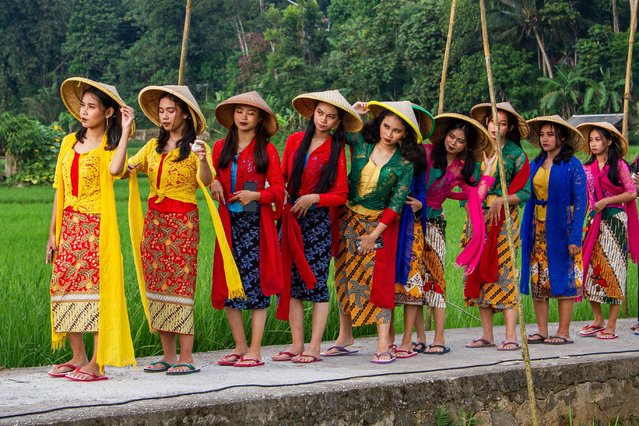
Dancers walk on rice fields during the Rice Field Festival in Baginda Village. The Rice Field Festival, organized by the Baginda Village Youth Organization, was held to maintain the local culture and art of Sundanese culture on May 5, 2024. (Photo by Algi Febri Sugita/ZUMA Press Wire/Alamy Live News)

Dancers walk on rice fields during the Rice Field Festival in Baginda Village. The Rice Field Festival, organized by the Baginda Village Youth Organization, was held to maintain the local culture and art of Sundanese culture on May 5, 2024. (Photo by Algi Febri Sugita/ZUMA Press Wire/Alamy Live News)
Details
05 Jun 2024 02:42:00
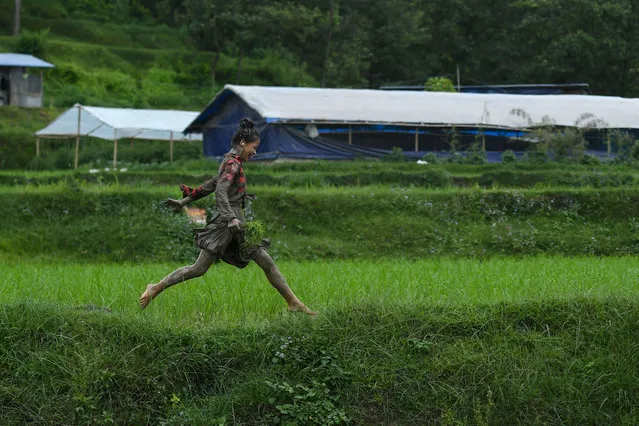
A girl walks along rice paddy fields during “National Paddy Day”, which marks the start of the annual rice planting season, in Tokha village on the outskirts of Kathmandu on June 29, 2020. Splashing mud and drinking local rice beer, Nepali farmers this week celebrated National Paddy Day to mark the beginning of the rice-planting season, despite some coronavirus lockdown measures still in place. Traditional farming songs and laughter echoed in the air as farmers waded into waterlogged fields to sow green paddy. (Photo by Prakash Mathema/AFP Photo)

A girl walks along rice paddy fields during “National Paddy Day”, which marks the start of the annual rice planting season, in Tokha village on the outskirts of Kathmandu on June 29, 2020. Splashing mud and drinking local rice beer, Nepali farmers this week celebrated National Paddy Day to mark the beginning of the rice-planting season, despite some coronavirus lockdown measures still in place. Traditional farming songs and laughter echoed in the air as farmers waded into waterlogged fields to sow green paddy. (Photo by Prakash Mathema/AFP Photo)
Details
02 Aug 2020 00:01:00
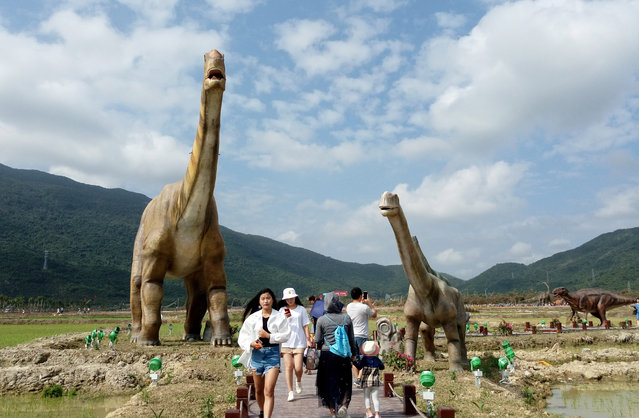
Visitors watch dinosaur models at Haitang Bay Rice Paddy Park on January 24, 2018 in Sanya, Hainan Province of China. The Haitang Bay Rice Paddy Park featuring 323 full-size dinosaur models was officially opened to the public on Thursday. (Photo by Yin Haiming/China News Service/VCG via Getty Images)

Visitors watch dinosaur models at Haitang Bay Rice Paddy Park on January 24, 2018 in Sanya, Hainan Province of China. The Haitang Bay Rice Paddy Park featuring 323 full-size dinosaur models was officially opened to the public on Thursday. (Photo by Yin Haiming/China News Service/VCG via Getty Images)
Details
27 Jan 2018 06:45:00
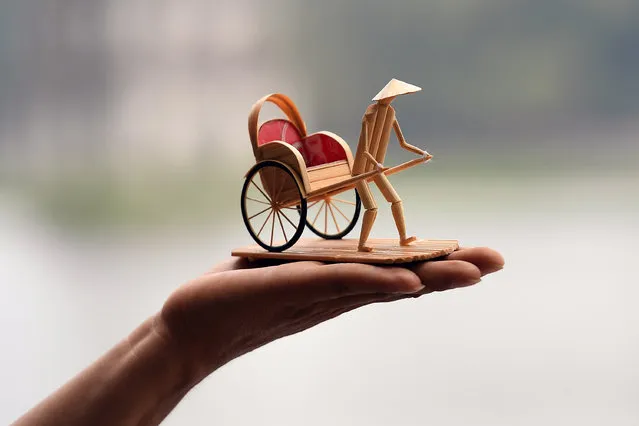
A craftman poses with a bamboo miniature sculpture in Hanoi on November 25, 2020. (Photo by Nhac Nguyen/AFP Photo)

A craftman poses with a bamboo miniature sculpture in Hanoi on November 25, 2020. (Photo by Nhac Nguyen/AFP Photo)
Details
30 Jan 2021 08:29:00
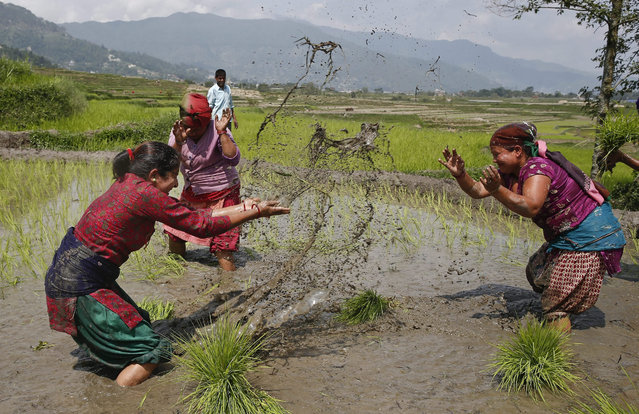
Nepalese women farmers spray mud water at each other while planting rice in a paddy field during the National Paddy Day in the village of Jitpur in Kathmandu, Nepal, 30 June 2015. On this day, known as Asar Pandra, farmers begin the annual rice planting season and mark the day with various festivities such as preparing rice meals with muddy water, spreads mud among farmers. (Photo by Narendra Shrestha/EPA)

Nepalese women farmers spray mud water at each other while planting rice in a paddy field during the National Paddy Day in the village of Jitpur in Kathmandu, Nepal, 30 June 2015. On this day, known as Asar Pandra, farmers begin the annual rice planting season and mark the day with various festivities such as preparing rice meals with muddy water, spreads mud among farmers. The Mud being a symbol for a prosperous season. The agricultural sector contributes about 60 per cent to Nepal's gross domestic product. (Photo by Narendra Shrestha/EPA)
Details
01 Jul 2015 13:16:00