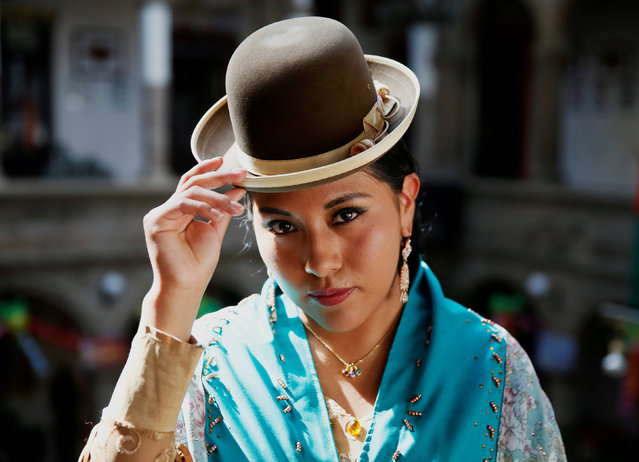
A Cholita (Andean woman) model poses during a practice session of Rosario Aguilar fashion model school in La Paz, Bolivia, February 23, 2019. (Photo by David Mercado/Reuters)
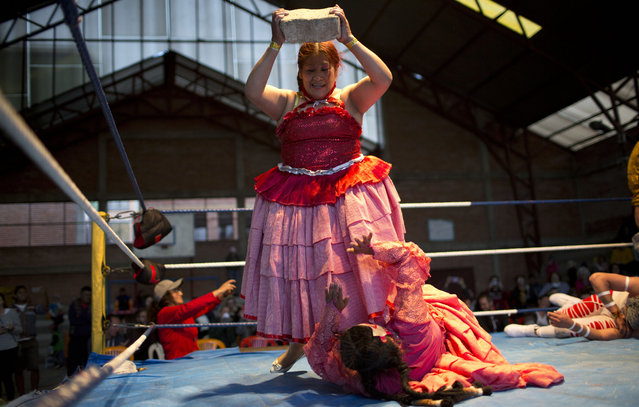
Veteran cholita wrestler Jennifer dos Caras, 45, holds a cement block over teen wrestler Lucero la Bonita in the ring in El Alto, Bolivia, Monday, January 21, 2019. Trainees of cholita wrestling are still a year away from their full professional debuts while competing in matches against established athletes. (Photo by Juan Karita/AP Photo)
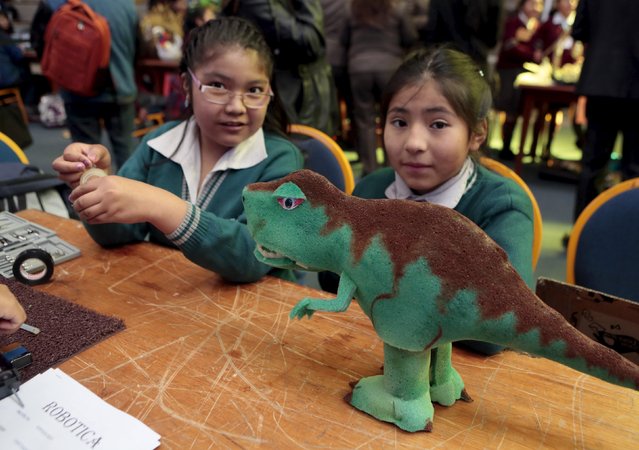
Students from Vida Nueva School present their dinosaur robot built with recycled materials during the annual robotics fair supported by the Bolivian Education Ministry in La Paz, August 10, 2015. (Photo by David Mercado/Reuters)
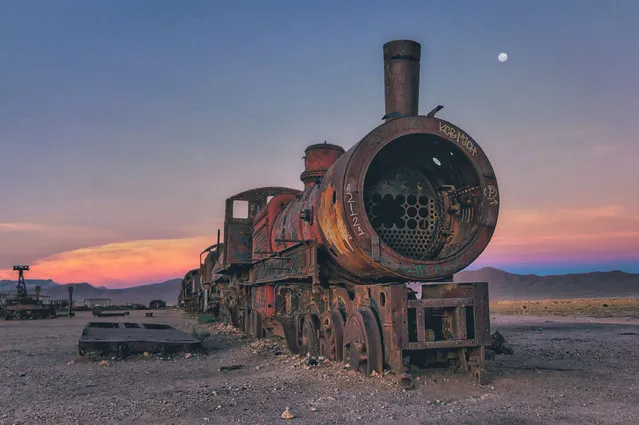
Chris Staring photographs a mysterious train graveyard in the heart of southern Bolivia, where the skeletons of British steam locomotives and rail cars rust away on the edge of the world’s largest salt flats. More than 100 rail cars and locomotives can be found in different states of decay in the train graveyard. (Photo by Chris Staring/Rex Features/Shutterstock)
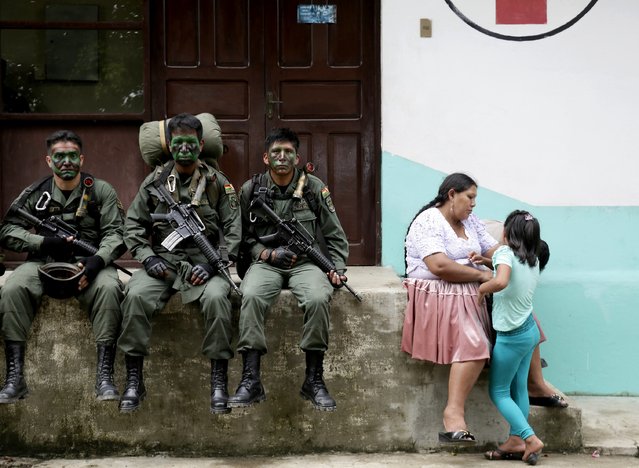
Members of the Bolivian combined forces of army and police rest at their headquarters at the end of their ceremony for the task of fighting against drugs and the eradication of coca leaves in Chimore, east of La Paz, December 10, 2014. The government of Bolivia's President Evo Morales eradicated some 11,000 hectares of illegal coca plants and confiscated nearly 192 tons of drugs in 2014, according to the local media. (Photo by David Mercado/Reuters)
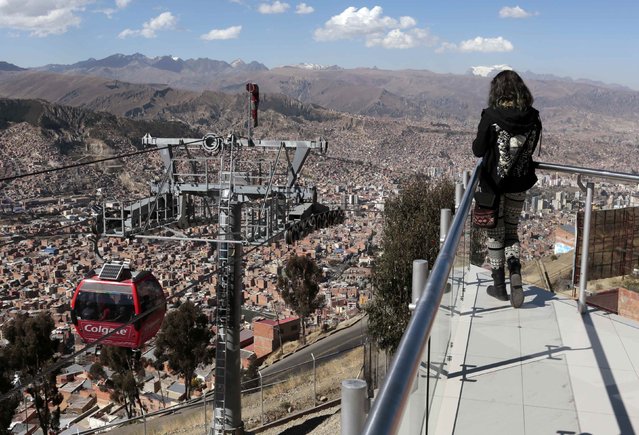
A woman looks at La Paz city from the Jacha Qhatu cable car station in El Alto, July 23, 2015. Bolivia already has the largest urban cable car system in the world. Now the booming country is tripling the size of the network and will soon have nine lines whizzing above the administrative capital of La Paz. (Photo by David Mercado/Reuters)
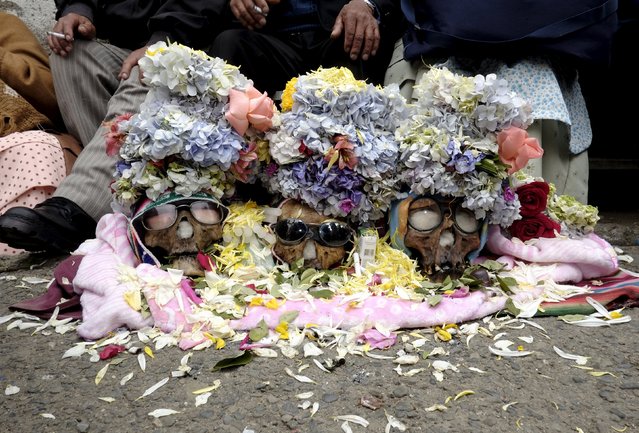
Skulls placed on the floor are seen during a ceremony held for the "Dia de las natitas" (Day of the Skull) celebrations at the General Cemetery of La Paz, November 8, 2015. Bolivians, who keep close relatives skulls at home as a macabre talisman, flock to the cemetery chapel once a year to have the craniums blessed and to bring themselves good luck in the future. (Photo by David Mercado/Reuters)
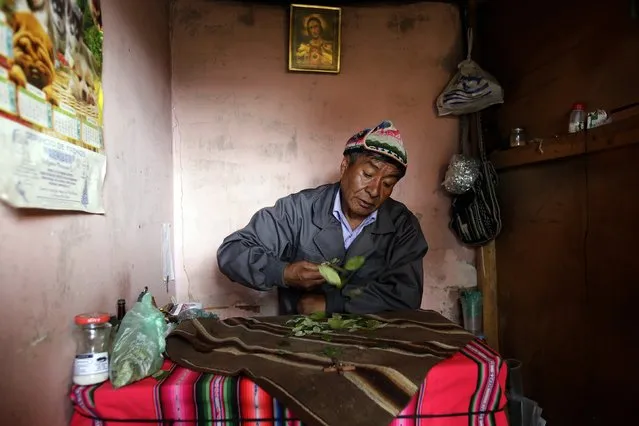
Aymara witchdoctor Ricardo Quispe, also called “Lord of the Lake”, throws coca leaves during a ritual to predict the future, at the witches market of El Alto, on the outskirts of La Paz, December 31, 2014. Dozens of witch doctors tend to a warren of stalls in El Alto, making offerings to give thanks, to promise luck at work or in love, or to call up spirits and banish curses at the end of the year. (Photo by David Mercado/Reuters)