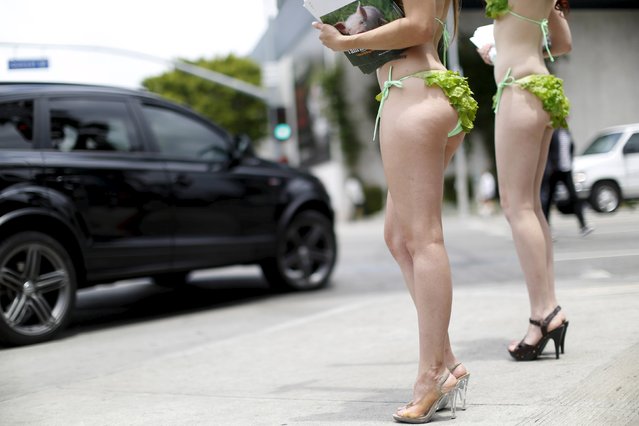
Activists from People for the Ethical Treatment of Animals (PETA) promoting a vegan diet are pictured as people drive past in Los Angeles, California May 21, 2015. (Photo by Mario Anzuoni/Reuters)
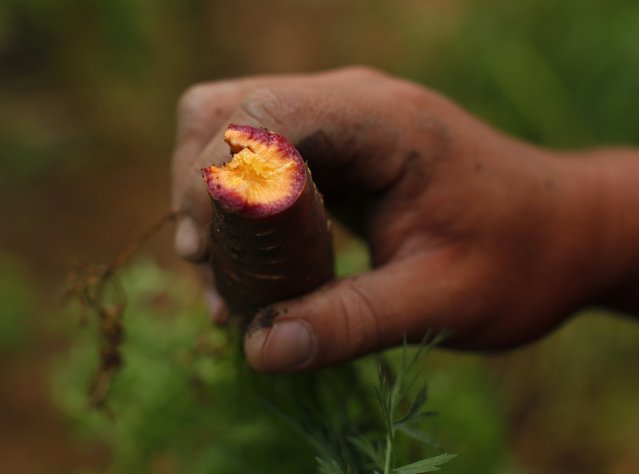
Makoto Chino eats a purple haze carrot as he works harvesting the morning's vegetables and fruit from his family's farm in Rancho Santa Fe, California August 12, 2014. The gravitational pull of Chino Farm is legendary. Since they don't ship, everyone – whether a top chef or a traveling foodie or a local resident – comes to the farm stand, simply called “Vegetable Shop”, on a dusty corner of this affluent San Diego County town, hemmed in by sprawling housing estates. (Photo by Mike Blake/Reuters)
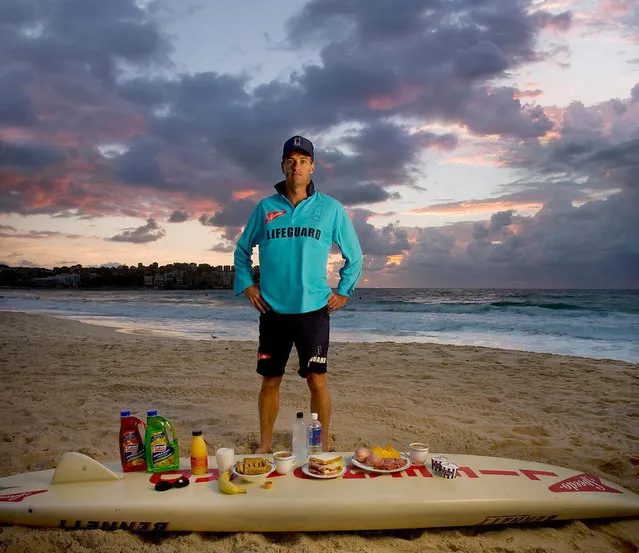
A stunning photographic collection featuring portraits of people from 30 countries and the food they eat in one day. In this fascinating study of people and their diets, 80 profiles are organized by the total number of calories each person puts away in a day. Featuring a Japanese sumo wrestler, a Massai herdswoman, world-renowned Spanish chef Ferran Adria, an American competitive eater, and more, these compulsively readable personal stories also include demographic particulars, including age, activity level, height, and weight. Essays from Harvard primatologist Richard Wrangham, journalist Michael Pollan, and others discuss the implications of our modern diets for our health and for the planet. This compelling blend of photography and investigative reportage expands our understanding of the complex relationships among individuals, culture, and food.
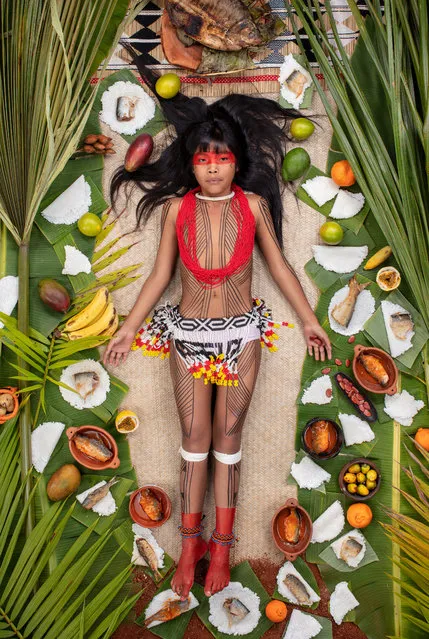
Photographer Gregg Segal travelled the world to document children and the food they eat in a week. Partly inspired by the increasing problems of childhood obesity, he tracked traditional regional diets as yet unaffected by globalisation, and ironically, found that the healthiest diets were often eaten by the least well off. (Photo by Gregg Segal/The Guardian)
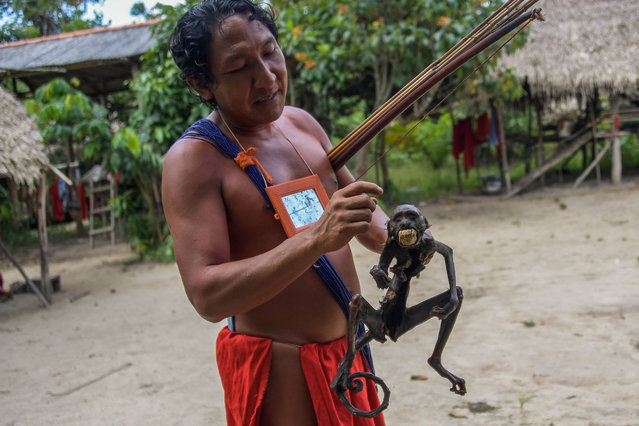
Chieftain Japarupi Waiapi shows a roasted monkey -part of Waiapi's diet, also based in Manioc and fruits- at the reserve in Amapa state in Brazil on October 13, 2017. When Waiapis walks into the Amazon forest surrounding their village, they do not see trees, but a kind of shopping mall providing medicine, food, shelter, tools and weapons all under the eye of multiple spirits. (Photo by Apu Gomes/AFP Photo)
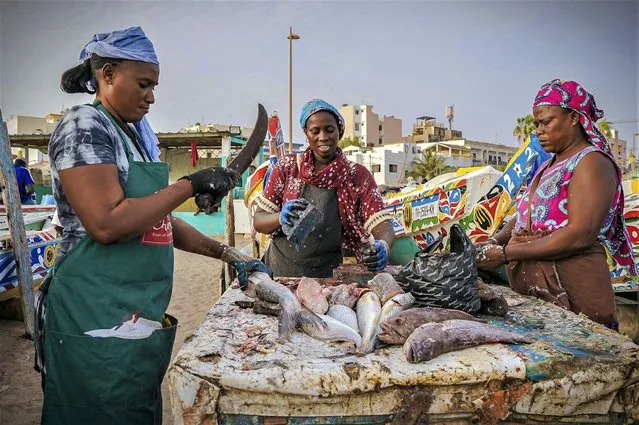
Fishmongers cut and clean fish at the Soumbedioune fish market in Dakar, Senegal, May 31, 2022. In Senegal, fish and seafood represent more than 40% of the animal protein intake in the diet. According to a U.S. report, one in six people work in the fisheries sector. (Photo by Grace Ekpu/AP Photo)
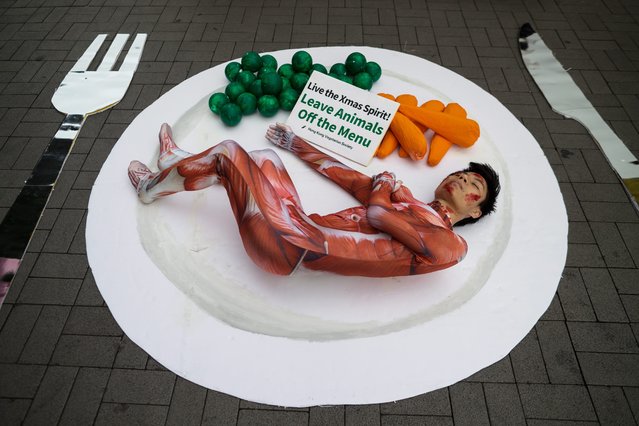
A Hong Kong Vegetarian Society activists lies on a giant plate alongside oversized peas, carrots and cutlery during a protest rally in the tourist district of Tsim Sha Tsui, Hong Kong, China, 23 December 2015. The activists urged passers-by to extend the holiday spirit to animals and to give thoughts to the cruelty inflicted on animals in meat productions. (Photo by Jerome Favre/EPA)
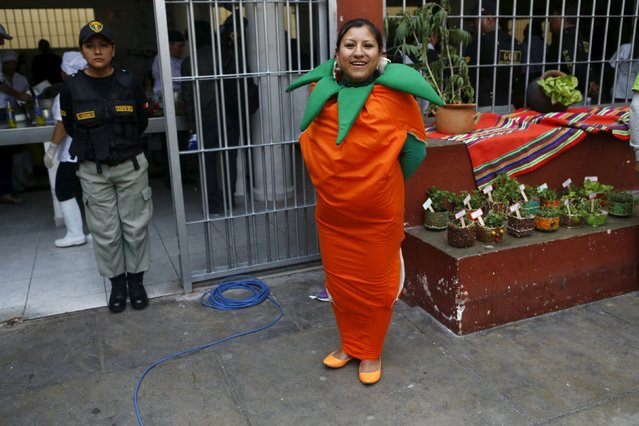
An inmate, dressed as a carrot, participates in a culinary competition at the Santa Monica female prison in Lima, September 10, 2015. About 14 prisoners from different jails took on the roles of cooks and assistants to participate in a culinary competition called “Inpe Mistura 2015”, an event held concurrently with the Mistura food fair taking place in Lima in September. (Photo by Mariana Bazo/Reuters)