Loading...
Done
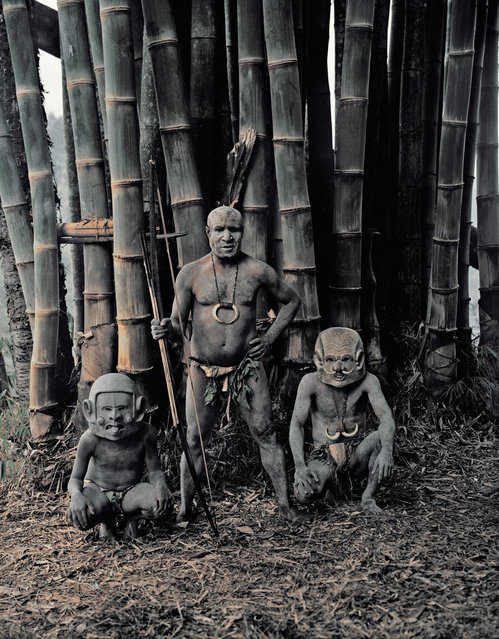
“Asaro from the Eastern Highlands”. The mudmen could not cover their faces with mud because the people of Papua New Guinea thought that the mud from the Asaro river was poisonous. So instead of covering their faces with this alleged poison, they made masks from pebbles that they heated and water from the waterfall, with unusual designs such as long or very short ears either going down to the chin or sticking up at the top, long joined eyebrows attached to the top of the ears, horns and sideways mouths. (Jimmy Nelson)

“Asaro from the Eastern Highlands”. The mudmen could not cover their faces with mud because the people of Papua New Guinea thought that the mud from the Asaro river was poisonous. So instead of covering their faces with this alleged poison, they made masks from pebbles that they heated and water from the waterfall, with unusual designs such as long or very short ears either going down to the chin or sticking up at the top, long joined eyebrows attached to the top of the ears, horns and sideways mouths. (Photo and caption by Jimmy Nelson)
Details
20 Oct 2013 08:54:00
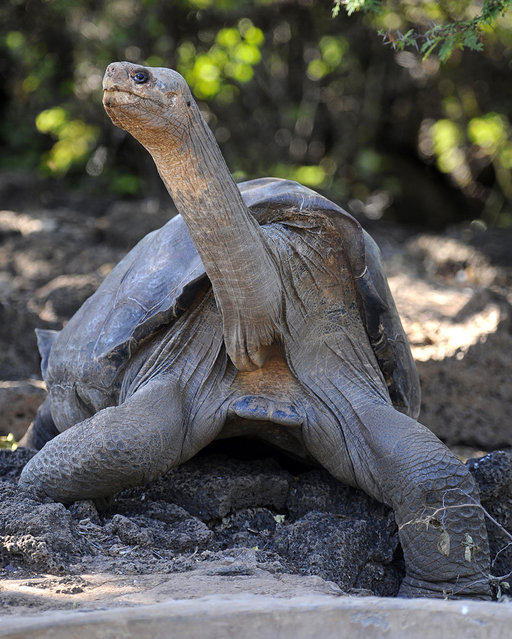
Lonesome George

“The last known individual of the subspecies was a male named Lonesome George (Spanish: El Solitario Jorge/George), who died on 24 June 2012. In his last years, he was known as the rarest creature in the world. George served as a potent symbol for conservation efforts in the Galápagos and internationally”. – Wikipedia. (Photo by Rodrigo Buendia/AFP)
Details
26 Jun 2012 14:05:00
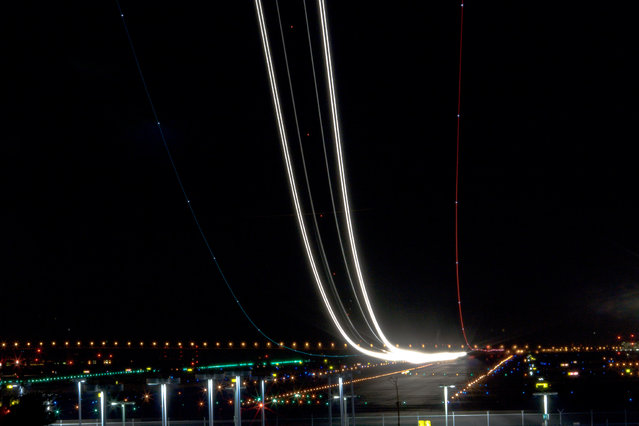
Long Exposure Airport Photos ByTerence Chang

Terence Chang's (aka exxonvaldez) long exposure photographs, capturing only streaks of light as airplanes arrive and depart from the San Francisco airport, certainly are stunning. There's just something so magical about seeing the various patterns created in the sky, even over a relatively short amount of time.
Details
08 Nov 2013 11:23:00
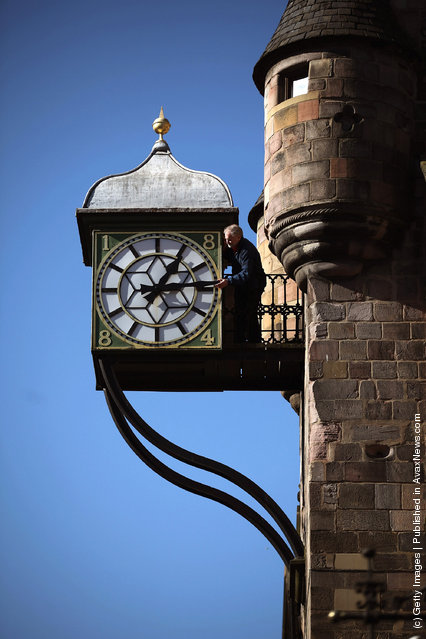
Alan Wilson, Director of James Ritchie & Son clockmakers, founded in 1809, adjusts a clock face at the Cannongate Tobooth to British Summer Time in Edinburgh

Alan Wilson, Director of James Ritchie & Son clockmakers, founded in 1809, adjusts a clock face at the Cannongate Tobooth to British Summer Time on March 21, 2012 in Edinburgh, Scotland. The Tolbooth, built in 1591, was where tolls and public dues were collected. The clock face dates back to 1820 and replaced an earlier clock from the 17th Century. Clocks will be put forward by one hour on Sunday March 25, 2012 at 1.00am and British Summer Time (BST) will officially start. (Photo by Jeff J. Mitchell/Getty Images)
Details
24 Mar 2012 09:25:00


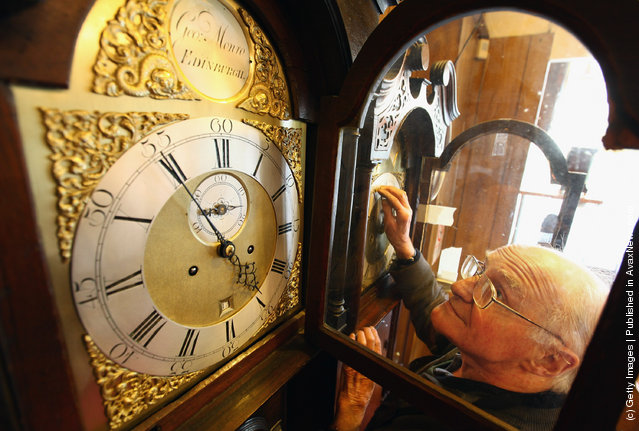
Archie McQuater, 82-year-old clockmaker at Craiglea clocks, adjusts a clock face to British Summer Time (BST) on March 25, 2011 in Edinburgh, Scotland. Clocks will be put forward by one hour at 1:00 AM GMT on Sunday March 27, 2011 officially the start of British Summer Time. British Summer Time will end this year on October 30. (Photo by Jeff J Mitchell/Getty Images)
Details
26 Mar 2011 12:06:00


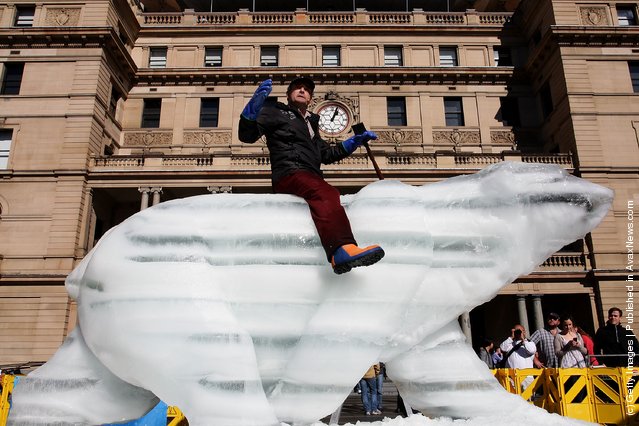
British artist, Mark Coreth sits on top of the “Sydney Ice Bear” carved from a 10 tonne block of ice to illustrate how humans affect climate change in the Arctic at Customs House on June 3, 2011 in Sydney, Australia. The public will be welcomed to touch the bear, and leave an imprint which will begin the melting process and act as a metaphor for how humans affect the environment. The ice bear's has visited six cities on it's global tour since 2009; the visit to Sydney coincides with World Environment Day on June 5. (Photo by Lisa Maree Williams/Getty Images)
Details
03 Jun 2011 08:21:00
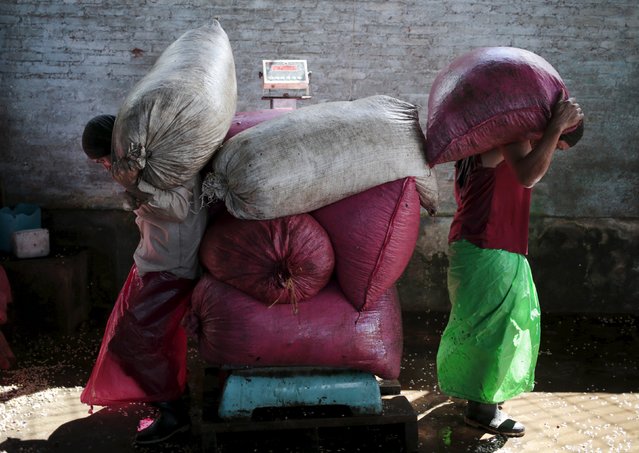
Workers carry sacks of coffee beans at a warehouse at the Nogales farm in Jinotega, Nicaragua January 7, 2016. (Photo by Oswaldo Rivas/Reuters)

Workers carry sacks of coffee beans at a warehouse at the Nogales farm in Jinotega, Nicaragua January 7, 2016. Soaring temperatures in Central America due to climate change are forcing farmers to pull up coffee trees and replace them with cocoa, spurring a revival in the cultivation of a crop once so essential to the region's economy. (Photo by Oswaldo Rivas/Reuters)
Details
20 Jan 2016 08:00:00
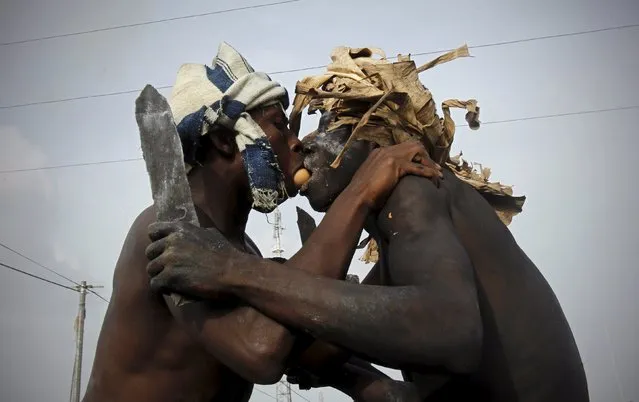
Participants pass an egg using their mouths during a religious ritual as they play the role of traditional fighters in a parade during the Popo (Mask) Carnival of Bonoua, in the east of Abidjan, April 18, 2015. The carnival has its origins in the changes that Aboure youths in Bonoua introduced to the annual festival of yams. (Photo by Luc Gnago/Reuters)

Participants pass an egg using their mouths during a religious ritual as they play the role of traditional fighters in a parade during the Popo (Mask) Carnival of Bonoua, in the east of Abidjan, April 18, 2015. The carnival has its origins in the changes that Aboure youths in Bonoua introduced to the annual festival of yams. (Photo by Luc Gnago/Reuters)
Details
20 Apr 2015 13:36:00