In this Sunday, September 18, 2016 photo, participants wait on stage ahead of Miss Trans Star International 2016 show celebrated in Barcelona, Spain. (Photo by Emilio Morenatti/AP Photo)
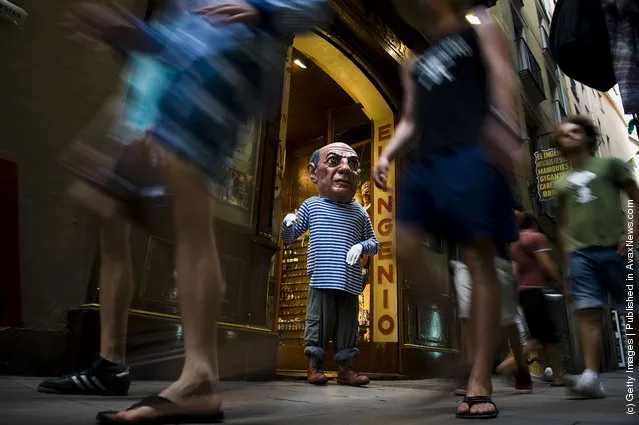
A Pablo Picasso papier mache “huge head” mask, known as “Capgros” in Catalan, is displayed at the entrance of the “El Ingenio” shop on August 23, 2011 in Barcelona, Spain. “El Ingenio” (The Ingenuity) has been making and selling papier mache giant masks and huge heads for Catalan popular festivals since 1838. The “La Merce” festival will be held on September 24 to observe the feast day of Our Lady of Mercy, patron saint of Barcelona. (Photo by David Ramos/Getty Images)
An athlete dressed as a clown jumps into the Mediterranean sea as he takes part in the Copa Nadal in the Spanish port of Barcelona in Barcelona, Spain, Sunday, December 25, 2016. The Copa Nadal (Christmas Cup) is a traditional swimming competition that takes place in Barcelona every December 25th, where participants swim 200 meters in the open sea in the port of Barcelona. (Photo by Manu Fernandez/AP Photo)
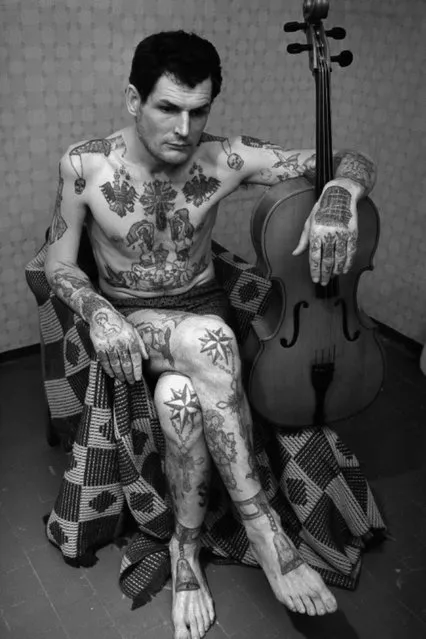
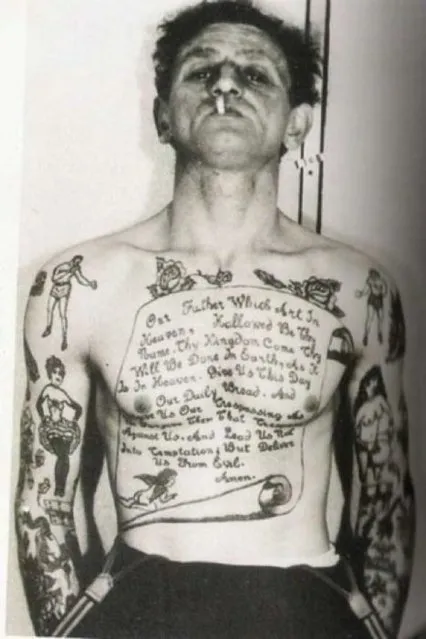
Tattoos are commonly used among criminals to show gang membership and record the wearer's personal history—such as his or her skills, specialties, accomplishments and convictions. They are also used as a means of personal expression. Certain designs have developed recognized coded meanings. The code systems can be quite complex and because of the nature of what they encode, the tattoo designs are not widely recognized.
Barcelona's Caroline Graham Hansen, center, in action during the women's Champions League quarterfinals, second leg, soccer match between FC Barcelona and SK Brann Kvinner at the Estadi Johan Cruyff in Barcelona, Spain, Thursday, March 28, 2024. (Photo by Joan Monfort/AP Photo)
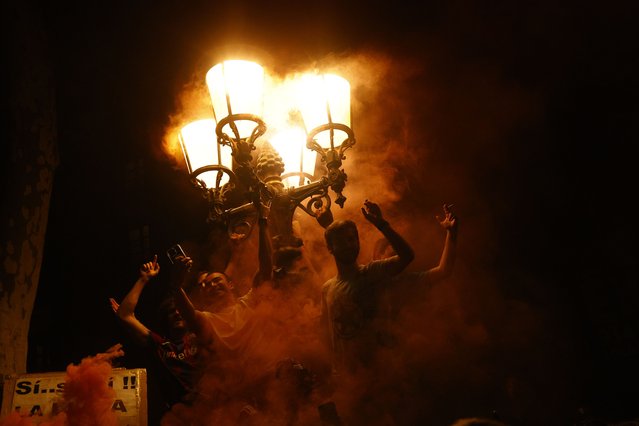
FC Barcelona's fans celebrate winning the Spanish LaLiga soccer championship at Canaletas Square in Barcelona, Spain, 15 May 2025, after the Spanish LaLiga soccer match between RCD Espanyol and FC Barcelona at the RCDE Stadium in Cornella de Llobregat. (Photo by Quique Garcia/EPA/EFE)
Tattoos are commonly used among criminals to show gang membership and record the wearer's personal history—such as his or her skills, specialties, accomplishments and convictions. They are also used as a means of personal expression. Certain designs have developed recognized coded meanings. The code systems can be quite complex and because of the nature of what they encode, the tattoo designs are not widely recognized.