Loading...
Done
Men fix a pinata representing U.S. President-elect Donald Trump as a devil outside a house before it is set on fire at the traditional Burning of the Devil festival, ahead of Christmas in Guatemala City, Guatemala, December 7, 2016. (Photo by Luis Echeverria/Reuters)

Men fix a pinata representing U.S. President-elect Donald Trump as a devil outside a house before it is set on fire at the traditional Burning of the Devil festival, ahead of Christmas in Guatemala City, Guatemala, December 7, 2016. (Photo by Luis Echeverria/Reuters)
Details
09 Dec 2016 11:23:00
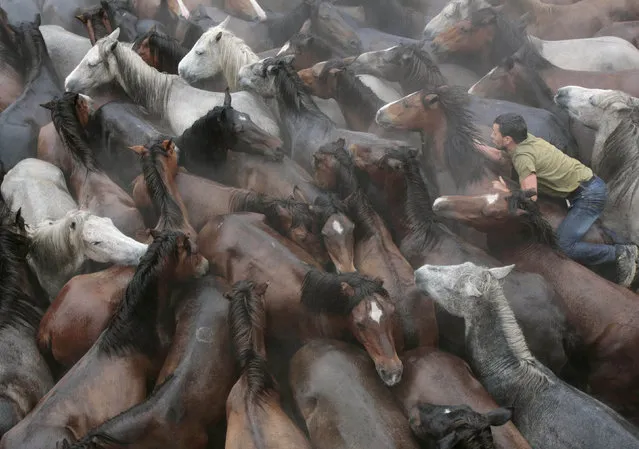
A reveller tries to hold on to a wild horse during the “Rapa Das Bestas” traditional event in the Spanish northwestern village of Sabucedo July 5, 2014. (Photo by Miguel Vidal/Reuters)

A reveller tries to hold on to a wild horse during the “Rapa Das Bestas” traditional event in the Spanish northwestern village of Sabucedo July 5, 2014. On the first weekend of the month of July, hundreds of wild horses are rounded up, trimmed and groomed in different villages in the Spanish northwestern region of Galicia. (Photo by Miguel Vidal/Reuters)
Details
07 Jul 2014 12:58:00


“Rapa das Bestas is the name of an operation that involves cutting the manes of the horses that are performed in the curros (enclosed which retain the horses) held in various locations in Galicia (Spain).

The best known is the Rapa das Bestas of Sabucedo, in the city hall of A Estrada, which lasts three days: the First Saturday, Sunday and Monday in July. In fact, the name given to the celebration (Rapa das Bestas of Sabucedo), while in most places speaking about curros, including curros de Valga, etc”. – Wikipedia

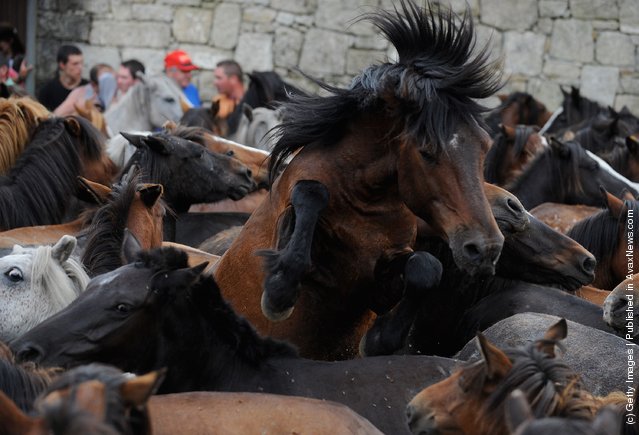
Photo: A wild horse leaps up during the Rapa das Bestas (shearing of the beasts) festival on July 2, 2011 in Sabucedo, Spain. Hundreds of wild horses are rounded up from the mountains and trimmed and marked in the corral. (Photo by Denis Doyle/Getty Images)

Details
03 Jul 2011 12:30:00
Revelers participate in the traditional Bloco da Lama (Mud block) carnival in Parati, Rio de Janeiro State, Brazil, on February 9, 2013. The event, which was begun by two men in a playful manner in 1986, has now become a traditional carnival in which participants disguised as primitives with rags, lianas or skulls and bones, dive in the mud. (Photo by Victor Moriyama/AFP Photo)

Revelers participate in the traditional Bloco da Lama (Mud block) carnival in Parati, Rio de Janeiro State, Brazil, on February 9, 2013. The event, which was begun by two men in a playful manner in 1986, has now become a traditional carnival in which participants disguised as primitives with rags, lianas or skulls and bones, dive in the mud. (Photo by Victor Moriyama/AFP Photo)
Details
12 Feb 2013 14:10:00
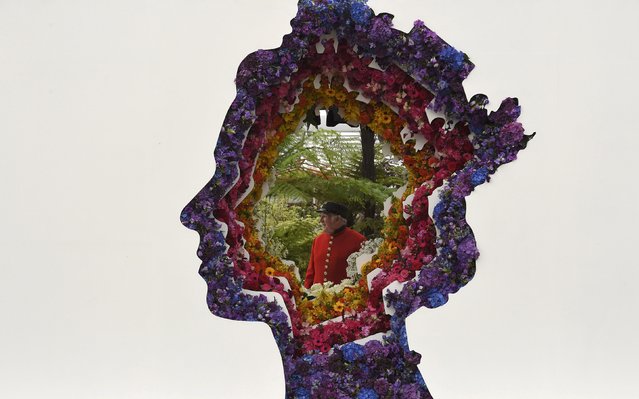
A Chelsea Pensioner poses as he views displays through a floral design of Britain's Queen Elizabeth at the Chelsea Flower Show in London, Britain, May 23, 2016. (Photo by Toby Melville/Reuters)

A Chelsea Pensioner poses as he views displays through a floral design of Britain's Queen Elizabeth at the Chelsea Flower Show in London, Britain, May 23, 2016. (Photo by Toby Melville/Reuters)
Details
24 May 2016 09:26:00
A woman carries a floral design handbag at the RHS Chelsea Flower Show in London, Britain on May 21, 2018. (Photo by Toby Melville/Reuters)

A woman carries a floral design handbag at the RHS Chelsea Flower Show in London, Britain on May 21, 2018. The annual show of floral art, timed to coincide with the RHS Chelsea Flower Show nearby, sees over sixty shops, restaurants and local businesses compete for prizes, with the awards given by RHS (Royal Horticultural Society) judges, this year on the theme of “Summer of Love”. (Photo by Toby Melville/Reuters)
Details
24 May 2018 00:03:00
Members of a music band rest before the procession of “Nossa Senhora da Boa Viagem”, in Constancia April 6, 2015. (Photo by Rafael Marchante/Reuters)

Members of a music band rest before the procession of “Nossa Senhora da Boa Viagem”, in Constancia April 6, 2015. This benediction has been held annually for about 200 years. In the past, goods were transported by the Tagus river in small boats to Lisbon, 100 km south. The sailors, as the navigation was dangerous, blessed their boats every year during the festivity of “Nossa Senhora da Boa Viagem”. (Photo by Rafael Marchante/Reuters)
Details
07 Apr 2015 11:14:00
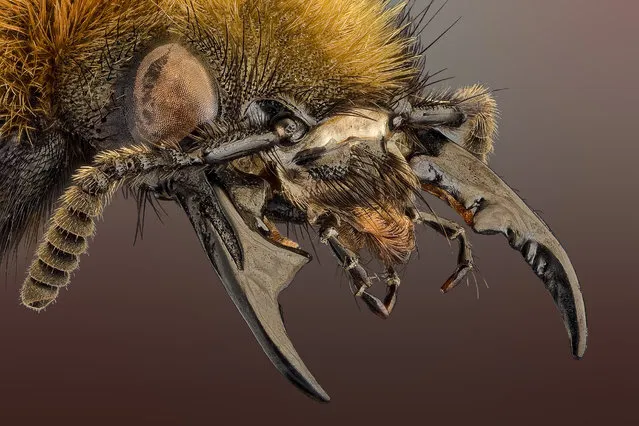
Emus hirtus (Linnaeus, 1758). (Andrea Hallgass)

Emus hirtus (Linnaeus, 1758). (Photo by Andrea Hallgass)
Details
06 Dec 2012 11:32:00