Loading...
Done
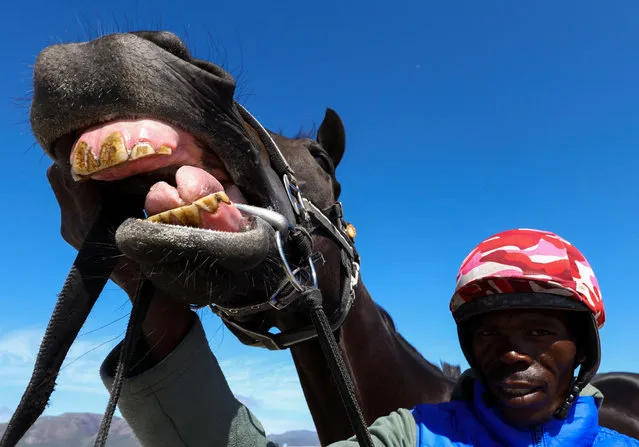
A horse handler poses with a horse during a beach parade at Muizenberg beach, in Cape Town, South Africa on January 5, 2024. (Photo by Esa Alexander/Reuters)

A horse handler poses with a horse during a beach parade at Muizenberg beach, in Cape Town, South Africa on January 5, 2024. (Photo by Esa Alexander/Reuters)
Details
28 Jan 2024 08:26:00
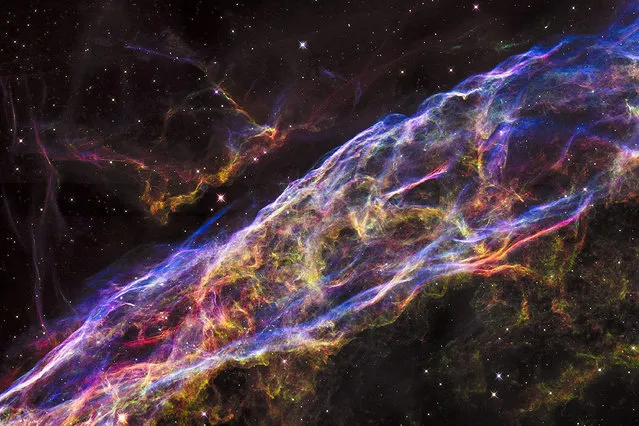
A small section of the expanding remains of the Veil Nebula, a massive star that exploded about 8,000 years ago. The entire nebula is 110 light-years across, covering six full moons on the sky as seen from Earth, and resides about 2,100 light-years away in the constellation Cygnus, the Swan. (Photo by Reuters/NASA/ESA/Hubble)

A small section of the expanding remains of the Veil Nebula, a massive star that exploded about 8,000 years ago. The entire nebula is 110 light-years across, covering six full moons on the sky as seen from Earth, and resides about 2,100 light-years away in the constellation Cygnus, the Swan. (Photo by Reuters/NASA/ESA/Hubble)
Details
29 Feb 2016 11:30:00
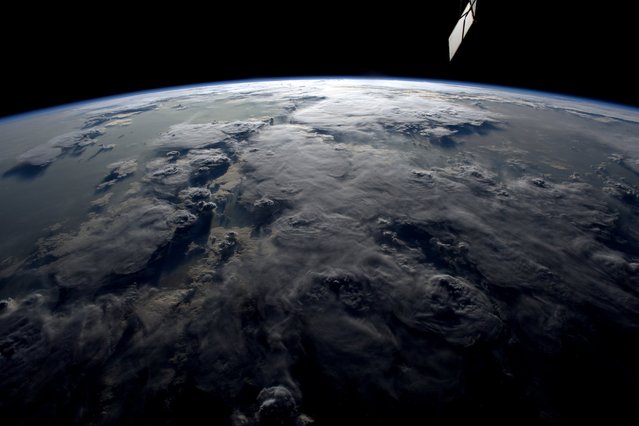
European Space Agency astronaut Tim Peake will return home after a six-month long mission on the International Space Station,on June 18, 2016. Peake was the first British ESA astronaut to visit the ISS and captured hundreds of photographs of the Earth during his mission. Here: “Lots of sun-glint right now during our whole orbit – we haven't seen a sunset for over 3 days”, he wrote. (Photo by Tim Peake/ESA/NASA)

European Space Agency astronaut Tim Peake will return home after a six-month long mission on the International Space Station,on June 18, 2016. Peake was the first British ESA astronaut to visit the ISS and captured hundreds of photographs of the Earth during his mission. Here: “Lots of sun-glint right now during our whole orbit – we haven't seen a sunset for over 3 days”, he wrote. (Photo by Tim Peake/ESA/NASA)
Details
18 Jun 2016 13:08:00


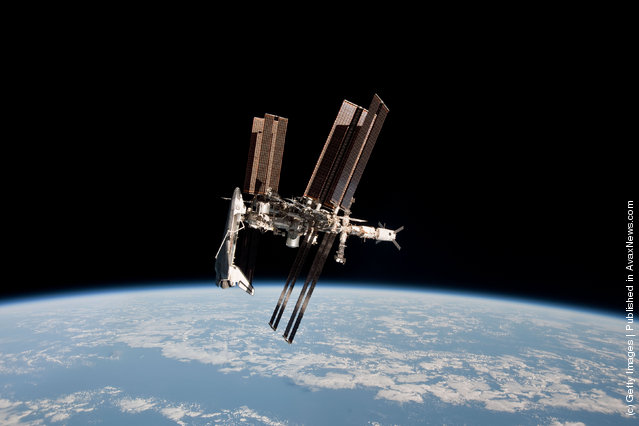
In this handout image provided by the European Space Agency (ESA) and NASA, the International Space Station and the docked space shuttle Endeavour orbit Earth during Endeavour's final sortie on May 23, 2011 in Space. Italian astronaut Paolo Nespoli captured the first-ever images of an orbiter docked to the International Space Station from the viewpoint of a departing vessel as he returned to Earth in a Soyuz capsule. (Photo by Paolo Nespoli - ESA/NASA via Getty Images)
Details
09 Jun 2011 11:28:00
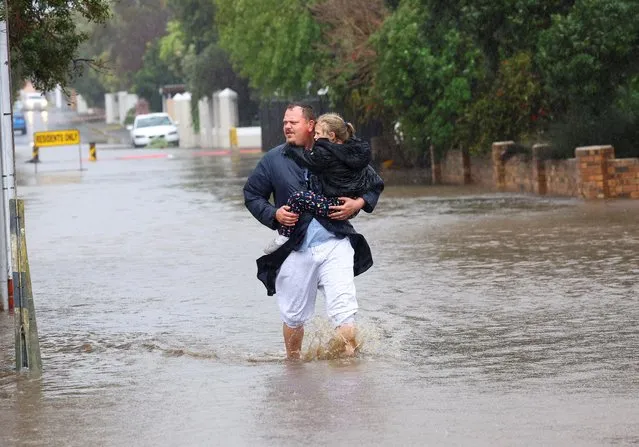
A man carries a child as he wades trough a flooded road following heavy rains in Strand, Western Cape, South Africa on September 25, 2023. (Photo by Esa Alexander/Reuters)

A man carries a child as he wades trough a flooded road following heavy rains in Strand, Western Cape, South Africa on September 25, 2023. (Photo by Esa Alexander/Reuters)
Details
07 Oct 2023 03:51:00
Uzbekistan's Javokhir Sindarov in action against Hans Niemann of the U.S. during the Diving Chess Competition in Cape Town, South Africa, on December 4, 2025. (Photo by Esa Alexander/Reuters)

Uzbekistan's Javokhir Sindarov in action against Hans Niemann of the U.S. during the Diving Chess Competition in Cape Town, South Africa, on December 4, 2025. (Photo by Esa Alexander/Reuters)
Details
14 Dec 2025 07:23:00
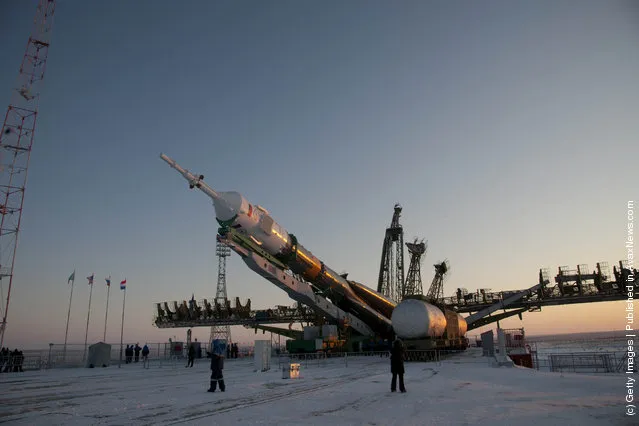
Soyuz TMA-03M Flight To International Space Station

In this handout image supplied by the European Space Agency, the Soyuz TMA-03M spacecraft is raised into vertical position on December 19, 2011 at the Baikonur Cosmodrome in Kazakhstan. (Photo by Stephane Corvaja/ESA via Getty Images)
Details
20 Dec 2011 14:32:00


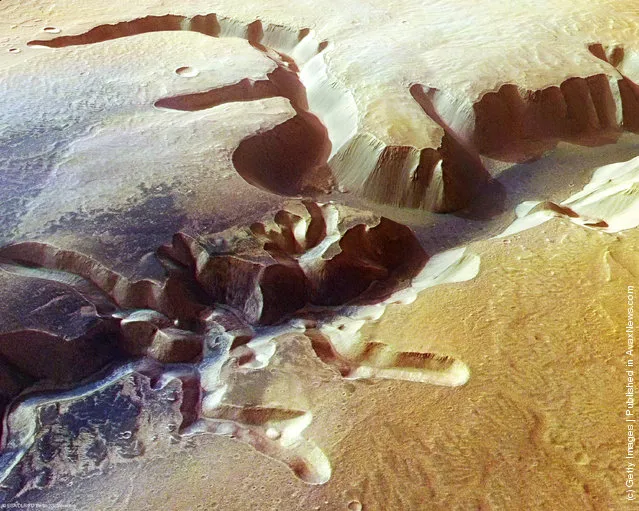
“Echus Chasma is a chasma in the Lunae Planum high plateau north of the Valles Marineris canyon system of Mars. Clay has been found in Echus Chasma that means that water once sat there for a time. Echus Chasma is approximately 100 km long and 10 km wide, with valleys ranging in depth from around 1 km to 4 km”. – Wikipedia

Photo: In this handout image supplied by the European Space Agency (ESA) on July 16, 2008, The Echus Chasma, one of the largest water source regions on Mars, is pictured from ESA's Mars Express. The data was acquired on September 25, 2005. The dark material shows a network of light-coloured, incised valleys that look similar to drainage networks known on Earth. It is still debated whether the valleys originate from precipitation, groundwater springs or liquid or magma flows on the surface. (Photo by ESA via Getty Images)
Details
18 Jul 2011 11:47:00