Loading...
Done
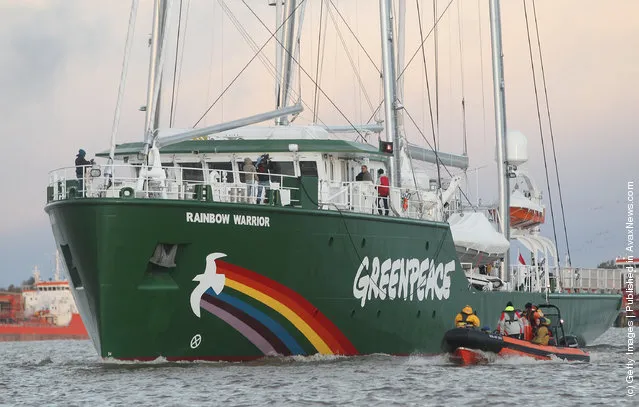
The Rainbow Warrior III, the newest ship of the enivornmental conservation organization Greenpeace

The Rainbow Warrior III, the newest ship of the enivornmental conservation organization Greenpeace, makes its way to port on the Elbe River on October 20, 2011 in Hamburg, Germany. The Rainbow Warrior III, 53 meters long, designed by Greenpeace and built in Poland and Germany, is a EUR 23 million project completed last week. (Photo by Sean Gallup/Getty Images)
Details
21 Oct 2011 09:35:00
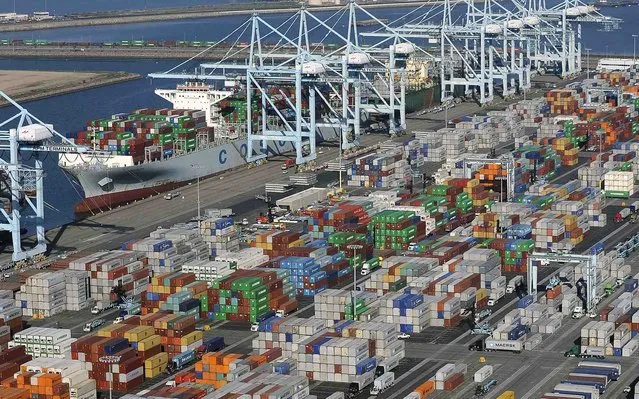
Shipping containers sit idle at the ports of Los Angeles and Long Beach, California in this aerial photo taken February 6, 2015. (Photo by Bob Riha, Jr./Reuters)

Shipping containers sit idle at the ports of Los Angeles and Long Beach, California in this aerial photo taken February 6, 2015. The loading and unloading of cargo freighters has been suspended at all 29 U.S. West Coast ports this weekend because of chronic slowdowns on the docks that shippers and terminal operators have blamed on the dockworkers' union, the companies said Friday. (Photo by Bob Riha, Jr./Reuters)
Details
10 Feb 2015 12:24:00
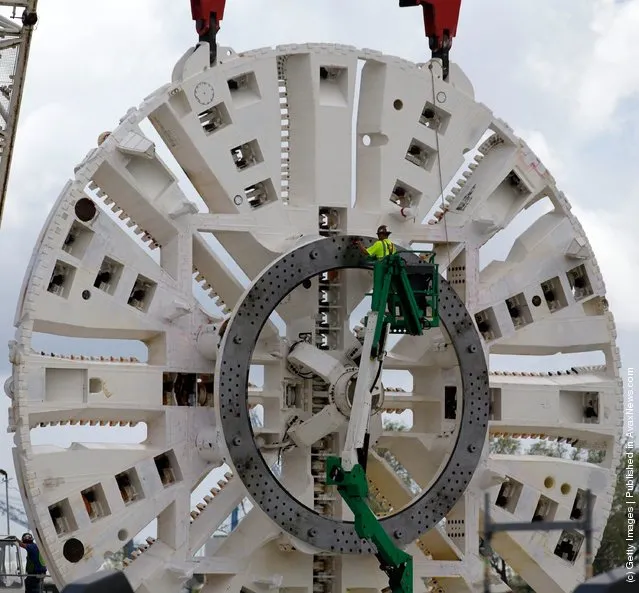
Tunnel-Boring Machine

A worker prepares the “Cutter Head” of the Port Tunnel boring machine for attachment to the tunneling machine on September 1, 2011 in Miami, Florida. The $45 million machine is longer than a football field and about as tall as a four-story building and it will carve the twin tunnels connecting Watson Island and Dodge Island. The the new $1 billion Port of Miami tunnel is expected to be completed in May of 2014. (Photo by Joe Raedle/Getty Images)
Details
02 Sep 2011 10:02:00
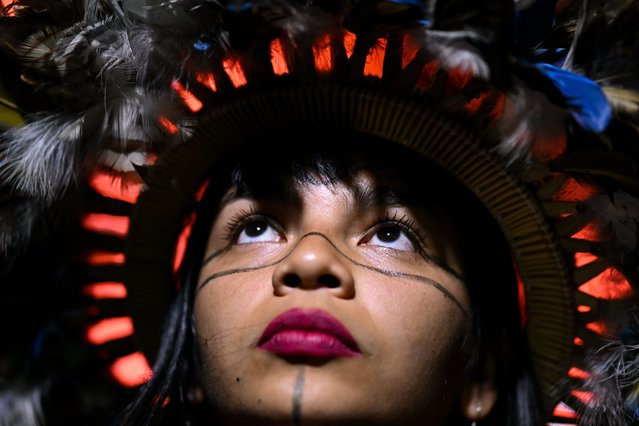
Txai Suruí, Amazonian Activist, during the opening night of Web Summit Rio 2023 at Riocentro in Rio de Janeiro, Brazil. (Photo By Stephen McCarthy/Sportsfile for Web Summit Rio via Getty Images)

Txai Suruí, Amazonian Activist, during the opening night of Web Summit Rio 2023 at Riocentro in Rio de Janeiro, Brazil. (Photo By Stephen McCarthy/Sportsfile for Web Summit Rio via Getty Images)
Details
04 Sep 2024 02:58:00


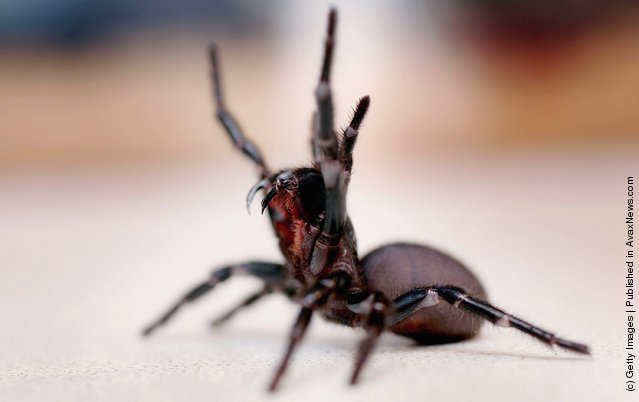
A Funnel Web spider is pictured at the Australian Reptile Park January 23, 2006 in Sydney, Australia. The Funnel Web is one of Australia's deadliest animals, with a venom that is packed with at least 40 different toxic proteins. A bite from a Funnel Web causes massive electrical over-load in the body's nervous system. Finally, fatalities occur from either heart attack or a pulmonary oedema, where the capillaries around the lungs begin to leak fluid and the patient effectively drowns. Death can come as quickly as two hours after a bite if no medical treatment is sought. Due to advances in anti-venom, there has been no death from a Funnel Web bite in Australia since 1980. Australia is home to some of the most deadly and poisonous animals on earth. (Photo by Ian Waldie/Getty Images)
Details
25 Apr 2011 07:49:00
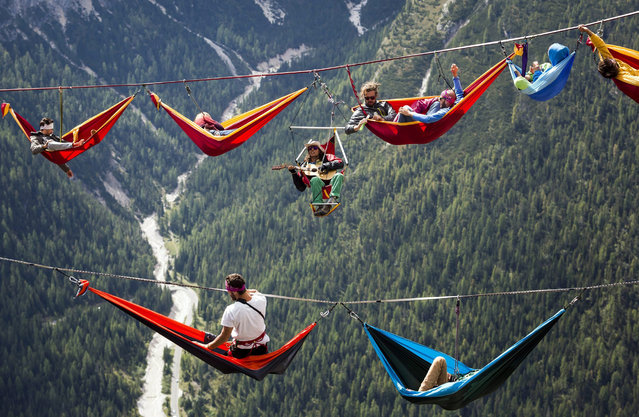
A picture made available on 17 September 2014 shows extreme athletes resting in hammocks on webbings stretched between rocks during the International Highline Meeting in Monte Piana, near Misurina, in the northern Italian Alps, Italy, 08 September 2014. (Photo by Balazs Mohai/EPA)

A picture made available on 17 September 2014 shows extreme athletes resting in hammocks on webbings stretched between rocks during the International Highline Meeting in Monte Piana, near Misurina, in the northern Italian Alps, Italy, 08 September 2014. (Photo by Balazs Mohai/EPA)
Details
20 Sep 2014 10:37:00
Dakota Johnson at the Red-Carpet World Premiere of Columbia Pictures' MADAME WEB at the Regency Village Westwood Theater on February 12, 2024 in Los Angeles, California. (Photo by Stewart Cook/Getty Images for Sony Pictures)

American actress Dakota Johnson at the Red-Carpet World Premiere of Columbia Pictures' MADAME WEB at the Regency Village Westwood Theater on February 12, 2024 in Los Angeles, California. (Photo by Stewart Cook/Getty Images for Sony Pictures)
Details
25 Feb 2024 06:40:00
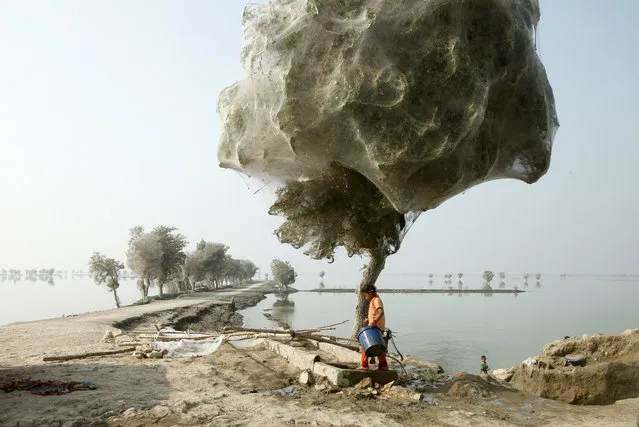
Spiderweb Cocooned Trees In Pakistan

An unexpected side-effect of the flooding in parts of Pakistan has been that millions of spiders climbed up into the trees to escape the rising flood waters. Because of the scale of the flooding and the fact that the water has taken so long to recede, many trees have become cocooned in spiders’ webs.
Details
15 May 2014 11:22:00