Loading...
Done
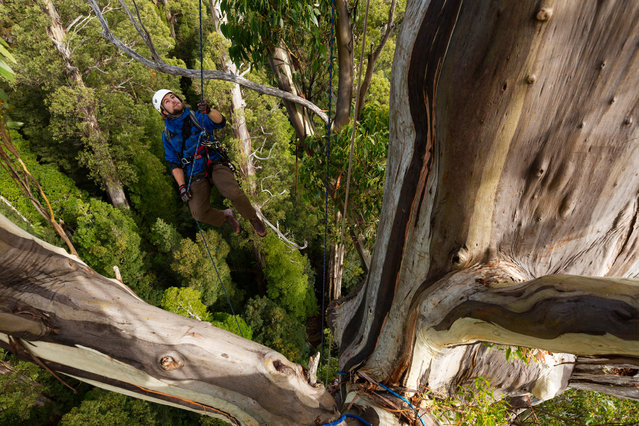
Haley nears the top of the tree. (Photo by Steven Pearce/The Tree Projects/The Guardian)

The Tree Projects team spent 67 days documenting one eucalyptus regnans in the Styx valley of Tasmania. Using a combination of tree-climbing and elaborate arboreal rigging techniques, they produced an intimate portrait from an impossible perspective of one of the world’s largest individual flowering trees, which goes by several common names. These photos document the process that resulted in an extraordinary ultra high-definition photograph. Here: Haley nears the top of the tree. (Photo by Steven Pearce/The Tree Projects/The Guardian)
Details
01 Feb 2017 06:37:00
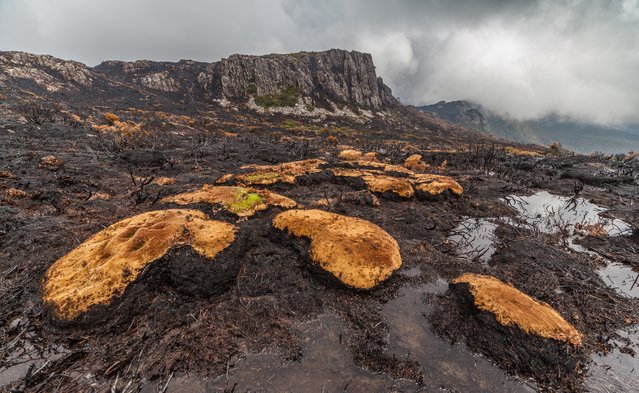
Pictures from Tasmania’s central plateau, shot by wilderness photographer Dan Broun, show the extraordinary damage wrought by more than a week of bushfires following lightning strikes in Australia’s southernmost state on January 13. 2016. The world heritage area was home to a range of unique alpine flora including pencil pines, king billy pines and cushion plants, some more than 1,000 years old. (Photo by Dan Broun)

Pictures from Tasmania’s central plateau, shot by wilderness photographer Dan Broun, show the extraordinary damage wrought by more than a week of bushfires following lightning strikes in Australia’s southernmost state on January 13. 2016. The world heritage area was home to a range of unique alpine flora including pencil pines, king billy pines and cushion plants, some more than 1,000 years old. Now more than 10,000ha of land has been incinerated, and ecologist say that, unlike eucalyptus trees, the ancient flora will not recover. (Photo by Dan Broun)
Details
02 Feb 2016 13:56:00
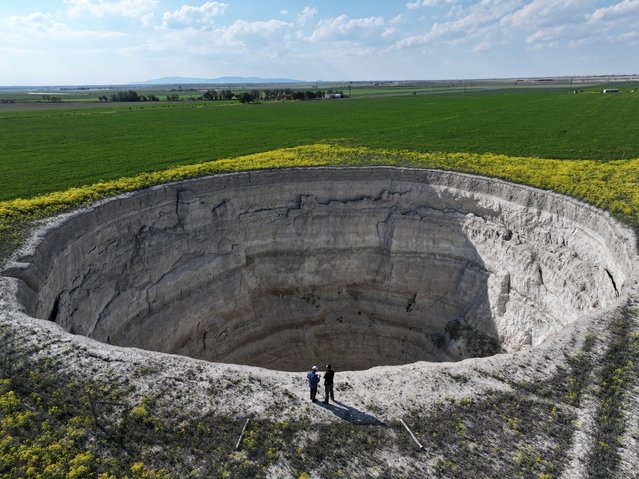
A view of Yarimoglu sinkhole (obruk), caused by some form of collapse of the surface layer in 2009, in Konya province, Turkiye on May 15, 2025. The gigantic pit formed between the fields where intensive irrigation activities are carried out is expanding and growing every year. (Photo by Abdullah Dogan/Anadolu via Getty Images)

A view of Yarimoglu sinkhole (obruk), caused by some form of collapse of the surface layer in 2009, in Konya province, Turkiye on May 15, 2025. The gigantic pit formed between the fields where intensive irrigation activities are carried out is expanding and growing every year. (Photo by Abdullah Dogan/Anadolu via Getty Images)
Details
19 Jul 2025 02:09:00
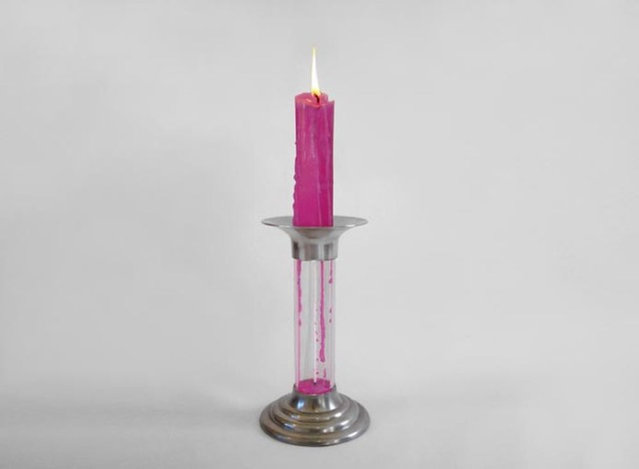
Rekindle Candle By Benjamin Shine

The Rekindle Candle is a clever candlestick holder that regenerates the candle as it burns by forming the melted wax into a new candle. The newly-formed candle can then be placed on top of the holder and the process can be started again. Rekindle Candle was designed by Benjamin Shine.
Details
23 Aug 2014 17:37:00
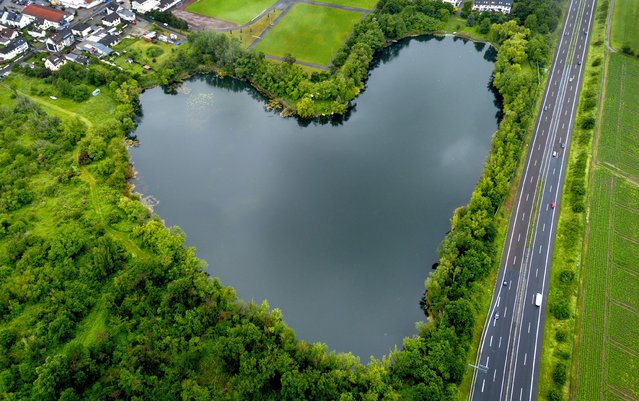
An areal view of the lake in the form of a heart in Rodgau, near Frankfurt, Germany, Friday, May 24, 2024. (Photo by Michael Probst/AP Photo)

An areal view of the lake in the form of a heart in Rodgau, near Frankfurt, Germany, Friday, May 24, 2024. (Photo by Michael Probst/AP Photo)
Details
02 Jul 2024 00:16:00
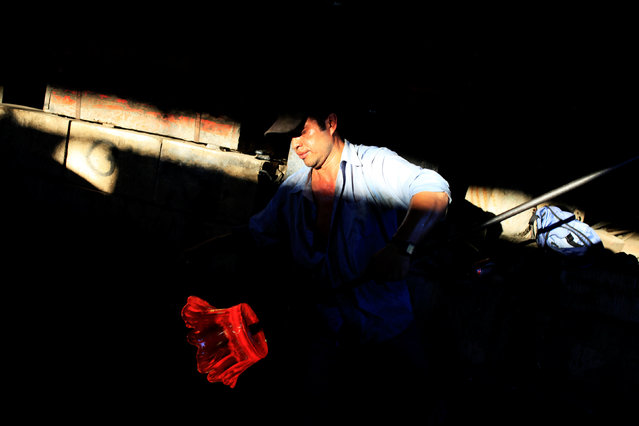
A glassmaker forms molten glass next to a furnace at Cespedes factory in Olocuilta, El Salvador February 8, 2017. (Photo by Jose Cabezas/Reuters)

A glassmaker forms molten glass next to a furnace at Cespedes factory in Olocuilta, El Salvador February 8, 2017. (Photo by Jose Cabezas/Reuters)
Details
10 Feb 2017 00:04:00
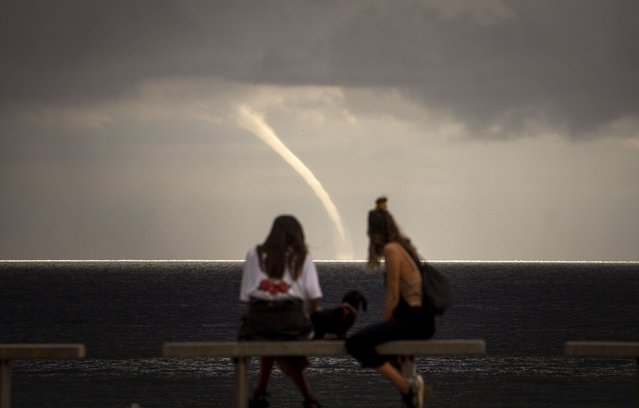
People look at a funnel cloud formed near the beach in Barcelona, Spain, Monday, September 21, 2020. (Photo by Emilio Morenatti/AP Photo)

People look at a funnel cloud formed near the beach in Barcelona, Spain, Monday, September 21, 2020. (Photo by Emilio Morenatti/AP Photo)
Details
19 Oct 2020 00:01:00
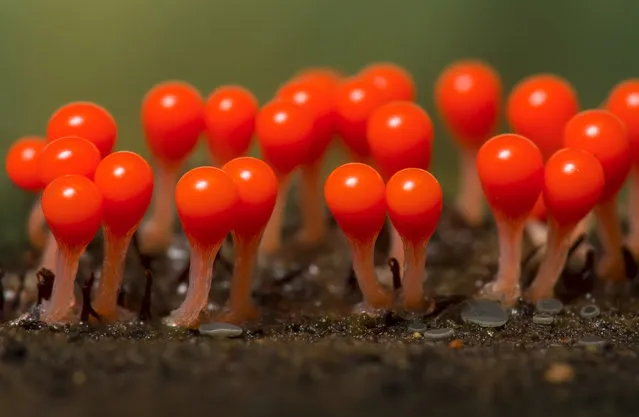
These may look like alien creatures from another planet, but the odd organisms are, in fact, colorful, microscopic life forms found in our forests. The bizarre slime molds, known as mycetozoa or fungus animals, were captured by geologist Valeriya Zvereva. (Photo by Valeriya Zvereva/Caters News)

These may look like alien creatures from another planet, but the odd organisms are, in fact, colorful, microscopic life forms found in our forests. The bizarre slime molds, known as mycetozoa or fungus animals, were captured by geologist Valeriya Zvereva. She spent months documenting the common life forms that are found beneath our feet – but are rarely seen. Incredibly, the organisms can move and hunt for other microscopic life forms on which to feed. Zvereva, who is from Moscow, used a special macro lens to capture the vibrant and up-close shots, which show off the organisms’ unlikely beauty. (Photo by Valeriya Zvereva/Caters News)
Details
20 Apr 2015 13:27:00