Loading...
Done
Models of the SibPlus Models agency and participants of the Miss Doughnut beauty competition take part in a rehearsal in Krasnoyarsk, Siberia, Russia, March 4, 2017. (Photo by Ilya Naymushin/Reuters)

Models of the SibPlus Models agency and participants of the Miss Doughnut beauty competition take part in a rehearsal in Krasnoyarsk, Siberia, Russia, March 4, 2017. (Photo by Ilya Naymushin/Reuters)
Details
10 Mar 2017 00:06:00
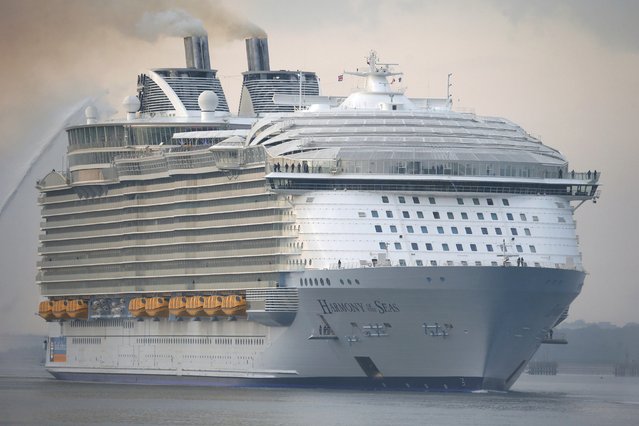
The worlds largest cruise ship, the 361 metres long, Harmony of the Seas, arrives in port  for her mayden voyage, in Southampton, Britain May 17, 2016. (Photo by Peter Nicholls/Reuters)

The worlds largest cruise ship, the 361 metres long, Harmony of the Seas, arrives in port for her mayden voyage, in Southampton, Britain May 17, 2016. (Photo by Peter Nicholls/Reuters)
Details
18 May 2016 13:41:00
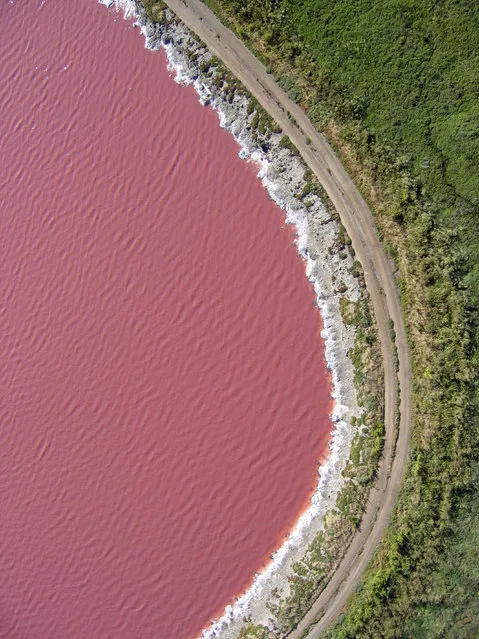
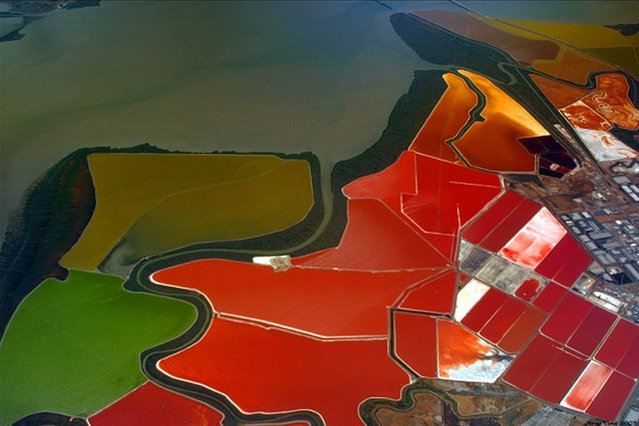
Aerial view of the salt ponds in San Francisco, California. (Photo by Cris Benton/Caters News)

These spectacular landscapes may look like something from another planet – but they are in fact colorful salt ponds which stretch for miles. Despite being better known for tech companies and expensive property – San Francisco, California is also home to this vibrant quilt of color spanning the South Bay Area. From eerie green pools to gothic shades of red the surreal landscapes are caused by the organisms or micro-algae living within them. Photo: Aerial view of the salt ponds in San Francisco, California. (Photo by Cris Benton/Caters News)
Details
02 Jul 2014 10:18:00
Salt

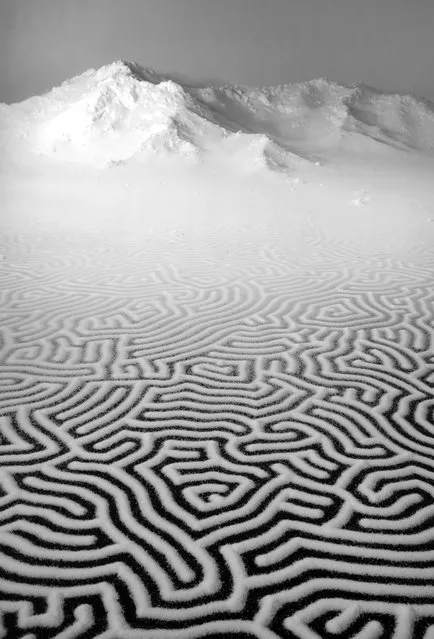
Motoi Yamamoto is an incredibly patient man. His intricate salt labyrinths can take weeks to create and require a slow, steady hand, not to mention a tremendous amount of salt. The result is a beautifully detailed, if impermanent, exhibition.
Details
13 Jul 2012 10:21:00
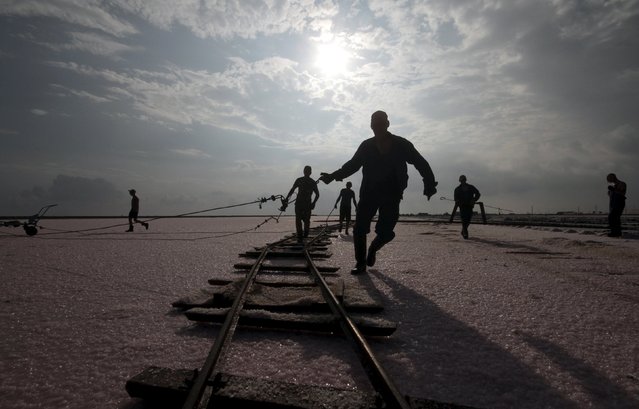
Workers adjust rails at the bed of a drained area of a lake used for the production of salt at the Sasyk-Sivash lake near the city of Yevpatoria, Crimea, September 25, 2015. The area has a long tradition of salt production, prepared from salt flats flooded with water from the Black Sea. (Photo by Pavel Rebrov/Reuters)

Workers adjust rails at the bed of a drained area of a lake used for the production of salt at the Sasyk-Sivash lake near the city of Yevpatoria, Crimea, September 25, 2015. The area has a long tradition of salt production, prepared from salt flats flooded with water from the Black Sea. (Photo by Pavel Rebrov/Reuters)
Details
28 Sep 2015 08:01:00
Boys play basketball in the facilities of Belarus' Republican Clinic of Speleotherapy within a salt mine, as part of their treatment, near the town of Soligorsk, south of Minsk, February 19, 2015. According to the state clinic, more than 7,000 children and adults seek medical treatment for respiratory illness each year in the subsurface chambers of its facilities, located 420 metres underground between layers of potassium and stone salts in an operational salt mine. (Photo by Vasily Fedosenko/Reuters)


Boys play basketball in the facilities of Belarus' Republican Clinic of Speleotherapy within a salt mine, as part of their treatment, near the town of Soligorsk, south of Minsk, February 19, 2015. According to the state clinic, more than 7,000 children and adults seek medical treatment for respiratory illness each year in the subsurface chambers of its facilities, located 420 metres underground between layers of potassium and stone salts in an operational salt mine. (Photo by Vasily Fedosenko/Reuters)
Details
20 Feb 2015 13:17:00
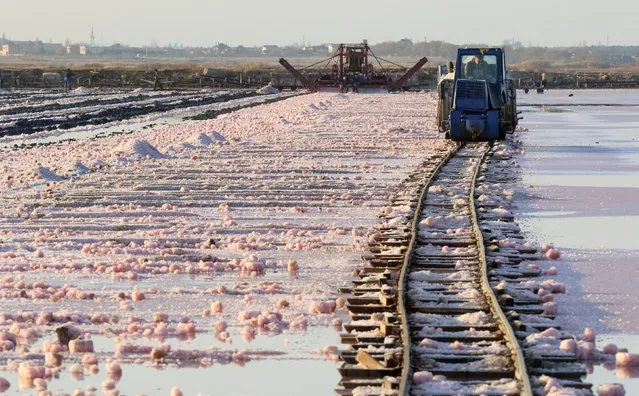
A train drives along a field at a salt production site at the Sasyk-Sivash lake near the city of Yevpatoria, Crimea, November 14, 2017. (Photo by Pavel Rebrov/Reuters)

A train drives along a field at a salt production site at the Sasyk-Sivash lake near the city of Yevpatoria, Crimea, November 14, 2017. A saltwater lagoon known as Lake Sasyk-Sivash on Ukraine's Crimea peninsula is the source of a rare resource: pink salt. The mineral is tinted by tiny algae that produce the pigment beta-carotene. Each autumn, seasonal workers collect thousands of tons of pink salt for processing and export. (Photo by Pavel Rebrov/Reuters)
Details
16 Nov 2017 08:18:00
Salt ponds in San Francisco Bay

Salt evaporation ponds, also called salterns or salt pans, are shallow artificial ponds designed to produce salts from sea water or other brines. The seawater or brine is fed into large ponds and water is drawn out through natural evaporation which allows the salt to be subsequently harvested. The ponds also provide a productive resting and feeding ground for many species of waterbirds, which may include endangered species. The ponds are commonly separated by levees.
Details
11 Oct 2012 12:49:00