Loading...
Done
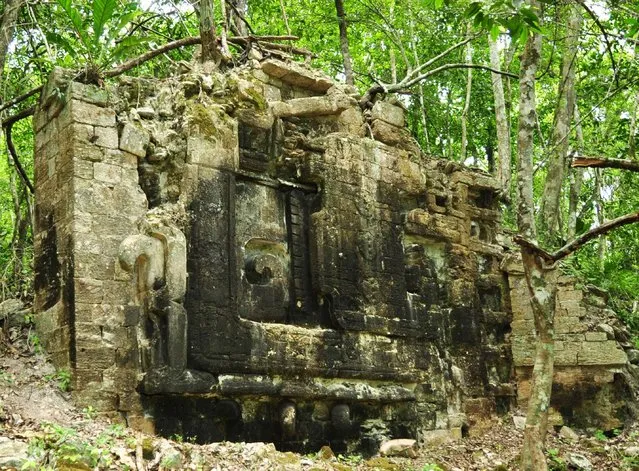
A photograph released to Reuters on August 22, 2014 shows the remains of an ancient Mayan city in Lagunita May 30, 2014. Archaeologists have found two ancient Mayan cities hidden in the jungle of southeastern Mexico, and lead researcher Ivan Sprajc, an associate professor at the Research Center of the Slovenian Academy of Sciences and Arts, says he believes there are “dozens” more to be found in the region. (Photo by Reuters/Research Center of the Slovenian Academy of Sciences and Arts)

A photograph released to Reuters on August 22, 2014 shows the remains of an ancient Mayan city in Lagunita May 30, 2014. Archaeologists have found two ancient Mayan cities hidden in the jungle of southeastern Mexico, and lead researcher Ivan Sprajc, an associate professor at the Research Center of the Slovenian Academy of Sciences and Arts, says he believes there are “dozens” more to be found in the region. (Photo by Reuters/Research Center of the Slovenian Academy of Sciences and Arts)
Details
27 Aug 2014 09:28:00
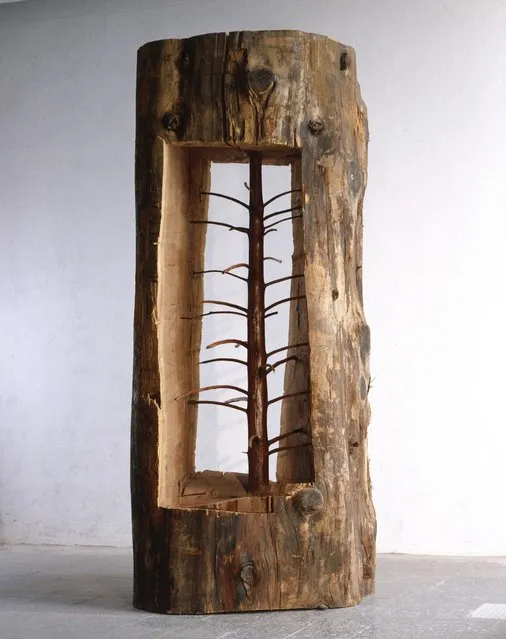
The Hidden Life Within By Giuseppe Penone

“My artwork shows, with the language of sculpture, the essence of matter and tries to reveal with the work, the hidden life within.”
Giuseppe Penone

Details
30 Aug 2015 10:07:00
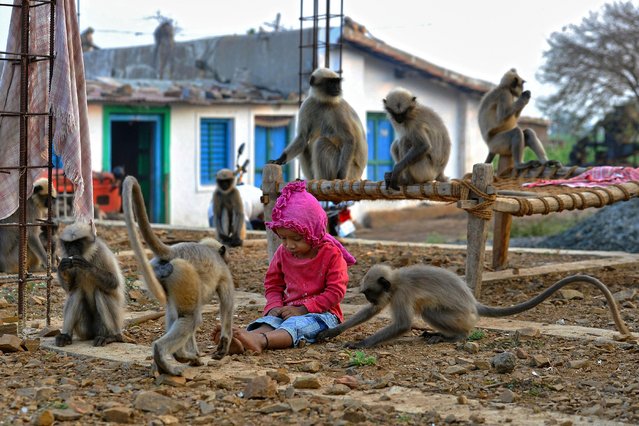
In this photograph taken on December 8, 2017, Indian child Samarth Bangari, 2, plays with langur monkeys at his home in Allapur in India' s southwest Karnataka state. (Photo by Manjunath Kiran/AFP Photo)

In this photograph taken on December 8, 2017, Indian child Samarth Bangari, 2, plays with langur monkeys at his home in Allapur in India' s southwest Karnataka state, 250 miles from Bangalore. He is still too young to talk, but a 2- year- old Indian boy has become a subject of local intrigue after befriending a gang of langur monkeys. (Photo by Manjunath Kiran/AFP Photo)
Details
25 Dec 2017 06:03:00
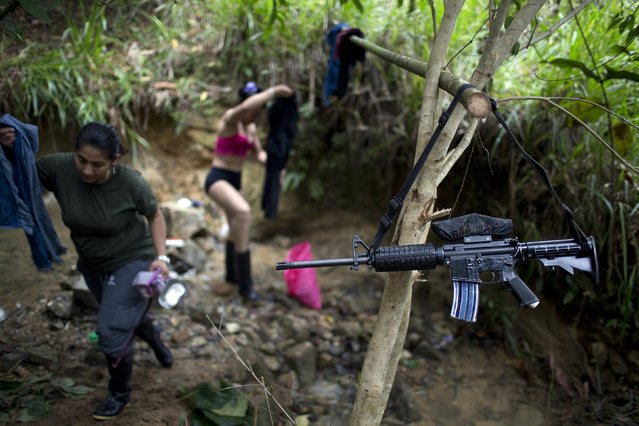
In this January 4, 2016 photo, the weapon of a rebel fighter for the 36th Front of the Revolutionary Armed Forces of Colombia, or FARC, hangs from a branch serving as a makeshift clothesline, near a rebel camp, in Antioquia state, in the northwest Andes of Colombia. “We’ll lay aside our weapons, like the accord says, but never hand them over”, says Juan Pablo, a commander of the 36th Front. (Photo by Rodrigo Abd/AP Photo)

In this January 4, 2016 photo, the weapon of a rebel fighter for the 36th Front of the Revolutionary Armed Forces of Colombia, or FARC, hangs from a branch serving as a makeshift clothesline, near a rebel camp, in Antioquia state, in the northwest Andes of Colombia. “We’ll lay aside our weapons, like the accord says, but never hand them over”, says Juan Pablo, a commander of the 36th Front. (Photo by Rodrigo Abd/AP Photo)
Details
22 Jan 2016 10:45:00
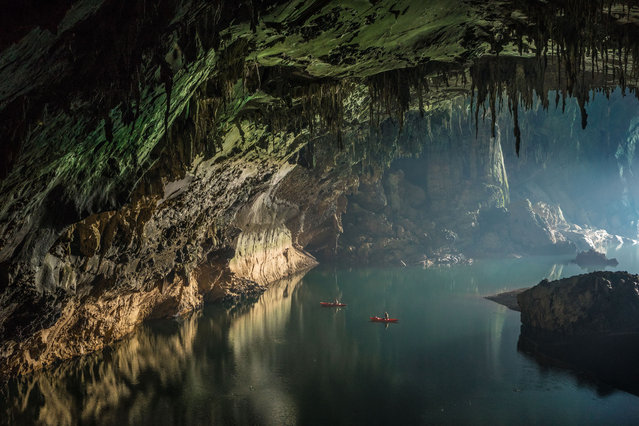
Floating on clear deep water and reflections near the cave entrance. Visitors can either bring their own kayaks or rent boats from the local community to paddle deep inside the cave and marvel at its wonders on March 2015 at Tham Khoun Ex, Laos. Tham Khoun Xe, commonly known as the Xe Bang Fai River Cave, in Laos, has over 15km of passages filled with awe-inspiring views and wide expanses of water. (Photo by John Spies/Barcroft Media/ABACAPress)

Floating on clear deep water and reflections near the cave entrance. Visitors can either bring their own kayaks or rent boats from the local community to paddle deep inside the cave and marvel at its wonders on March 2015 at Tham Khoun Ex, Laos. Tham Khoun Xe, commonly known as the Xe Bang Fai River Cave, in Laos, has over 15km of passages filled with awe-inspiring views and wide expanses of water. Photographer, John Spies, 59, captured scenes from the entrances of the huge underground river passages, intricate cave formations and views from a passage high above the water. The cave is formed by the Xe Bang Fai river, a major tributary of the Mekong and in the dry season can be traversed using inflatable kayaks. (Photo by John Spies/Barcroft Media/ABACAPress)
Details
11 Apr 2015 09:56:00
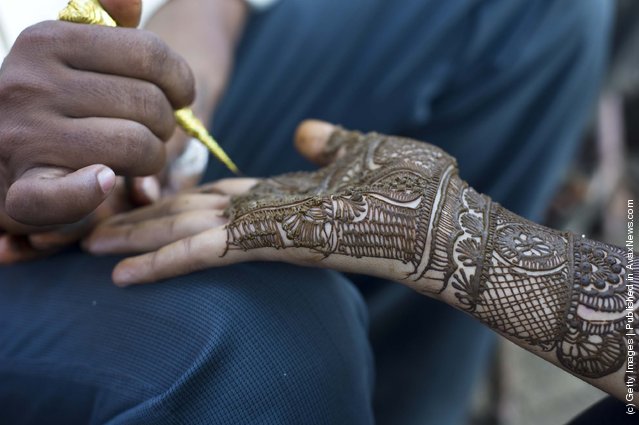
Application of henna or “Mehndi”  to a girls hand in a market in Jaipur, India

“Mehndi or menhdi is the application of henna as a temporary form of skin decoration in India, as well as by expatriate communities from the country. The word mehndi is derived from the Sanskrit word mendhikā. The use of mehndi and turmeric is described in the earliest Vedic ritual books. Haldi (Staining oneself with turmeric paste) as well as mehndi are important Vedic customs as a symbolic representation of the Outer and the Inner Sun. Vedic customs are meant to awaken the “inner light” and so the gold of the inner Sun has an important symbolic function”. – Wikipedia

Photo: Application of henna or “Mehndi” to a girls hand in a market on October 18, 2010 in Jaipur, India. (Photo by Simon de Trey-White/Getty Images)
Details
23 Nov 2011 13:33:00
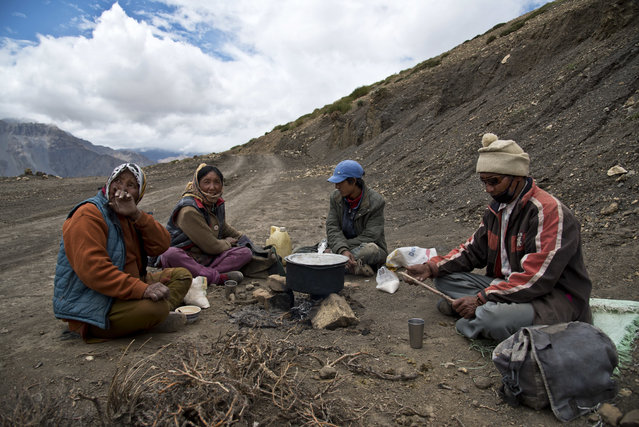
In this August 17, 2016, photo, from left to right, Chhering Chodom, 60, Tashi Yangzom, 50, Lobsang Chhering, 27, and Dorje Tandup, 58, drink milk tea on the side of the road. For centuries, the sleepy valley nestled in the Indian Himalayas remained a hidden Buddhist enclave forbidden to outsiders. Enduring the harsh year-round conditions of the high mountain desert, the people of Spiti Valley lived by a simple communal code – share the Earth's bounty, be hospitable to neighbors, and eschew greed and temptation at all turns. That's all starting to change, for better or worse. Since India began allowing its own citizens as well as outsiders to visit the valley in the early 1990s, tourism and trade have boomed. And the marks of modernization, such as solar panels, asphalt roads and concrete buildings, have begun to appear around some of the villages that dot the remote landscape at altitudes above 4,000 meters (13,000 feet). (Photo by Thomas Cytrynowicz/AP Photo)

In this August 17, 2016, photo, from left to right, Chhering Chodom, 60, Tashi Yangzom, 50, Lobsang Chhering, 27, and Dorje Tandup, 58, drink milk tea on the side of the road. For centuries, the sleepy valley nestled in the Indian Himalayas remained a hidden Buddhist enclave forbidden to outsiders. Enduring the harsh year-round conditions of the high mountain desert, the people of Spiti Valley lived by a simple communal code – share the Earth's bounty, be hospitable to neighbors, and eschew greed and temptation at all turns. That's all starting to change, for better or worse. (Photo by Thomas Cytrynowicz/AP Photo)
Details
15 Sep 2016 09:22:00
Prayer flags fly at Namgyal Tsemo Monastery above the town of Leh in Ladakh, India September 24, 2016. (Photo by Cathal McNaughton/Reuters)

Prayer flags fly at Namgyal Tsemo Monastery above the town of Leh in Ladakh, India September 24, 2016. High in the Indian Himalayas, young novice monks in maroon robes take their lessons inside the 15th-century Thiksey monastery. (Photo by Cathal McNaughton/Reuters)
Details
06 Jan 2017 14:13:00