Loading...
Done
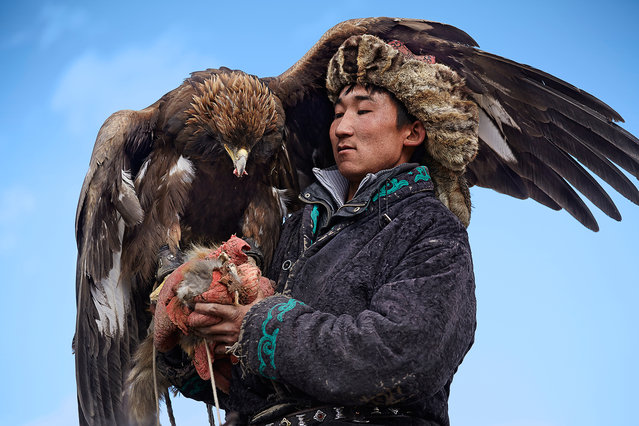
In one of the planet’s most desolate and harsh terrains, the Altai Mountains which run from Siberia in Russia down to Mongolia’s Gobi Desert, hunting with eagles is currently only practiced by a handful of Kyrgyz and Kazakhs. This form of falconry, the practice of hunting with the aid of birds of prey, can be traced back as far as 4,000 years in Central Asia. (Photo by Tariq Zaidi/The Washington Post)

In one of the planet’s most desolate and harsh terrains, the Altai Mountains which run from Siberia in Russia down to Mongolia’s Gobi Desert, hunting with eagles is currently only practiced by a handful of Kyrgyz and Kazakhs. This form of falconry, the practice of hunting with the aid of birds of prey, can be traced back as far as 4,000 years in Central Asia. Here: after a successful hunt, a proud hunter rewards his eagle by feeding it the lungs of the prey, which is considered the most highly prized part of the animal. (Photo by Tariq Zaidi/The Washington Post)
Details
22 Aug 2015 12:46:00
A woman walks past a mural amid the outbreak of the coronavirus disease (COVID-19) in Manchester, Britain, January 4, 2021. (Photo by Phil Noble/Reuters)

A woman walks past a mural amid the outbreak of the coronavirus disease (COVID-19) in Manchester, Britain, January 4, 2021. (Photo by Phil Noble/Reuters)
Details
10 Feb 2021 11:04:00
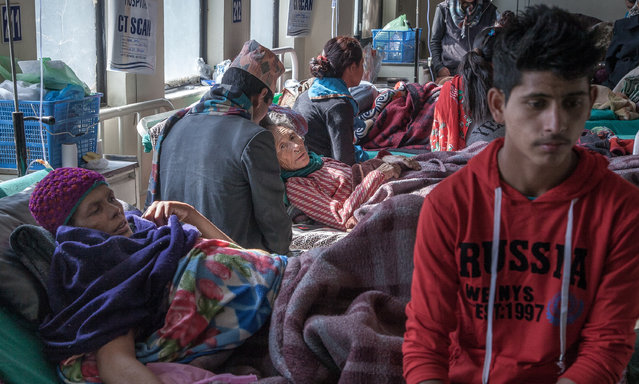
One of the most significant challenges related to cancer in Nepal is the lack of awareness around the prognosis of the disease, as many patients, their families and even healthcare professionals consider cancer to be an incurable disease at any stage. This results in significant delays in bringing patients to hospitals, and high rates of advanced stage cancers and mortality. (Photo by Omar Havana)

One of the most significant challenges related to cancer in Nepal is the lack of awareness around the prognosis of the disease, as many patients, their families and even healthcare professionals consider cancer to be an incurable disease at any stage. This results in significant delays in bringing patients to hospitals, and high rates of advanced stage cancers and mortality. (Photo by Omar Havana)
Details
06 Mar 2016 09:44:00
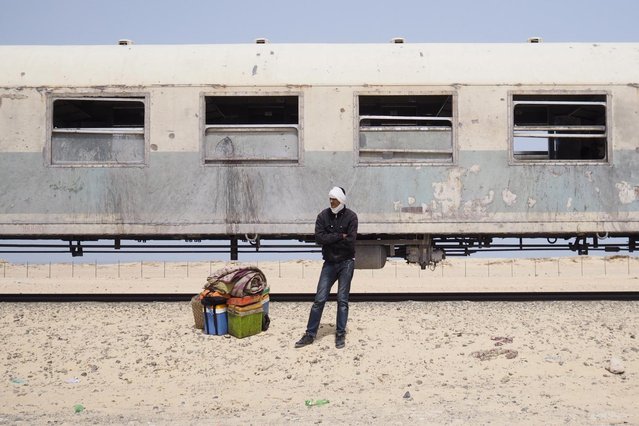
A passenger on a SNIM train carrying iron ore and mine workers waits for transport after arriving in Nouadhibou June 25, 2014. (Photo by Joe Penney/Reuters)

A passenger waits after his train arrived in Nouadhibou, Mauritania’s second largest city and the main export port for the country’s iron ore industry, on June 25, 2014. The mining company’s employees proudly call their firm the lung of their nation's economy and the train that ferries the ore to the coast stretches some two kilometres, making it one of the world's longest. SNIM mines black iron ore in the northern town of Zouerate, a remote desert location which nevertheless attracts people from all over the country looking for work. (Photo by Joe Penney/Reuters)
Details
27 Oct 2014 11:51:00


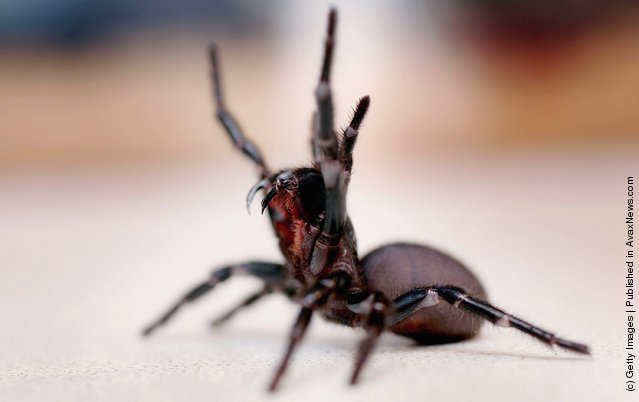
A Funnel Web spider is pictured at the Australian Reptile Park January 23, 2006 in Sydney, Australia. The Funnel Web is one of Australia's deadliest animals, with a venom that is packed with at least 40 different toxic proteins. A bite from a Funnel Web causes massive electrical over-load in the body's nervous system. Finally, fatalities occur from either heart attack or a pulmonary oedema, where the capillaries around the lungs begin to leak fluid and the patient effectively drowns. Death can come as quickly as two hours after a bite if no medical treatment is sought. Due to advances in anti-venom, there has been no death from a Funnel Web bite in Australia since 1980. Australia is home to some of the most deadly and poisonous animals on earth. (Photo by Ian Waldie/Getty Images)
Details
25 Apr 2011 07:49:00
Students wearing masks rest amid the coronavirus disease (COVID-19) pandemic in Seoul, South Korea, August 25, 2020. (Photo by Kim Hong-Ji/Reuters)

Students wearing masks rest amid the coronavirus disease (COVID-19) pandemic in Seoul, South Korea, August 25, 2020. (Photo by Kim Hong-Ji/Reuters)
Details
04 Sep 2020 00:01:00
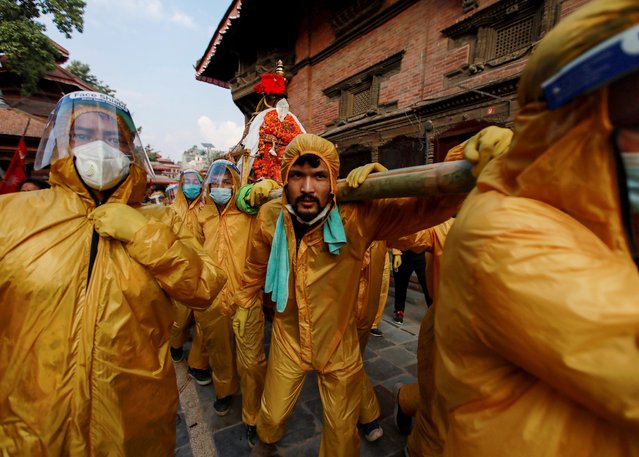
Devotees wearing personal protective equipment (PPE), carry a chariot of Pachali Bhairab amid the spread of coronavirus disease (COVID-19), in Kathmandu, Nepal on October 21, 2020. (Photo by Navesh Chitrakar/Reuters)

Devotees wearing personal protective equipment (PPE), carry a chariot of Pachali Bhairab amid the spread of coronavirus disease (COVID-19), in Kathmandu, Nepal on October 21, 2020. (Photo by Navesh Chitrakar/Reuters)
Details
29 Oct 2020 00:03:00
A GDR Trabant car drives through the city during the local coronavirus disease (COVID-19) lockdown in Dresden, Germany, December 14, 2020. (Photo by Matthias Rietschel/Reuters)

A GDR Trabant car drives through the city during the local coronavirus disease (COVID-19) lockdown in Dresden, Germany, December 14, 2020. (Photo by Matthias Rietschel/Reuters)
Details
16 Dec 2020 00:07:00