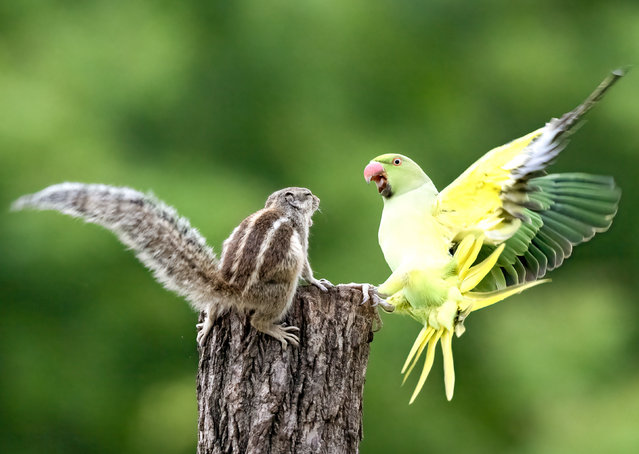
A palm squirrel and ring-rosed parakeet compete for space on a stump in a residential area of Chandigarh, India in the last decade of August 2024. (Photo by Anuj Jain/Solent News)
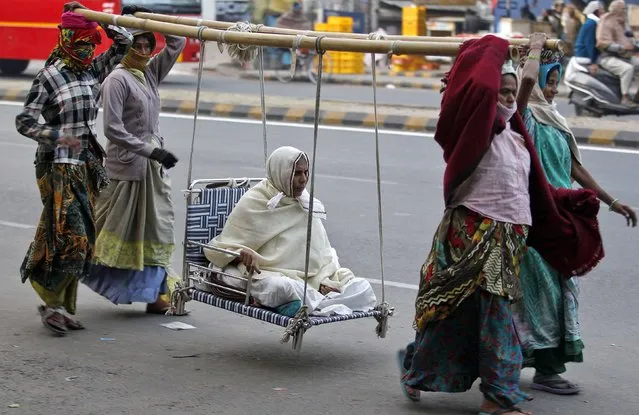
Female porters carry a holy woman belonging to the Jain community through a street to collect food from local residents living in nearby areas, during early morning in the western Indian city of Ahmedabad December 19, 2014. (Photo by Amit Dave/Reuters)
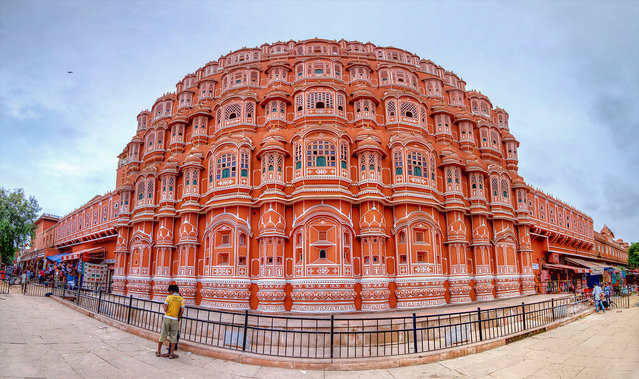
Hawa Mahal, which translates as the Palace of Winds, was built in 1799 by Maharaja Sawai Pratap Singh. The design of the palace was created by Shreyansh Jain to resemble the crown of Krishna. The design of this unique five-story building is akin to a honeycomb. The main purpose of this building was to allow royal ladies to watch the street below while remaining unseen, since during those times they had a strict code of dressing, which meant covering their faces. The palace was designed to produce the Venturi effect, which created natural air conditioning and kept the interior relatively cool during hot summers.
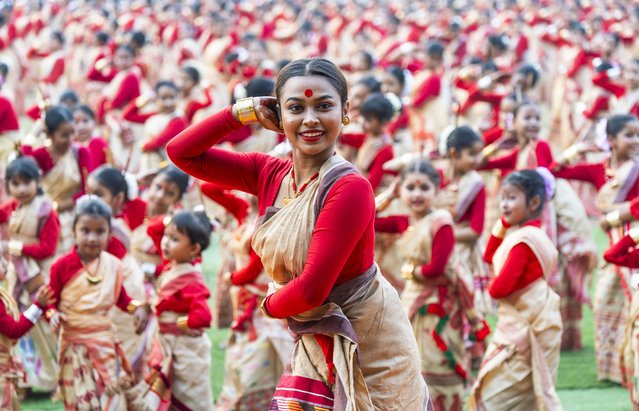
An instructor dances as participants follow the dance steps in a Bihu dance workshop ahead of the Rongali Bihu Festival in Guwahati, India, on April 8, 2025. (Photo by David Talukdar/NurPhoto/Rex Features/Shutterstock)
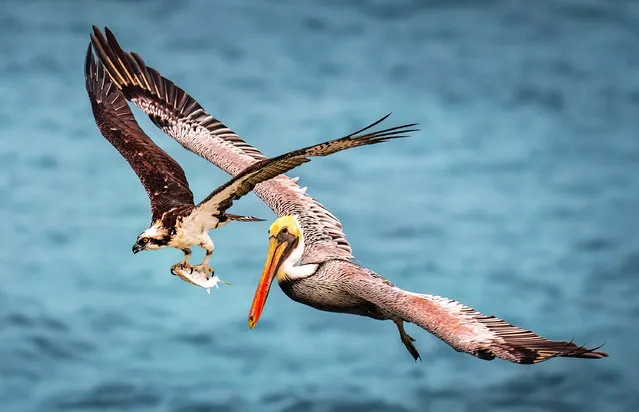
A hungry pelican is shown in a high-speed aerial pursuit of a rival's fish dinner. Having caught the fish, the osprey had to fend off competition from the much bigger bird. These stunning pictures were captured by Hanping Xiao in Sebastian Inlet State Park, Florida, USA in February 2023. (Photo by Hanping Xiao/Solent News & Photo Agency)
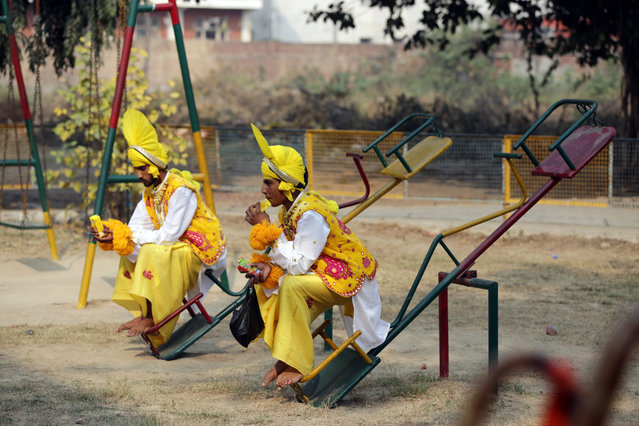
Indian young men wearing traditional folk dance “Bhangra” attire of Punjab, sit on see-saws and sip on soft drinks at a park before their performance during the Khalsa College International Folk Festival 2017 in Amritsar, India, 29 November 2017. The festival is aimed to promote cultural ties between India and participating countries. (Photo by Raminder Pal Singh/EPA/EFE)
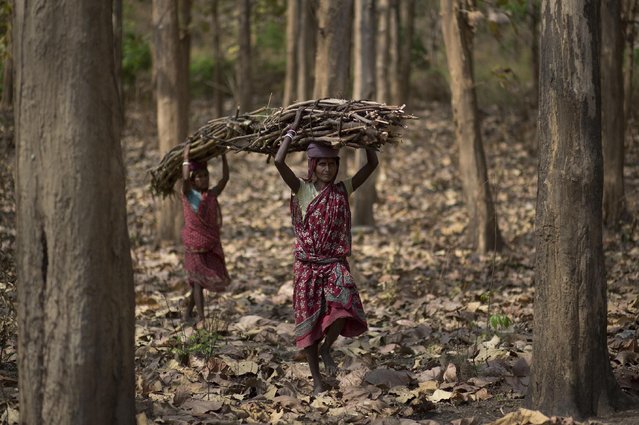
In this Tuesday, March 31, 2015 photo, Indian women walk carrying firewood they collected from a forest at Gobhali village on the outskirts of Gauhati, India. Every evening, hundreds of millions of Indian women hover over crude stoves making dinner for their families. They feed the flames with polluting fuels like kerosene or cow dung, and breathe the acrid smoke wafting from the fires. (Photo by Anupam Nath/AP Photo)
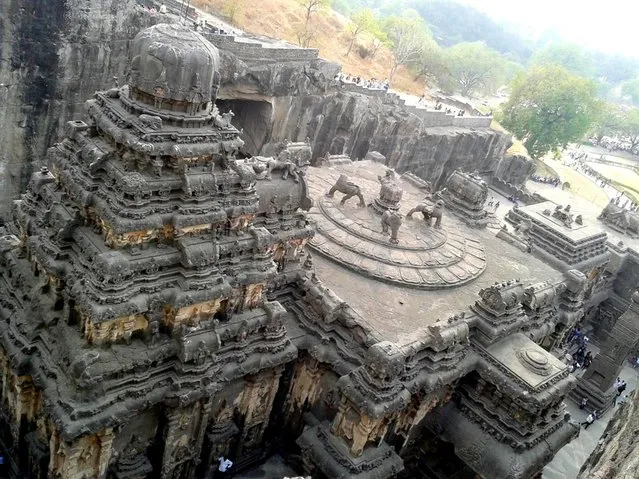
Ellora is an archaeological site, 29 km (18 mi) North-West of the city of Aurangabad in the Indian state of Maharashtra built by the Rashtrakuta dynasty. It is also known as Elapura (in the Rashtrakuta literature-Kannada).