Loading...
Done
Crime Tatoo  Part 2

Tattoos are commonly used among criminals to show gang membership and record the wearer's personal history—such as his or her skills, specialties, accomplishments and convictions. They are also used as a means of personal expression. Certain designs have developed recognized coded meanings. The code systems can be quite complex and because of the nature of what they encode, the tattoo designs are not widely recognized.
Details
24 Apr 2013 09:49:00
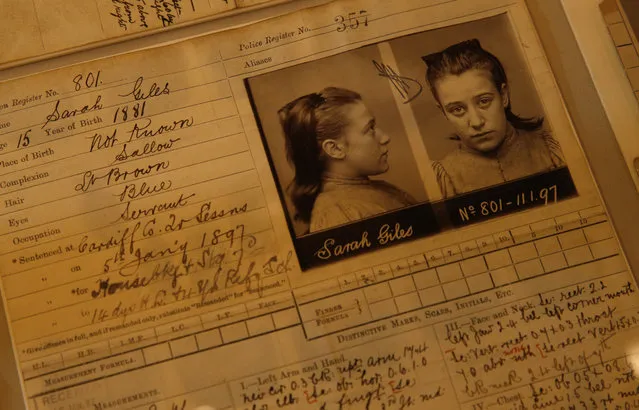
The anthropometric record card of Sarah Giles, a servant who was convicted of stealing in 1897, on display making up part of a mosaic of cards on a table top during a press preview for the Crime Museum Uncovered exhibition at the Museum of London in the City of London, Wednesday, October 7, 2015. (Photo by Alastair Grant/AP Photo)

The anthropometric record card of Sarah Giles, a servant who was convicted of stealing in 1897, on display making up part of a mosaic of cards on a table top during a press preview for the Crime Museum Uncovered exhibition at the Museum of London in the City of London, Wednesday, October 7, 2015. Drawn from Scotland Yard's private collection, the show charts more than a century of violence and suffering, from the murders of Jack the Ripper to IRA and al-Qaida bombings. But it also celebrates the brains, bravery and scientific advances that helped catch perpetrators and solve crimes. (Photo by Alastair Grant/AP Photo)
Details
11 Oct 2015 08:00:00
Dancers take part in “La Vijanera”, a winter masquerade at the beginning of carnival season in Europe, in Silio, northern Spain, January 8, 2017. (Photo by Vincent West/Reuters)

Dancers take part in “La Vijanera”, a winter masquerade at the beginning of carnival season in Europe, in Silio, northern Spain, January 8, 2017. (Photo by Vincent West/Reuters)
Details
09 Jan 2017 12:10:00
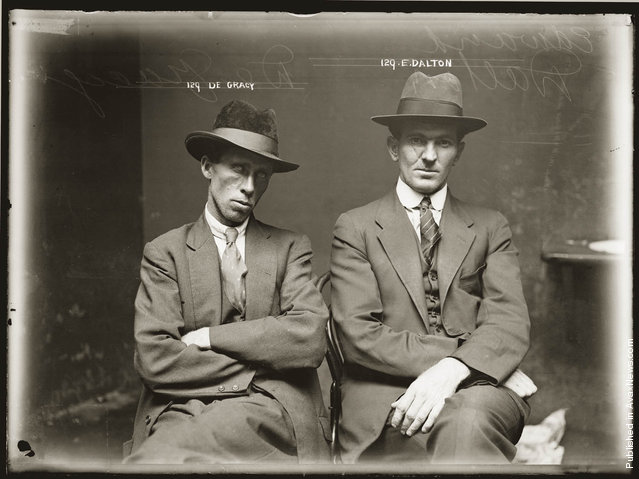
Mug shot of De Gracy (sic) and Edward Dalton. Details unknown. Central Police Station, Sydney, around 1920

Mug shot of De Gracy (sic) and Edward Dalton. Details unknown. Central Police Station, Sydney, around 1920. (Photo by NSW Police Forensic Photography Archive, Justice & Police Museum, Histiric Houses Trust of NSW)
Details
21 Apr 2012 12:24:00
An inmate (L) tends to a fellow prisoner while performing ear candling during an alternative therapy session as part of the ACUDA programme, at a complex of ten prisons in Porto Velho, Rondonia State, Brazil, August 27, 2015. Ear candling, which involves inserting a hollow cone-shaped device into the ear canal and lighting the exposed end, is believed by practitioners to draw out earwax. According to ACUDA the therapy is beneficial for the inmates' emotional health. (Photo by Nacho Doce/Reuters)

An inmate (L) tends to a fellow prisoner while performing ear candling during an alternative therapy session as part of the ACUDA programme, at a complex of ten prisons in Porto Velho, Rondonia State, Brazil, August 27, 2015. Ear candling, which involves inserting a hollow cone-shaped device into the ear canal and lighting the exposed end, is believed by practitioners to draw out earwax. According to ACUDA the therapy is beneficial for the inmates' emotional health. (Photo by Nacho Doce/Reuters)
Details
30 Oct 2015 08:00:00
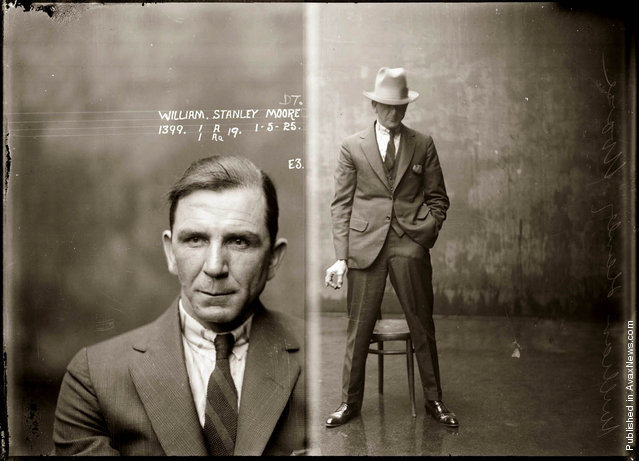
Mug shot of William Stanley Moore, 1 May 1925, Central Police Station, Sydney

Mug shot of William Stanley Moore, 1 May 1925, Central Police Station, Sydney. This picture appears in the Photo Supplement to the NSW Police Gazette, 28 July, 1926 captioned: “Opium dealer. Operates with large quantities of faked opium and cocaine. A wharf labourer; associates with water front thieves and drug traders”. (Photo by NSW Police Forensic Photography Archive, Justice & Police Museum, Histiric Houses Trust of NSW)
Details
24 Apr 2012 11:46:00
A young man, who says he is part of a local criminal gang, poses for a picture holding a gun in the neighbourhood of Korogcho in Nairobi, Kenya, March 19, 2015. (Photo by Siegfried Modola/Reuters)

A young man, who says he is part of a local criminal gang, poses for a picture holding a gun in the neighbourhood of Korogcho in Nairobi, Kenya, March 19, 2015. Around 2 million people live in the shantytowns packed in around Kenya's capital. Crime is high amid chronic unemployment levels, while basic services and sanitation are scarce. Residents try to make the best of things, eking out a living and picking up work where they can. (Photo by Siegfried Modola/Reuters)
Details
27 Nov 2015 04:59:00
A young girl makes a “tomato angel” on a tomato covered street during the traditional tomato fight “Tomatina” during the fiestas in Bunol, Spain, 28 August 2013. This year's Tomatina is the first pay festival after Bunol's City Hall sold 15,000 tickets to take part in the tomato throwing. A total of 20,000 people, including 5,000 residents, will throw over 130,000 kg tomatoes. Local authorities decided to sell tickets this year to avoid the overcrowding in previous years in which over 50,000 people took part in the event. (Photo by Biel Alino/EPA)

A young girl makes a “tomato angel” on a tomato covered street during the traditional tomato fight “Tomatina” during the fiestas in Bunol, Spain, 28 August 2013. This year's Tomatina is the first pay festival after Bunol's City Hall sold 15,000 tickets to take part in the tomato throwing. A total of 20,000 people, including 5,000 residents, will throw over 130,000 kg tomatoes. Local authorities decided to sell tickets this year to avoid the overcrowding in previous years in which over 50,000 people took part in the event. (Photo by Biel Alino/EPA)
Details
29 Aug 2013 11:24:00