Loading...
Done
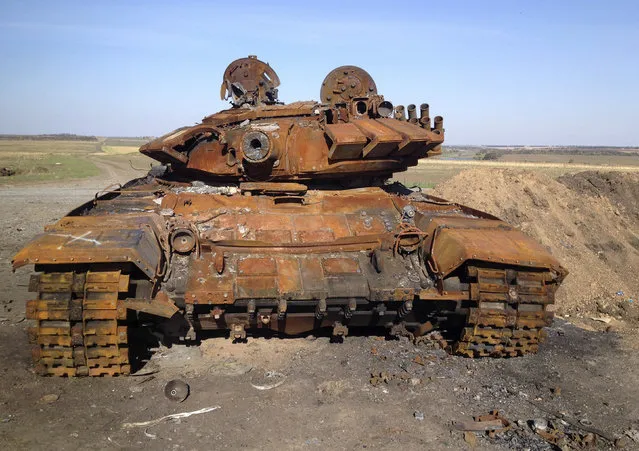
A destroyed T-72 tank, which presumably came from Russia, is seen on a battlefield near separatist-controlled Starobesheve, eastern Ukraine, October 2, 2014.(Photo by Maria Tsvetkova/Reuters)

A destroyed T-72 tank, which presumably came from Russia, is seen on a battlefield near separatist-controlled Starobesheve, eastern Ukraine, October 2, 2014. The burnt-out remains of dozens of tanks and armoured vehicles in fields near the small village of Horbatenko bear witness to the ferocity of a battle that turned the tide of the conflict in eastern Ukraine. Among the debris, Reuters found the blackened carcasses of what military experts have since identified as two Russian army tanks, supporting statements by Kiev and the West that the rebels were backed by troops and equipment sent by Moscow. (Photo by Maria Tsvetkova/Reuters)
Details
24 Oct 2014 12:14:00


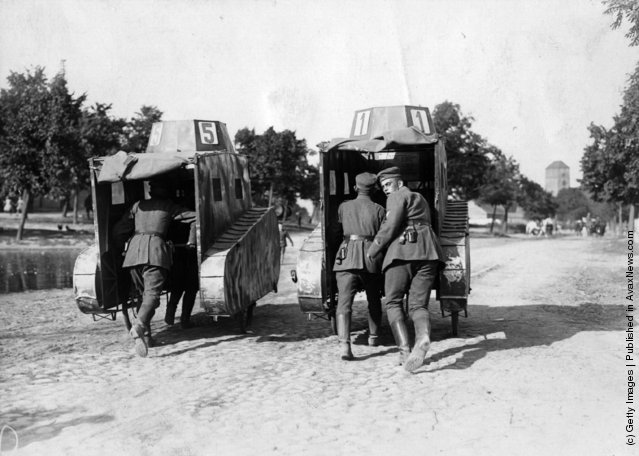
Two dummy tanks being pushed along a road by German soldiers. (Photo by Hulton Archive/Getty Images). Circa 1925
Details
06 Apr 2011 09:46:00
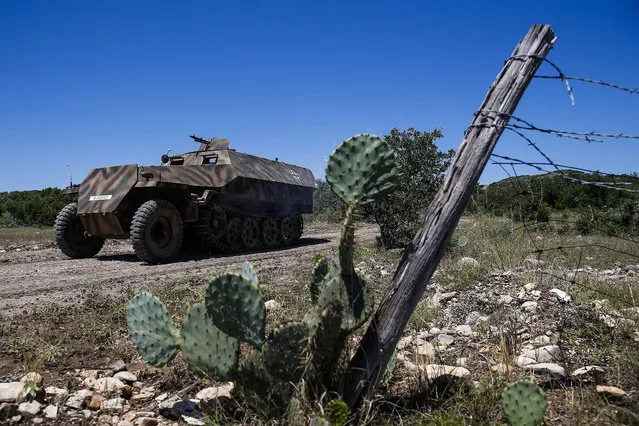
In this May 24, 2017, photo, DriveTanks.com customers drive on a tank course at Ox Ranch  in Uvalde, Texas. (Photo by Michael Ciaglo/Houston Chronicle via AP Photo)

In this May 24, 2017, photo, DriveTanks.com customers drive on a tank course at Ox Ranch in Uvalde, Texas. The ranch is a free-roaming range filled with exotic animals, some to hunt, and home to DriveTanks.com, where tourists pay to transport themselves into another era and another life. (Photo by Michael Ciaglo/Houston Chronicle via AP Photo)
Details
09 Jun 2017 06:28:00
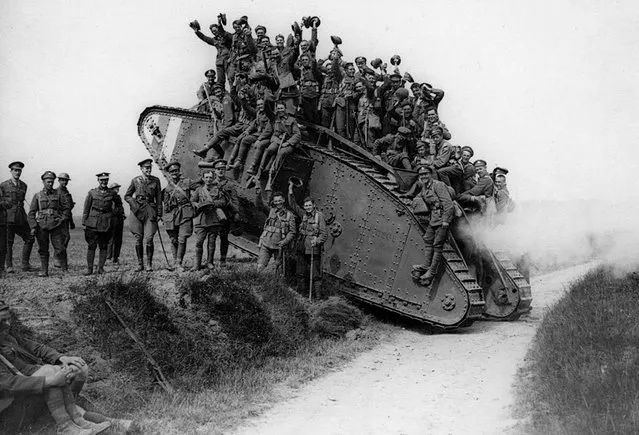
These black-and-white photos are taken from the new book “Armoured Warfare in the First World War 1916 – 1918” by Anthony Tucker-Jones and published by Pen & Sword Military. “Interestingly the British, French and Germans took completely different approaches with varying results”. The British military produced “Little Willie” in Autumn 1915 weighing 18 tonnes, which had a crew of two plus four gunners. “Inspired by a tracked artillery tractor “Little Willie” was referred to as a water tank – hence the name tank – to ensure secrecy”, said Anthony. “This led to the strange looking Mark I with its peculiar rhomboid shape, designed to cross trenches with guns in sponsons on either side. The Germans saw the tank as unchivalrous and were slow to grasp its utility. They favoured the Stormtrooper (specialist soldiers used to infiltrate enemy trenches) and artillery, not the tank”, said Anthony. “However, they didn’t hesitate to make use of captured British tanks. Although the tank helped secure victory and German soldiers dubbed it “Germany’s Downfall” the country was ultimately brought to its knees by the Allies blockade”. Here: British troops hitch a ride on a Mark IV after the massed tank fleet spearheading attack at Cambrai on November 20, 1917. (Photo by Anthony Tucker-Jones/Mediadrumworld.com)

These black-and-white photos are taken from the new book “Armoured Warfare in the First World War 1916 – 1918” by Anthony Tucker-Jones and published by Pen & Sword Military. Here: British troops hitch a ride on a Mark IV after the massed tank fleet spearheading attack at Cambrai on November 20, 1917. (Photo by Anthony Tucker-Jones/Mediadrumworld.com)
Details
23 Feb 2017 00:02:00
Members of the English Defence League (EDL) take part in a demonstration through the streets of Leicester

Members of the English Defence League (EDL) take part in a demonstration through the streets of Leicester on February 4, 2012 in Leicester, England. Up to two thousand members of the EDL gathered in the centre of Leicester as an opposing demonstration by anti-fascists held their protest nearby. (Photo by Christopher Furlong/Getty Images)
Details
05 Feb 2012 13:13:00
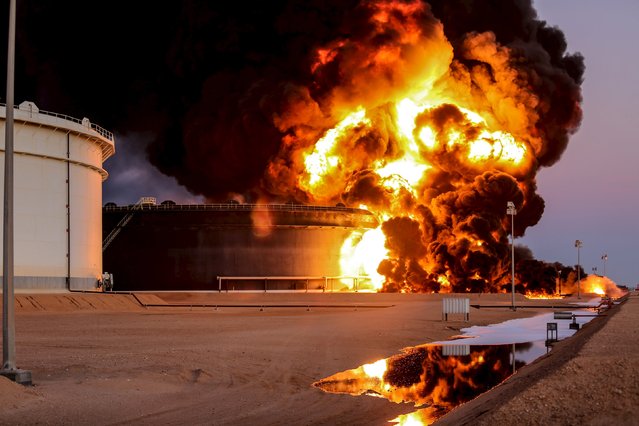
Fire rises from an oil tank in the port of Es Sider, in Ras Lanuf, Libya January 4, 2016. (Photo by Reuters/Stringer)

Fire rises from an oil tank in the port of Es Sider, in Ras Lanuf, Libya January 4, 2016. Firefighters have extinguished two fires at oil storage tanks at Libya's Ras Lanuf terminal, but blazes continue at five tanks in the nearby port of Es Sider after attacks this week by Islamic State militants, a Petroleum Facilities Guards (PFG) spokesman said on Thursday. (Photo by Reuters/Stringer)
Details
10 Jan 2016 12:14:00


Football transfers are not cheap. To have a player strengthen their ranks, teams are willing to pay big money. The football transfer considered to be the most expensive in the sport's history was that of Gareth Bale leaving Tottenham to play at Real Madrid. The Spanish club paid not less than £86 million (about $133 million at today's exchange rates) to have the player among its own. But recent news suggest that this record might be broken this year. According to reports in the media, UK Premier League team Manchester United is willing to almost double that amount.
Details
18 Sep 2015 19:15:00
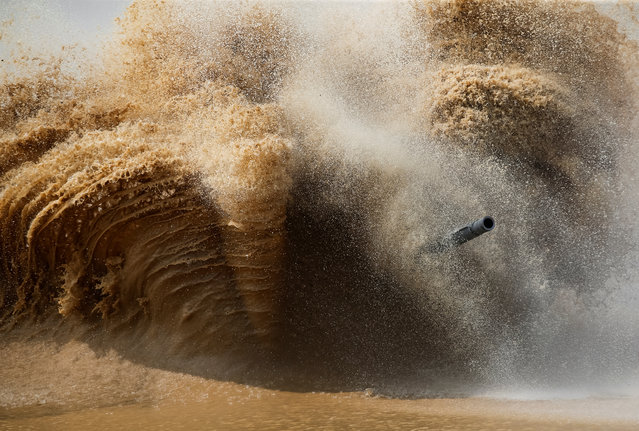
A tank's barrel is seen on the course of the Tank Biathlon competition during the International Army Games 2016 in Alabino, outside Moscow, Russia, July 30, 2016. (Photo by Maxim Zmeyev/Reuters)

A tank's barrel is seen on the course of the Tank Biathlon competition during the International Army Games 2016 in Alabino, outside Moscow, Russia, July 30, 2016. (Photo by Maxim Zmeyev/Reuters)
Details
01 Aug 2016 09:56:00