Loading...
Done
How Snakeskin Handbags Are Made

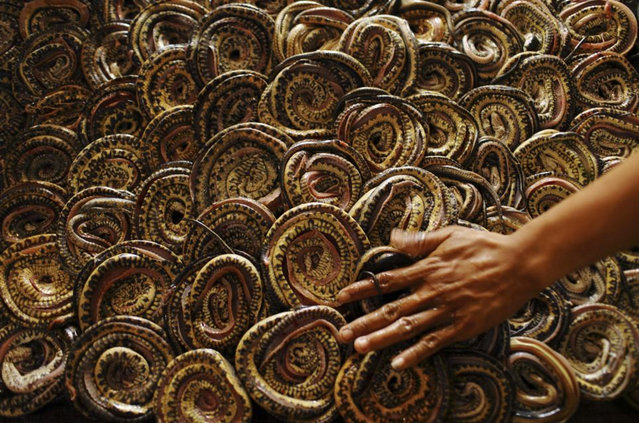
Images from a snake slaughterhouse at Kapetakan village in Indonesia’s West Java province. Wakira, who is known as “Boss Cobra”, owns the slaughterhouse that produces snake meat and skin. Snake meat is believed by some to be a remedy for skin diseases and asthma, as well as an aid to increase virility. The snake skins, measuring in the hundreds of metres, are sold to bag factories in the West and Central Java provinces on a monthly basis. The price of a bag made from snake skin costs between 150,000 rupiah ($ 15.60) and 300,000 rupiah ($31.20), depending on its size. That snakeskin handbag you’ll buy is costing a hell of a lot more.
Details
20 Feb 2013 12:00:00
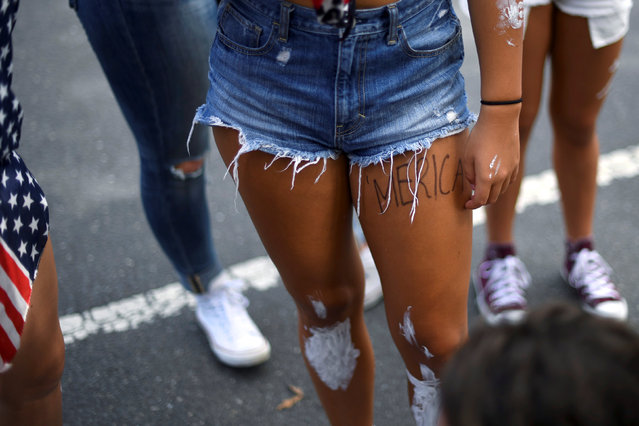
Allie Labutis wears a painted “Merica” on her thigh during the fifth annual Made in America Music Festival in Philadelphia, Pennsylvania September 3, 2016. (Photo by Mark Makela/Reuters)

Allie Labutis wears a painted “Merica” on her thigh during the fifth annual Made in America Music Festival in Philadelphia, Pennsylvania September 3, 2016. (Photo by Mark Makela/Reuters)
Details
05 Sep 2016 11:23:00
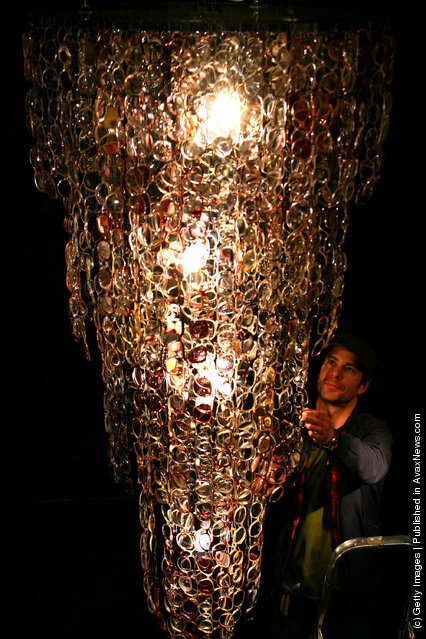
Chandelier Made Out Of Spectacles

Stuart Haygarth hangs his spectacle chandelier at The Lighthouse, Scotland's national Architecture Design Centre on November 29, 2007 in Glasgow, Scotland. The 7ft chandelier is made of over 1000 pairs of glasses, and is one of a range of products the designer has made out of recycled products. (Photo by Jeff J Mitchell/Getty Images)
Details
15 Dec 2011 13:32:00
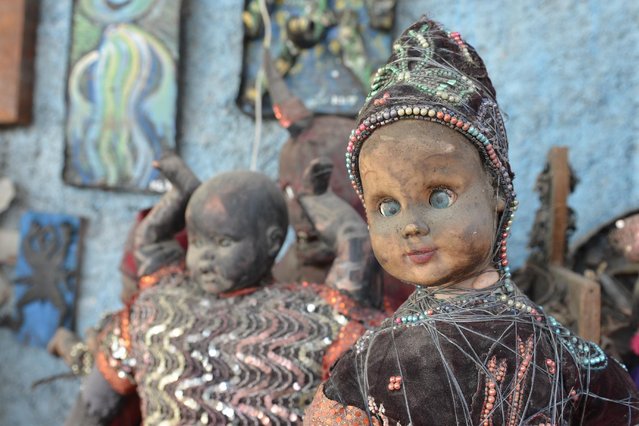
In this April 2, 2016 photo, dusty sculptures made of cast-off baby dolls sit in an open-air museum and art workshop off a trash-strewn street cutting through some of the poorest neighborhoods in Port-au-Prince, Haiti. They were created by Haitian artists called Atis Rezistans who have become celebrated in the international art world by creating sculptures out of scrapped car parts, old wood, discarded toys and even human skulls found scattered outside crumbling mausoleums. (Photo by David McFadden/AP Photo)

In this April 2, 2016 photo, dusty sculptures made of cast-off baby dolls sit in an open-air museum and art workshop off a trash-strewn street cutting through some of the poorest neighborhoods in Port-au-Prince, Haiti. They were created by Haitian artists called Atis Rezistans who have become celebrated in the international art world by creating sculptures out of scrapped car parts, old wood, discarded toys and even human skulls found scattered outside crumbling mausoleums. (Photo by David McFadden/AP Photo)
Details
12 Apr 2016 11:10:00
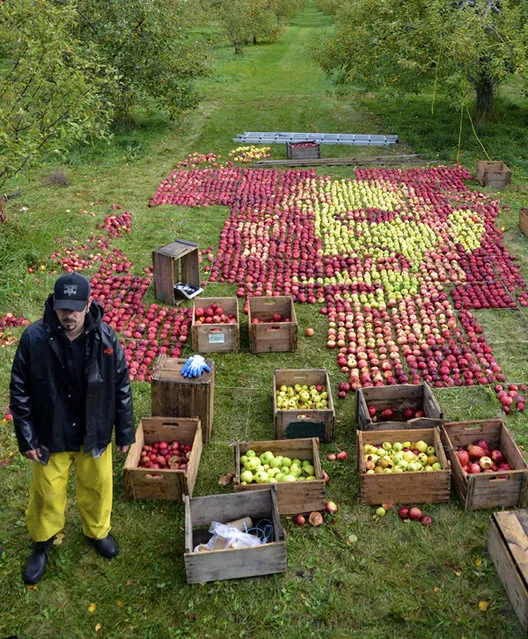
Portrait Of Steve Jobs Made With Apples

The visual artist Olivier Lefebvre wanted to accomplish with his representation of Steve Jobs’ portrait made entirely out of apples – the landart tribute expresses the impact Steve Jobs had on modern technology and the apple silhouette.
Details
07 Sep 2015 08:27:00


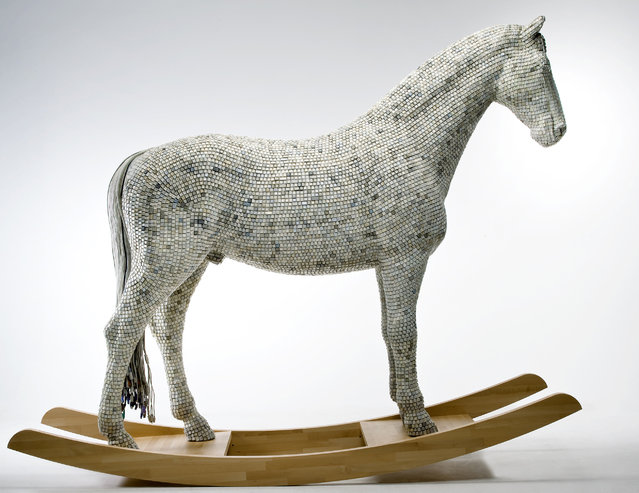
“Hedonism(y) Trojaner” is a sculpture of a horse that is made out of resin and recycled computer keys and cables. The sculpture references the Trojan Horse of myth (and more recently, computing) and was created by Nuremberg, Germany-based artist Babis Pangiotidis.
Details
07 Dec 2012 14:58:00
Samsung Galaxy Tab 7.7 tablet

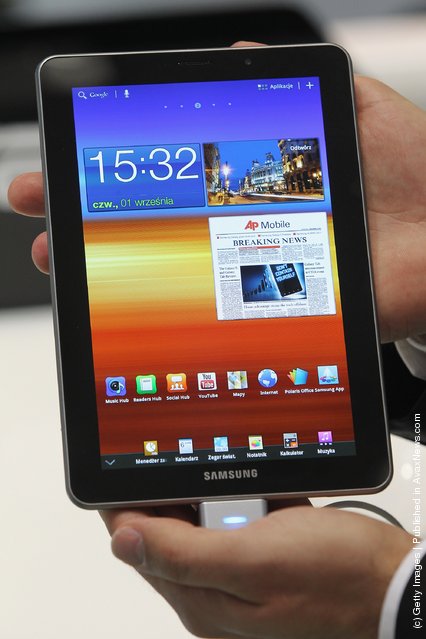
The photographer holds up a Samsung Galaxy Tab 7.7 tablet at the Samsung hall at the IFA 2011 consumer electonics and appliances fair the day before the fair's official opening on September 1, 2011 in Berlin, Germany. The IFA 2011 will be open to the public from September 2-7. (Photo by Sean Gallup/Getty Images)
Details
03 Sep 2011 12:34:00
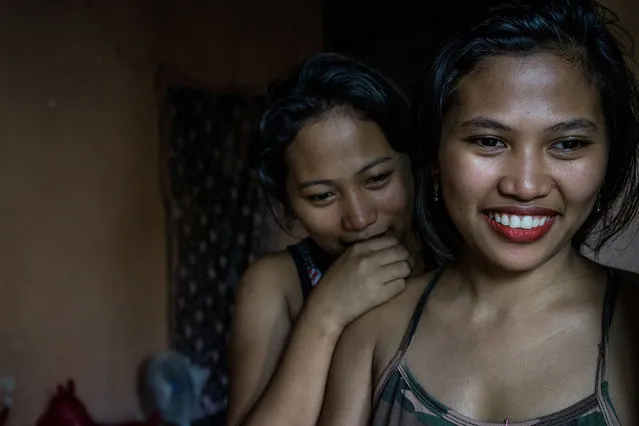
Gemma, right, and Joanne in their home in Angeles City. (Photo by Hannah Reyes Morales/The Washington Post)

Typhoon Yolanda – also known as Haiyan – struck the central part of the country November 8, 2013, leaving at least 6,300 people dead and over four million displaced. A month after Typhoon Haiyan, the United Nations Population Fund estimates that 5,000 women were subjected to sеxual violence. A study by the Health and Human Rights online publication shows the majority of young girls and women in Manila’s sеx industry come from poverty-stricken areas – such as Leyte, Samar, Cebu and southern Mindanao – and enter trafficking through force, deception, economic desperation and psychological manipulation. (Photo by Hannah Reyes Morales/The Washington Post)
Details
01 May 2017 09:59:00