Loading...
Done
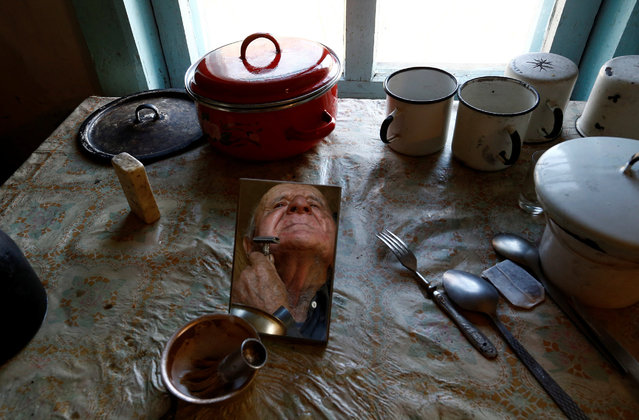
Ivan Shamyanok, 90, shaves in his house in the village of Tulgovichi, near the exclusion zone around the Chernobyl nuclear reactor, Belarus March 15, 2016. “My sister lived here with her husband. They decided to leave and soon enough they were in the ground ... They died from anxiety. I'm not anxious. I sing a little, take a turn in the yard, take things slowly like this and I live”, he said. (Photo by Vasily Fedosenko/Reuters)

Ivan Shamyanok, 90, shaves in his house in the village of Tulgovichi, near the exclusion zone around the Chernobyl nuclear reactor, Belarus March 15, 2016. “My sister lived here with her husband. They decided to leave and soon enough they were in the ground ... They died from anxiety. I'm not anxious. I sing a little, take a turn in the yard, take things slowly like this and I live”, he said. (Photo by Vasily Fedosenko/Reuters)
Details
27 Apr 2016 09:50:00
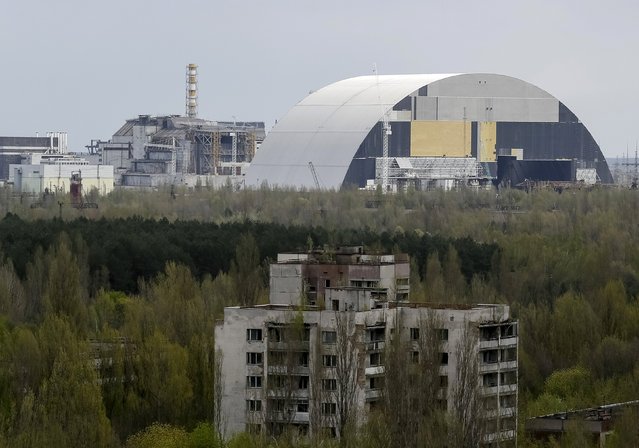
A containment shelter for the damaged fourth reactor (L) and the New Safe Confinement (NSC) structure (R) at the Chernobyl Nuclear Power Plant are seen from Ukraine's abandoned town of Pripyat, Ukraine, April 22, 2016. (Photo by Gleb Garanich/Reuters)

A containment shelter for the damaged fourth reactor (L) and the New Safe Confinement (NSC) structure (R) at the Chernobyl Nuclear Power Plant are seen from Ukraine's abandoned town of Pripyat, Ukraine, April 22, 2016. (Photo by Gleb Garanich/Reuters)
Details
23 Apr 2016 13:30:00
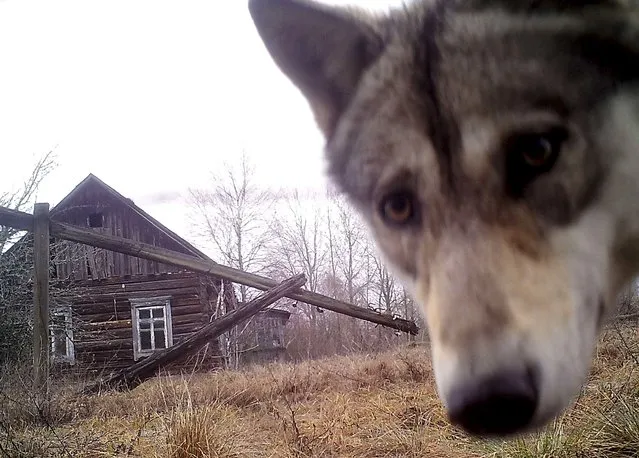
A wolf looks into the camera at the 30 km (19 miles) exclusion zone around the Chernobyl nuclear reactor in the abandoned village of Orevichi, Belarus, March 2, 2016. (Photo by Vasily Fedosenko/Reuters)

A wolf looks into the camera at the 30 km (19 miles) exclusion zone around the Chernobyl nuclear reactor in the abandoned village of Orevichi, Belarus, March 2, 2016. What happens to the environment when humans disappear? Thirty years after the Chernobyl nuclear disaster, booming populations of wolf, elk and other wildlife in the vast contaminated zone in Belarus and Ukraine provide a clue. (Photo by Vasily Fedosenko/Reuters)
Details
08 Apr 2016 15:13:00
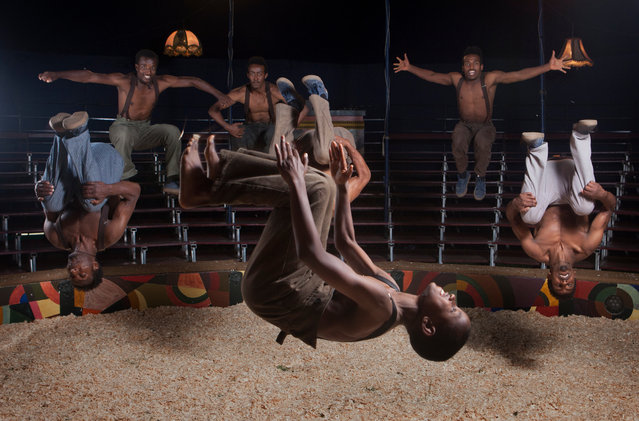
The incredible, gravity-defying Konjowoch Troupe. (Photo by Tom Pilston/The Guardian)

Giffords Circus’s show is touring the UK. Established in 2000, Giffords Circus is a small circus company that delivers circus / theatre fusion to the villages and market towns of the south west. It combines dance, comedy, horses and live music in a two-hour show, located on village greens in a small white tent surrounded by handmade burgundy and gold showman’s wagons. Photographer Tom Pilston goes behind the scenes to meet the performers. Here: The incredible, gravity-defying Konjowoch Troupe. (Photo by Tom Pilston/The Guardian)
Details
27 Jun 2016 12:07:00
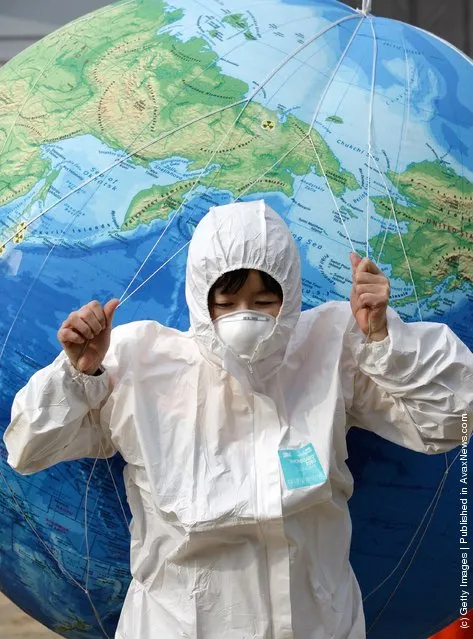
South Korean environmentalists participates in a rally held to commemorate the Fukushima nuclear disaster on the eve of the one year anniversary of Japan's earthquake and tsunami

South Korean environmentalists participates in a rally held to commemorate the Fukushima nuclear disaster on the eve of the one year anniversary of Japan's earthquake and tsunami on March 10, 2012 in Seoul, South Korea. Currently four nuclear power plants are in operation in South Korea while the government plans to increase the number of reactors to 32 by the year 2021. (Photo by Chung Sung-Jun/Getty Images)
Details
12 Mar 2012 11:44:00
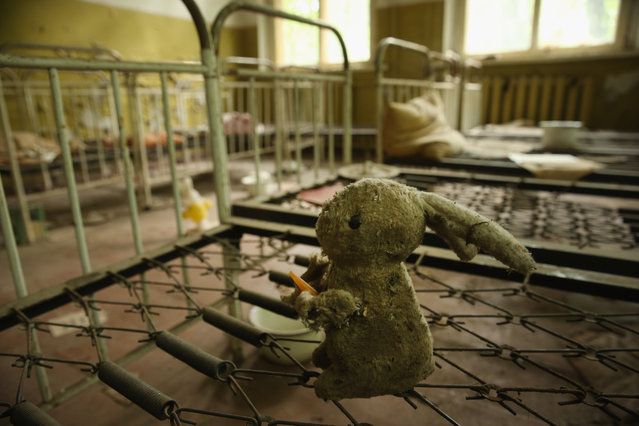
A stuffed rabbit doll sits among children's beds standing in the abandoned kindergarten of Kopachi village located inside the Chernobyl Exclusion Zone on September 29, 2015 near Chornobyl, Ukraine. Kopachi, a village that before 1986 had a population of 1,114, lies only a few kilometers south of the former Chernobyl nuclear power plant, where in 1986 workers inadvertantly caused reactor number four to explode, creating the worst nuclear accident in history. Radiation fallout was so high that authorities bulldozed and buried all of Kopachi's structures except for the kindergarten. (Photo by Sean Gallup/Getty Images)

A stuffed rabbit doll sits among children's beds standing in the abandoned kindergarten of Kopachi village located inside the Chernobyl Exclusion Zone on September 29, 2015 near Chornobyl, Ukraine. Kopachi, a village that before 1986 had a population of 1,114, lies only a few kilometers south of the former Chernobyl nuclear power plant, where in 1986 workers inadvertantly caused reactor number four to explode, creating the worst nuclear accident in history. (Photo by Sean Gallup/Getty Images)
Details
27 Apr 2016 09:28:00
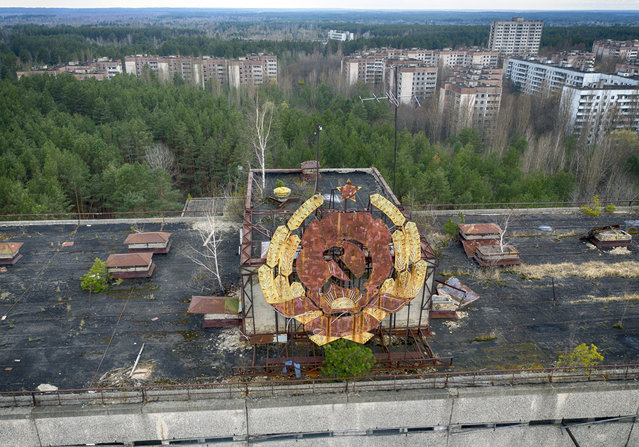
The rusty emblem of the Soviet Union is seen over the ghost town of Pripyat close to the Chernobyl nuclear plant, Ukraine, Thursday, April 15, 2021. The vast and empty Chernobyl Exclusion Zone around the site of the world’s worst nuclear accident is a baleful monument to human mistakes. Yet 35 years after a power plant reactor exploded, Ukrainians also look to it for inspiration, solace and income. (Photo by Efrem Lukatsky/AP Photo)

The rusty emblem of the Soviet Union is seen over the ghost town of Pripyat close to the Chernobyl nuclear plant, Ukraine, Thursday, April 15, 2021. The vast and empty Chernobyl Exclusion Zone around the site of the world’s worst nuclear accident is a baleful monument to human mistakes. Yet 35 years after a power plant reactor exploded, Ukrainians also look to it for inspiration, solace and income. (Photo by Efrem Lukatsky/AP Photo)
Details
30 Apr 2021 08:47:00
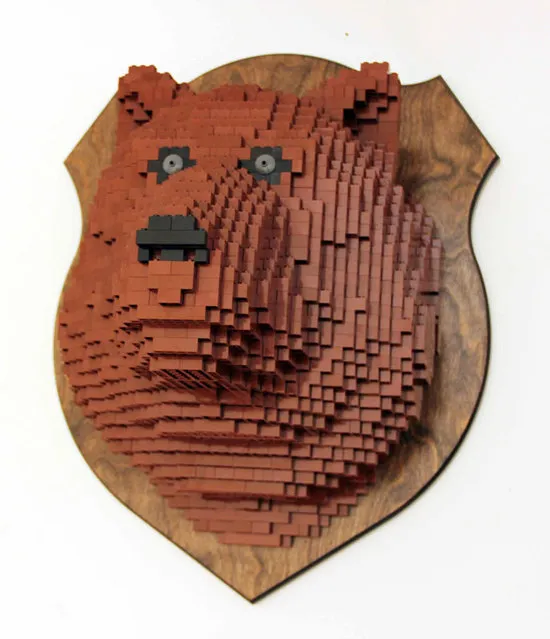
Art lego

New York sculptor Nathan Sawaya has become renowned in the modern art world for his groundbreaking fusion of pop art and surrealism in pieces comprised solely of LEGO® bricks. His most recent work represents a new phase of artistic expression within this medium, as he explores themes of identity. All his new sculpture is in one way or another autobiographical, addressing the issue of self through symbolism to express his surrealistic ideology.
Details
15 Apr 2015 09:00:00