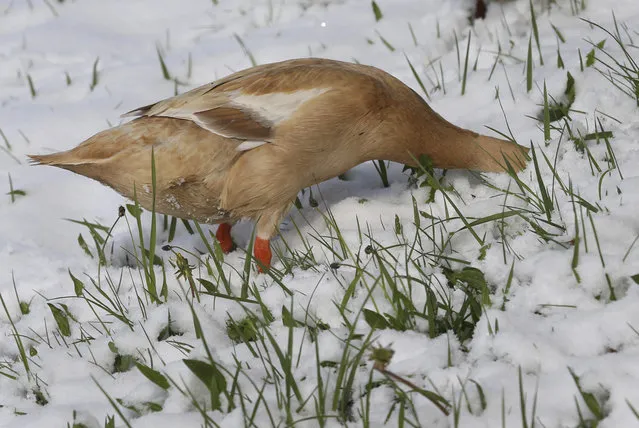
An Indian Runner duck searches for food on a snow-covered meadow in Aitrang, southern Germany, Wednesday. April 19, 2017. (Photo by Karl-Josef Hildenbrand/DPA via AP Photo)
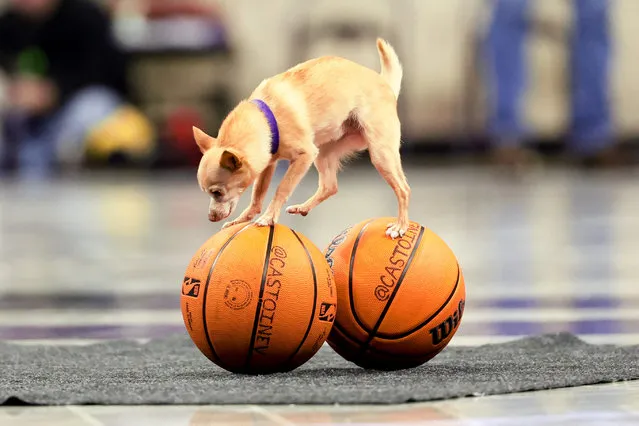
Scooby performs at halftime of the game between the TCU Horned Frogs and Texas Tech Red Raiders at Ed and Rae Schollmaier Arena in Fort Worth, Texas on January 30, 2024. (Photo by Kevin Jairaj/USA TODAY Sports)
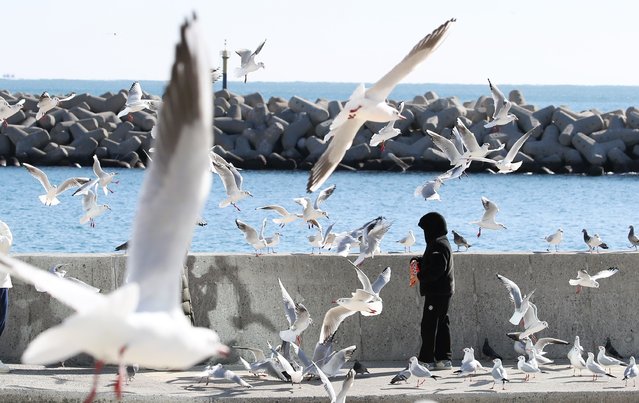
On the afternoon of the January 3, 2025, seagulls are gathering around a child holding shrimp crackers at Haeundae Beach in Busan, South Korea. (Photo by Dong-Hwan Kim)
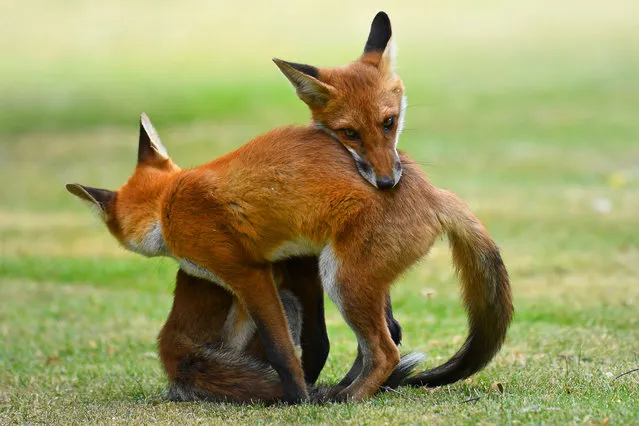
In this fur-ocious fight, two fox twins have been spotted locking paws as this sibling rivalry spirals into an epic brawl in London in the last decade of August 2023. (Photo by Anthony Cunningham/Caters News Agency)
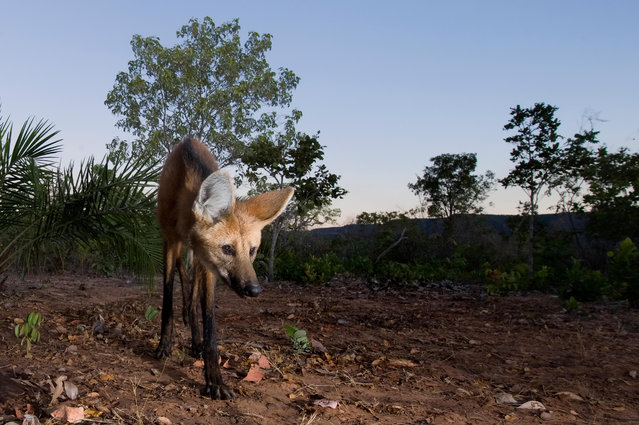
Global wildlife populations will decline by 67% by 2020 unless urgent action is taken to reduce human impact on species and ecosystems, warns the biennial Living Planet Index report from WWF (World Wide Fund for Nature) and ZSL (Zoological Society of London). From elephants to eels, here are some of the wildlife populations most affected by human activity. Here: The maned wolf is among the large mammals in the Brazilian Cerrado that are threatened by the increasing conversion of grasslands into farmland for grazing and growing crops. (Photo by Ben Cranke/Nature Picture Library/Alamy Stock Photo)
American media personality, socialite and model Kylie Jenner says “rise and shine” with her bra in the second decade of September 2022. (Photo by kyliejenner/Instagram)
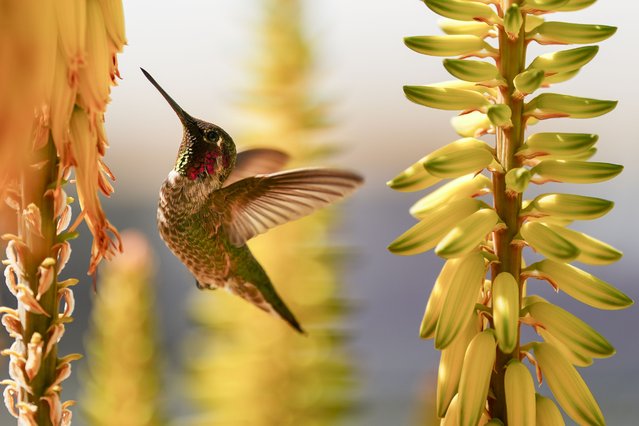
A hummingbird drinks from a flower in a garden on the outfield lawn before a spring training baseball game between the Kansas City Royals and the Athletics, Monday, February 24, 2025, in Surprise, Ariz. (Photo by Lindsey Wasson/AP Photo)