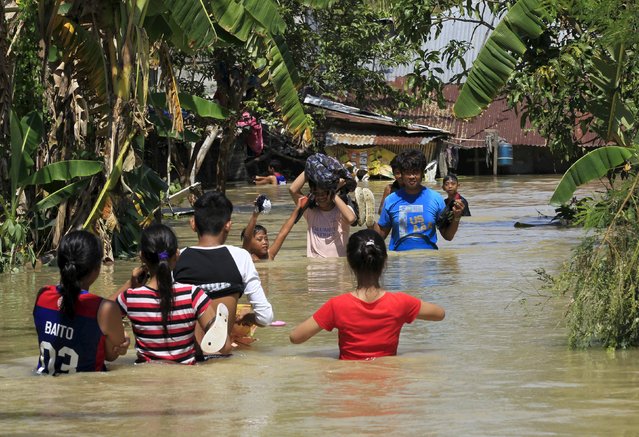
Residents wade across floodwaters after a week typhoon Koppu battered Calumpit town, Bulacan province, north of Manila October 24, 2015. Typhoon Koppu, that dumped heavy rains on the northern Philippines, killing 58 people as it flattened houses and destroyed crops, was petering out on Wednesday, weather officials said. (Photo by Romeo Ranoco/Reuters)
A passenger inter-island ferry Shuttle RoRo 5 is pictured after it was swept ashore at the height of Typhoon Nock-Ten in Mabini, Batangas in the Philippines December 26, 2016. (Photo by Erik De Castro/Reuters)
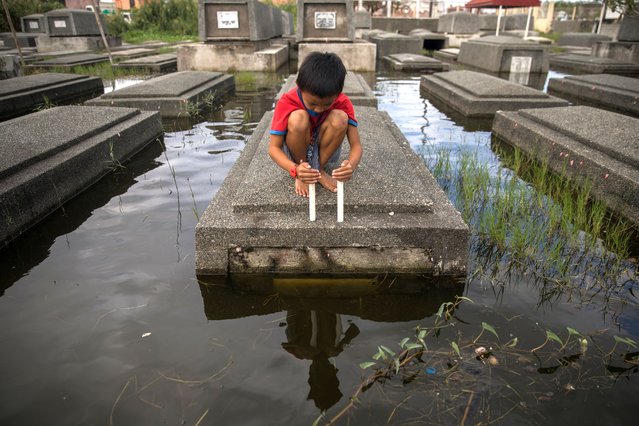
A boy attempts to keep a candle lit in a flooded cemetery following Typhoon Molave, in Masantol, Pampanga, Philippines, October 27, 2020. (Photo by Eloisa Lopez/Reuters)
Stunning images have revealed ice-cool British tourists chilling out inside Europe’s largest glacier – despite being at risk of flooding. The spectacular collection of images show the explorers braving the freezing temperatures to climb, photograph and even abseil down the inside of the icy cliff sides. Another image shows one visitor on his knees appearing to pray next to a water fall of melted ice. Other glistening shots show an adventurer trying to keep warm by a fire whose flames dance beautifully against the glossy roof. (Photo by Einar Runar Sigurdsson/Mediadrumworld.com)
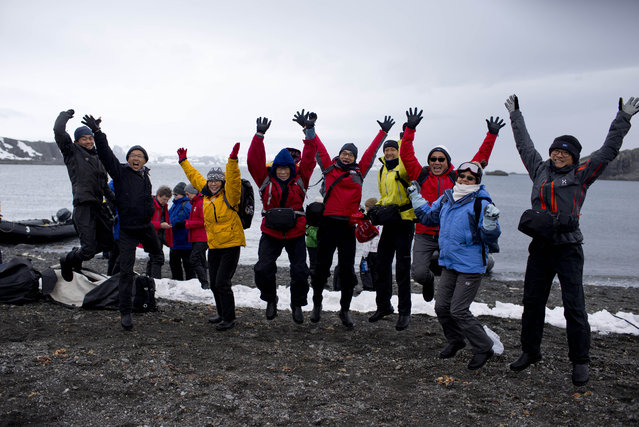
In this February 2, 2015 photo, tourists jump as they pose for a picture, after disembarking from the Ocean Nova cruise ship, on King George Island, Antarctica. This tourist season, which runs November through March, more than 37,000 visitors are expected to walk on the coldest continent on Earth, about 10 percent more than the year before. (Photo by Natacha Pisarenko/AP Photo)
A worker looks on with his camel as he waits for tourists at the Giza Pyramids on the outskirts of Cairo, Egypt, November 8, 2015. Egypt's Tourism Minister Hesham Zaazou said Cairo regretted the suspension of flights and was doing all it could to secure its airports and tourist sites, adding that he would fly to Sharm al-Sheikh to oversee measures to support tourists there. (Photo by Amr Abdallah Dalsh/Reuters)
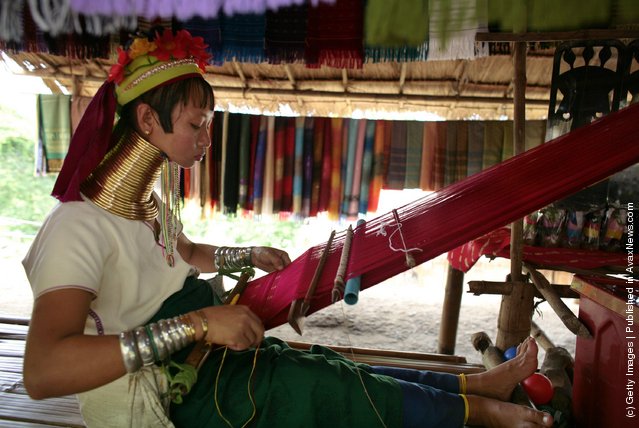
Mah Chan, a Long Neck Padaung hill tribe woman weaves a scraf for sale to tourists in a small village where 30 familes live July 13, 2006 in Chiang Dao, Thailand. All the Long Neck villages are set up for tourists and just over a year ago the hill tribe members were hand picked to move closer to Chiang Mai from more remote communities so that they could be more accessible. The Padaung women famously wear brass rings around their necks, beginning at five-years-old, to distort the growth of their collarbones and making them look like they have long necks. They are originally from eastern Burma near the Thailand border. (Photo by Paula Bronstein/Getty Images)